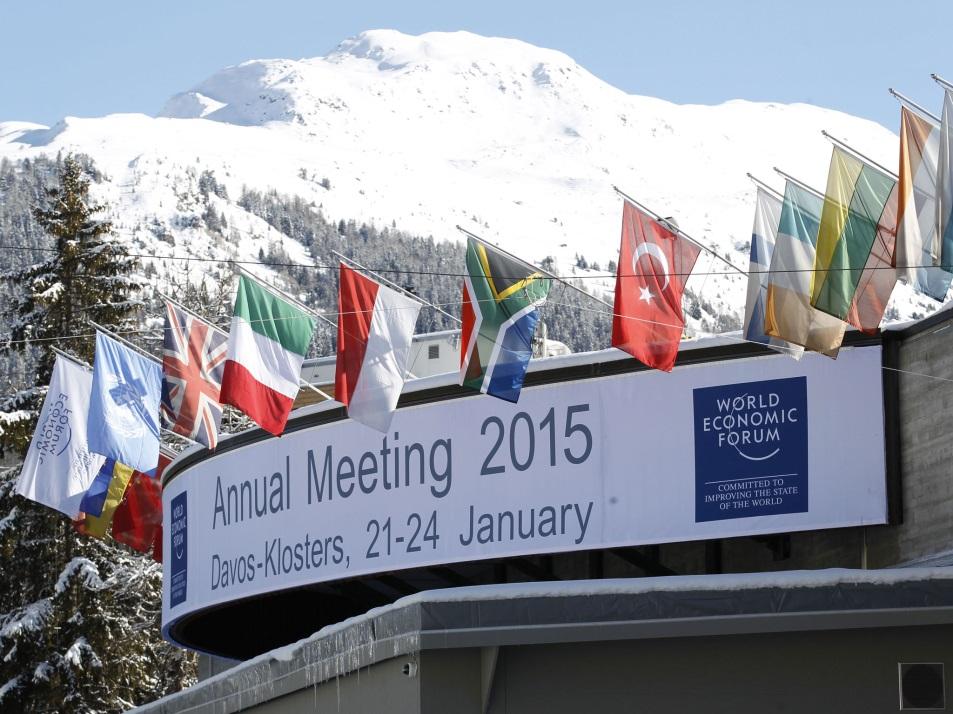
Yes. It’s Conference Time again…or Leadership Summit or Kick-Off. Our loved ones expect us to come back reeking of cigarettes, cheap perfume and a four-day-hangover…”but Richard you don’t even like whisky”.
What I don’t like at these do’s are elephants in rooms (like a forthcoming redundancy programme no-one mentions), inspirational speakers (who having climbed Everest singlehanded talk about teamwork…as if they knew), mind games and sports exercises which bring the worst out of anyone halfway intelligent. I hate the phoney nature of skill-set transfer - cook tapas or play the drums and learn to lead. But it’s those £15,000 speakers who really drive me crazy. I heard one last year whom the CEO dryly observed seemed to be “something of an over achiever.” He’d saved countless companies, engineered innumerable start-ups, played international sport, walked to the North and South Poles several times and was utterly loathsome. (Not Ranulph below who’s lovely but barking.)
Asked for his comments about this meeting of a huge, mature, leading brand name company in a declining sector he responded:-
“I can’t understand the lack of ambition here - you’ve said 3% growth is ambitious. It’s not. It’s pathetic. You should be looking for 40% growth or 400% …settling for less is weak.”
I also cringe at the acronyms like TEAM (Together everyone achieves more).
But occasionally like a really good party these things just come off. The magic ingredients seem to be to treat everyone like grown-ups, create a pleasing ambiance, have good food and drink and conversation and be entertained by the professionalism of your own people.
I’ve just been at one like that.
It was inspiring, informative and full of debate; there was good bonding and it was highly enjoyable and never silly.
I thought the amassed salaries in the room of say £15 million might have been inspired to throw in 10% extra aligned effort as a result of their highly focused experience - worth at least £1.5 million - which made it a great investment.
Lucy Kellaway, lead writer on the Financial Times who is the chief naysayer of corporate jamborees and alpha males on the rampage would have approved.
She would have liked these nice people talking about their work and how to do it better. She’d have liked the absence of bullshit (and sport). She’d have approved that the central topic of conversation was selling more or coaching better not trying to discover the parallel between people’s day-job and potholing…
”the deeper you go the more you learn, but you need your team around you because it’s dark as hell down there and if you slip you die…. just as it is in this Toilet Tissue market we’re in right now.”
It’s all about being grown up, focused and talking about what really matters. Harry Potter is all very well but please keep him out of the boardroom.
Let’s talk about business instead. It’s more important. And it’s more fun.
Monday, 15 February 2016
HANGOVER FROM HELL OR A BIT OF INSIGHT?
Labels:
climbing Everest,
colourful thinkers,
hangover,
lack of ambition,
Lucy Kellaway,
Ranulph Fiennes,
Richard Hall,
the elephant in the room,
toilet tissue
Posted by
Richard Hall
at
08:30
Monday, 8 February 2016
ANOTHER ROAD TO DAMASCUS MOMENT
I’ve had a strong sense of scepticism about the wonders of technology for some time like many from the pre-digital generation. And yet I love what’s happening too….
This week I started to read “The Second Machine Age” by Erik Brynjolfsson and Andrew McAfee. Eryk is the Director of the MIT initiative on the digital economy. You too should read the book which is well and freshly written.
No, it won’t change your minds; but it’ll focus you on the historical realty that nothing changed for thousands of years when humanity was on a “very gradual upward trajectory” until, wallop, the Industrial Revolution. James Watt’s brilliant tinkering enabled the steam revolution to initiate the biggest transformation in the history of the world.
They talk, by the way, extensively throughout the book about the brilliance of “tinkering” as opposed to first generation breakthroughs. Tinkering or recombinant thinking - recombining, fiddling about with what you have to produce something extraordinary - is what creative people do best and always have.
But it’s the digital world where tinkering has really come into its own. The authors trace the exponential growth of the sector citing Moore’s Law whereby he stated that the growth in computing power would double every year (which for the past four decades it has). The implications of that are astounding. On a trivial level the ASCI Red and the world’s fastest supercomputer reached 1.8 teraflops in 1997 and cost $55 million to develop. Just nine years later the Sony PlayStation 3 reached 1.8 teraflops and cost $500 to buy.
These guys are incredibly optimistic in answering the “so what?” question.
“The second machine age will be characterised by countless examples of machine intelligence and billions of interconnected brains working together to better understand and improve our world. It will make mockery out of all that came before.”
They make a mockery of Gross Domestic Product as a measure of economic growth when so much of the new economy is free-to-use. More music is being heard, more news read, more use of Google, Skype and so on is transforming our lives (at the fringes but nonetheless usefully.) Go back half a century and one of the brightest but unfulfilled minds got it right.
“The Gross National Product does not include the beauty of our poetry or the intelligence of our public debate. It measures neither our wit nor our courage, neither our wisdom nor our learning, neither our compassion nor our devotion. It measures everything, in short, except
that which makes life worthwhile.”
That was Robert Kennedy.
The unbridled enthusiasm of this book is wonderful. We live in an increasingly interconnected world where hitherto untapped sources of creativity are becoming available to everyone.
Thanks Eryk and Andrew. What makes our lives really worthwhile may be closer to hand than we’d thought if we just have to courage to reach for it.
I was a bit of a sceptic because I found the subject hard. Now I’m a believer.
This week I started to read “The Second Machine Age” by Erik Brynjolfsson and Andrew McAfee. Eryk is the Director of the MIT initiative on the digital economy. You too should read the book which is well and freshly written.
No, it won’t change your minds; but it’ll focus you on the historical realty that nothing changed for thousands of years when humanity was on a “very gradual upward trajectory” until, wallop, the Industrial Revolution. James Watt’s brilliant tinkering enabled the steam revolution to initiate the biggest transformation in the history of the world.
They talk, by the way, extensively throughout the book about the brilliance of “tinkering” as opposed to first generation breakthroughs. Tinkering or recombinant thinking - recombining, fiddling about with what you have to produce something extraordinary - is what creative people do best and always have.
But it’s the digital world where tinkering has really come into its own. The authors trace the exponential growth of the sector citing Moore’s Law whereby he stated that the growth in computing power would double every year (which for the past four decades it has). The implications of that are astounding. On a trivial level the ASCI Red and the world’s fastest supercomputer reached 1.8 teraflops in 1997 and cost $55 million to develop. Just nine years later the Sony PlayStation 3 reached 1.8 teraflops and cost $500 to buy.
These guys are incredibly optimistic in answering the “so what?” question.
“The second machine age will be characterised by countless examples of machine intelligence and billions of interconnected brains working together to better understand and improve our world. It will make mockery out of all that came before.”
They make a mockery of Gross Domestic Product as a measure of economic growth when so much of the new economy is free-to-use. More music is being heard, more news read, more use of Google, Skype and so on is transforming our lives (at the fringes but nonetheless usefully.) Go back half a century and one of the brightest but unfulfilled minds got it right.
“The Gross National Product does not include the beauty of our poetry or the intelligence of our public debate. It measures neither our wit nor our courage, neither our wisdom nor our learning, neither our compassion nor our devotion. It measures everything, in short, except
that which makes life worthwhile.”
That was Robert Kennedy.
The unbridled enthusiasm of this book is wonderful. We live in an increasingly interconnected world where hitherto untapped sources of creativity are becoming available to everyone.
Thanks Eryk and Andrew. What makes our lives really worthwhile may be closer to hand than we’d thought if we just have to courage to reach for it.
I was a bit of a sceptic because I found the subject hard. Now I’m a believer.
Labels:
colourful thinkers,
James Watt,
Richard Hall,
Robert Kennedy,
the second machine age
Posted by
Richard Hall
at
09:30
Monday, 1 February 2016
WHY BRANDING GOT SO CONFUSING
Branding used to be so simple. When Bass created their Red Triangle beer in 1875 (the UK's first registered trademark) they did it so those who couldn’t read would point out the beer they wanted. It was also a mark of reliability. Forget brand values, a brand was basically the same wherever and whenever you bought it.
This matters with food and drink. When it comes to cars it’s a little different with the idea of what we call a Friday car or in Germany a Monday car. Monday why? Because all the car workers are wasted after a weekend’s drinking…boom, boom. I heard that last week from a German Taxi driver in Nuremberg.
Like vicars we marketers can have doubts about our religion. I am struggling to believe in the power of branding as it used to be in the second half of the 20th century when we had Double Diamond, Mother’s Pride, Gold Blend, Silk Cut and Malibu.
When we had a plethora of ‘brands’ like Screaming Yellow Zonkers, Slime and Sunny Delight (remember that? From sales of £160 million in the UK it disappeared as the beta-carotene colourant in the product was found to turn skin orange if too much SD was drunk). In these good old days when an ad man said “people drink the advertising” Heineken, Carling Black Label in beer and in soft drinks Tango, funnier and more extraordinary advertising kept us glued to our TVs. Brands had become entertainers.
Stable brands like Mars, Heinz, Persil and Coca- Cola carried on plying their remorseless trade but I began to have serious doubts. Like the Reverend Johnson in Blazing Saddles who said in prayer:-
“O Lord, do we have the strength to carry off this mighty task in one night? Or are we just jerking off?”
There was Coca-Cola’s cynical and disastrous water brand Dasani and the sense that business had gone mad.
In China I drank their now global ‘brand’ Great Wall wine. No two glasses were the same. What the hell was going on in this world of branding?
People called themselves brands. Countries became brands. The ultimate brand of course was Planet Earth.
I became a deep sceptic about the religion of branding except when someone creates great product, because they want to, and signs it with their own name.
I believe in Ben & Jerry’s Ice Cream, I believe in Ted Baker, I believe in Dr Oetker the German family food company and I believe in Jimmy’s.
Jimmy’s is an Iced Coffee business in Christchurch, Dorset founded by Jim Cregan 5 years ago because he craved the iced coffee he’d drunk in Australia but couldn’t find here.
Like Patagonia (Yvon Chouinard’s creation) Adidas and Whole Food Market a person had an idea and drove it forwards with purpose and a simplicity of vision.
Great brands are real, living things created around an idea and just a touch of madness.
They are never made by a Marketing Committee.
Labels:
Bass,
beer,
branding,
brands,
Carling Black Label,
Coca-cola,
colourful thinkers,
Heineken,
Richard Hall,
Sunny Delight,
Tango,
TV
Posted by
Richard Hall
at
09:30
Monday, 25 January 2016
ISSUES OF LEADERSHIP
I’ve just finished Robert Harris’ “Dictator,” the last in his quadrilogy of books on Cicero. It’s about leadership as much as about Cicero. We have a smorgasbord of leadership types. Cicero himself, Pompey, Mark Anthony, Octavius and the so called, self-styled God called Julius Caesar, clearly insane but brilliant at building a fighting force of employees through non-stop action making all of them feel that they are irreplaceable and unstoppable.
Ernest Saunders at Guinness was a bit like that…he had the best foot soldier/marketers any general/CEO in business ever had. Talk to them now and they are still in awe of each other, of what they achieved with “the black stuff” as they called Guinness and having been part of the highest performing team they could remember.
The conversation about leadership is thrown into relevance by Davos where the movers and shakers are gathering like sleek vultures. The recently published Ipsos Mori Veracity Index which has been charting levels of public trust in various professions for 32 years is even more relevant.
Business leaders are now amongst the least trusted groups. As Matthew Parris spluttered in Saturday’s Times:- “the typical FTSE CEO makes 183 times more than their average employee…” Leadership is being measured, he implies, by how much they earn not by how effective they are.
What do we really expect from leaders?
In the Roman Republic they spent most of their time trying to construct checks and balances to avoid the Julius Caesar “I am God” problem. We spend our time today trying to create images of leadership perfection. Tim Cook, Charlie Mayfield, Howard Schultz and so on but whichever way it’s not going to be a long list.
When Tony Hayward ex BP CEO and running that business during the Deepwater Horizon crisis took a "day off" to see Bob, his co-owned boat, participate in the Round the Island yacht race off the Isle of Wight with his son saying he wanted to get “his life back”. In truth he was paid all those millions not to have a life of his own.
Leaders are needed to be different things in different situations. We choose the leaders we think we need. Churchill in 1940; Reagan in 1981; Thatcher in 1979; Blair in 1997. Sometimes we need inspirers, sometimes martinets, sometimes healers, sometimes role models and sometimes visionaries.
Reflect on the deluges that came after Lord Browne, Tim Leahy, Justin King, Alex Ferguson, Marjorie Scardino … and increasingly we realise leadership is as much to do with luck as skill.
To understand the role of leader, watch this Ted Talk:-
This a stunning story about conductors and styles of leadership from Itay Talgam, the Israeli Conductor and Business Consultant. It’s both insightful and very funny.
But don’t people need the smack of strong leadership…people like Trump and Putin?
No. I think people need leaders who manage to draw the best out of them…who make them surprise themselves.
Surely the age of the bully-leader is over.
Ernest Saunders at Guinness was a bit like that…he had the best foot soldier/marketers any general/CEO in business ever had. Talk to them now and they are still in awe of each other, of what they achieved with “the black stuff” as they called Guinness and having been part of the highest performing team they could remember.
The conversation about leadership is thrown into relevance by Davos where the movers and shakers are gathering like sleek vultures. The recently published Ipsos Mori Veracity Index which has been charting levels of public trust in various professions for 32 years is even more relevant.
Business leaders are now amongst the least trusted groups. As Matthew Parris spluttered in Saturday’s Times:- “the typical FTSE CEO makes 183 times more than their average employee…” Leadership is being measured, he implies, by how much they earn not by how effective they are.
What do we really expect from leaders?
In the Roman Republic they spent most of their time trying to construct checks and balances to avoid the Julius Caesar “I am God” problem. We spend our time today trying to create images of leadership perfection. Tim Cook, Charlie Mayfield, Howard Schultz and so on but whichever way it’s not going to be a long list.
When Tony Hayward ex BP CEO and running that business during the Deepwater Horizon crisis took a "day off" to see Bob, his co-owned boat, participate in the Round the Island yacht race off the Isle of Wight with his son saying he wanted to get “his life back”. In truth he was paid all those millions not to have a life of his own.
Leaders are needed to be different things in different situations. We choose the leaders we think we need. Churchill in 1940; Reagan in 1981; Thatcher in 1979; Blair in 1997. Sometimes we need inspirers, sometimes martinets, sometimes healers, sometimes role models and sometimes visionaries.
Reflect on the deluges that came after Lord Browne, Tim Leahy, Justin King, Alex Ferguson, Marjorie Scardino … and increasingly we realise leadership is as much to do with luck as skill.
To understand the role of leader, watch this Ted Talk:-
This a stunning story about conductors and styles of leadership from Itay Talgam, the Israeli Conductor and Business Consultant. It’s both insightful and very funny.
But don’t people need the smack of strong leadership…people like Trump and Putin?
No. I think people need leaders who manage to draw the best out of them…who make them surprise themselves.
Surely the age of the bully-leader is over.
Labels:
Churchill Julius Caesar,
Cicero,
colourful thinkers,
Davos,
Deepwater Horizon,
Ernest Saunders,
Guinness,
Ipsos Mori,
leadership,
Margaret Thatcher,
Mark Anthony,
Ronald Reagan,
Tony Blair,
Tony Hayward
Posted by
Richard Hall
at
09:30
Monday, 18 January 2016
WHY I WANT TO REMAIN BEING EUROPEAN
I’ve just been to Lisbon. I was blown away by how clean, organised and sophisticated it was. The sublimely warm and sunny weather helped. This was one of those basket case economies that after 2008 looked like bringing the EU down. Now exports are up, tourism is up and Portugal like Ireland is on a convincing road to recovery and growth.
My love affair with Europe grows. The thought of Brexit seems as insane as contemplating suicide. What possible sense does resigning from the largest economy and the most exciting culture in the world make? The arguments that the petty bureaucracy of the EU is stifling may be fair but disliking our own HMRC would be a piffling reason for emigrating.
What I love about Europe is that it works. It is so civilised, peaceful and sensible. The Brexit politicians all seem so dreary, aggressive and unambitious. The stay-Ins, for their part, seem inhibited, and too embarrassed to say what they really feel.
Daniel Kahneman’s book “Thinking fast and slow” nailed the realities of decision making…that it was the intuitive System One part of our brains that called all the shots. It makes little sense to seek a list of whys and why-nots for most of us. We are either “Little Englanders” or we are Europeans/Global citizens in our gut. Maybe I should blame my parents who lived the first 15 years of their marriage in Spain for the way I intuitively lean.
It was in Portugal that I read Jean-Claude Piris (he sounds suspiciously foreign or, worse, French the Brexits might say). He used to be Director General Legal Services EU and has written a book called “If the UK Votes to Leave”.
It’s chilling stuff. Leaving the EU is not like resigning from a job or getting a divorce. It will take years of negotiation and the way the EU works they won’t make it easy for us. Our national aircraft will, as it were, be grounded for a very long time.
Our lawyers will have a field day or rather a field year or five redrafting legislation. Our 2million countrymen living in the EU may have a rather unpleasant time especially as Brexit would be accompanied by Britain taking repressive attitudes to the Eastern Europeans. Trade relations with the EU would not just carry on as normal…everything would slow down. Think it’s a bureaucratic morass now? You just wait.
But there’s all the rest of the world to trade with.
Well it’s actually not that simple. Many of our trade relationships are done through the EU so we’d have to redevelop those from a somewhat weaker position. It’s no use comparing our position to Canada, Australia or Switzerland. By leaving the EU we’d be fundamentally changing the status quo.
Whichever way Brexit would be a very long and bloody mess.
And like Millwall FC no one would like us. But unlike Millwall I, and hopefully a majority of Britons, would very much care about that.
Labels:
being European,
Brexit,
collourful thinkers,
Daniel Kahneman,
EU,
Leaving the EU,
Lisbon,
Millwall,
Millwall football club,
Richard Hall
Posted by
Richard Hall
at
08:02
Monday, 11 January 2016
THE OLD, OLD STORY
Back now from New Year celebrations for a big exercise in “I told you so’s.” The retailers tell us about their Christmas.
Next, after several smug years, was given a sharp kick by the consumer, John Lewis had a great time and M&S had another shocker. Mark Bolland said rather plaintively “but we did brilliantly in food”. And they did. But he resigned anyway.
M&S has always understood its food customer. They have in their mind reasonably wealthy retirees who indulge themselves a bit. And then there are people who either live alone or with a partner working incredibly hard so Simply M&S is a saviour. Get a decent, low calorie Chicken Jalfrezi, a bottle of Chateau Neuf and bed.
M&S has a brilliant team of food developers. Their quality and taste is miles ahead of Waitrose who had a rather mediocre Christmas. Alone amongst food retailers M&S seem untouched by Aldi and Lidl who tortured the big grocers by stealing their luxury food sales . A Goldman Sachs Analyst confessed to finding the Goose, Champagne, Smoked Salmon, Stilton and Panettone not only much cheaper there but also better.
So how can M&S get it so right and so wrong?
I have a confession to make. In the past I’ve found M&S men’s clothes good value and a quick, lazy way of looking reasonably smart. Then I discovered style with Charles Tyrwhitt and Boden. But after a while quality went sideways in both.
Now I buy my clothes from John Lewis - stylish, interesting and easy to shop. My last visit to M&S Marble Arch left me slightly nauseous with the insane range of stuff, all of it randomly displayed and none of it exciting.
In their 12,700 sq. ft. Food Store just outside Brighton, M&S parade the best and newest they have to offer. They share “yum” factor with Nigella.
I don’t believe anyone much under 50 shops there for clothes but M&S would be embarrassed to acknowledge this. Stuart Rose was right to research the M&S brand with the Women’s Institute. But what happened next?
It’s time to be realistic and focus on the older generation who are living longer and longer.
And even longer if Dame Sally Davies has her way.
We may (she says) only drink 1 ½ bottles of wine a week, with three days alcohol free, or we’ll die prematurely.
Shocking as it may seem I am raising my own consumption level to try and die before I get dementia.
Forgive me Mary for being so cross with you. We need to balance our approach to health. But as with M&S the key target is the elderly and avoiding them becoming a cohort of medically fit, free of the curses of alcohol and tobacco, yet away with the fairies.
I think we should encourage the elderly to smoke and drink a lot.
It might save the NHS.
And it would give the rest of us a lot to look forward to.
Cheers.
Next, after several smug years, was given a sharp kick by the consumer, John Lewis had a great time and M&S had another shocker. Mark Bolland said rather plaintively “but we did brilliantly in food”. And they did. But he resigned anyway.
M&S has always understood its food customer. They have in their mind reasonably wealthy retirees who indulge themselves a bit. And then there are people who either live alone or with a partner working incredibly hard so Simply M&S is a saviour. Get a decent, low calorie Chicken Jalfrezi, a bottle of Chateau Neuf and bed.
M&S has a brilliant team of food developers. Their quality and taste is miles ahead of Waitrose who had a rather mediocre Christmas. Alone amongst food retailers M&S seem untouched by Aldi and Lidl who tortured the big grocers by stealing their luxury food sales . A Goldman Sachs Analyst confessed to finding the Goose, Champagne, Smoked Salmon, Stilton and Panettone not only much cheaper there but also better.
So how can M&S get it so right and so wrong?
I have a confession to make. In the past I’ve found M&S men’s clothes good value and a quick, lazy way of looking reasonably smart. Then I discovered style with Charles Tyrwhitt and Boden. But after a while quality went sideways in both.
Now I buy my clothes from John Lewis - stylish, interesting and easy to shop. My last visit to M&S Marble Arch left me slightly nauseous with the insane range of stuff, all of it randomly displayed and none of it exciting.
I don’t believe anyone much under 50 shops there for clothes but M&S would be embarrassed to acknowledge this. Stuart Rose was right to research the M&S brand with the Women’s Institute. But what happened next?
It’s time to be realistic and focus on the older generation who are living longer and longer.
And even longer if Dame Sally Davies has her way.
We may (she says) only drink 1 ½ bottles of wine a week, with three days alcohol free, or we’ll die prematurely.
Shocking as it may seem I am raising my own consumption level to try and die before I get dementia.
Forgive me Mary for being so cross with you. We need to balance our approach to health. But as with M&S the key target is the elderly and avoiding them becoming a cohort of medically fit, free of the curses of alcohol and tobacco, yet away with the fairies.
I think we should encourage the elderly to smoke and drink a lot.
It might save the NHS.
And it would give the rest of us a lot to look forward to.
Cheers.
Labels:
colourful thinkers,
Dame Sally Davies,
M&S,
Marble Arch,
Mark Bolland,
Marks and Spencer,
Next,
NHS,
Nigella Lawson,
Richard Hall
Posted by
Richard Hall
at
09:30
Monday, 4 January 2016
WHAT A FUNNY OLD WORLD THIS IS
There’s been some journalistic outrage about management jargon recently. They seem to take particular affront about expressions like “going forward” and “thinking out of the box” which have been around for some time. More recent efforts like “Don’t try to boil the Ocean” = don’t take on an impossible task or “Punching the Puppy” = taking an unpopular decision, seem to evoke greater wrath.
I think it’s time for a really red-in-the-face row about this and to aid this particular mission we need to create a few new ones that are especially horrid.
Here are some from me (I’m sure you can do better which is what I really want from you):
Time to kick the kitten - the moment to do some really mean things 'pour encourager les autres' - like firing the nicest people - or just being foul for the fun of it.
Going PHD - trying to make a simple action just too clever-clogs-complex.
Visiting the graveyard - nostalgically reviewing the good old days and how wonderful it once was or alternatively referring back to an invention, insight or opinion of someone no longer working with you.
Nosing the jockstrap - reviewing how a particularly exhausting project has actually gone. An alternative version is behaving sycophantically to a superior who’s just won promotion.
Pissing in the Petrus - ruining a really good idea with terrible and thoughtless execution.
Trying to water the Sahara - as “boil the Ocean” but different insofar as watering the Sahara is actually a great idea - in theory.
Sliding in on the razor wire - doing something really foolhardy when your gut tells you “don’t! Don’t even think about it.”
Putting on new socks - a change-programme which achieves little and is unnoticeable.
Contradicting the Pope - questioning a strategic decision already agreed by the Board.
Scratching off the scab - doing a deep dive investigation as to what went wrong after a cock-up and stopping at nothing to create the appearance of ruthless thoroughness.
A fart of Dasani - something which has the repugnant whiff of impending disaster (Dasani in case you’re struggling to remember was the Coca-Cola water that bombed.)
Funny this world may be but it’s good to see at last just how diverse it’s becoming.
The Harvard Business Review nominated their 25 Best Performing Global CEOS in October 2015.
Their nationalities were diverse and came from 12 different countries:
I find this data perfectly describes the world that I recognise and live in, where the role of Europe is central to the future of the planet.
And isn’t it great that 64% of these top CEOs come from the EU which represents only 10% of the world’s population.
And particular congratulations to the Danish, Lars Rebien Sørensen, CEO of Novo Nordisk, who came 1st.
A very happy and successful New Year to you all.
Richard Hall
http://marketing-creativity-leadership.blogspot.co.uk/
I think it’s time for a really red-in-the-face row about this and to aid this particular mission we need to create a few new ones that are especially horrid.
Here are some from me (I’m sure you can do better which is what I really want from you):
Time to kick the kitten - the moment to do some really mean things 'pour encourager les autres' - like firing the nicest people - or just being foul for the fun of it.
Going PHD - trying to make a simple action just too clever-clogs-complex.
Visiting the graveyard - nostalgically reviewing the good old days and how wonderful it once was or alternatively referring back to an invention, insight or opinion of someone no longer working with you.
Nosing the jockstrap - reviewing how a particularly exhausting project has actually gone. An alternative version is behaving sycophantically to a superior who’s just won promotion.
Pissing in the Petrus - ruining a really good idea with terrible and thoughtless execution.
Trying to water the Sahara - as “boil the Ocean” but different insofar as watering the Sahara is actually a great idea - in theory.
Sliding in on the razor wire - doing something really foolhardy when your gut tells you “don’t! Don’t even think about it.”
Putting on new socks - a change-programme which achieves little and is unnoticeable.
Contradicting the Pope - questioning a strategic decision already agreed by the Board.
Scratching off the scab - doing a deep dive investigation as to what went wrong after a cock-up and stopping at nothing to create the appearance of ruthless thoroughness.
A fart of Dasani - something which has the repugnant whiff of impending disaster (Dasani in case you’re struggling to remember was the Coca-Cola water that bombed.)
Funny this world may be but it’s good to see at last just how diverse it’s becoming.
The Harvard Business Review nominated their 25 Best Performing Global CEOS in October 2015.
Their nationalities were diverse and came from 12 different countries:
| USA | 8 |
| Germany | 3 |
| Brazil, France, Spain and Gt Britain | 2 each |
| Sweden, Noway, Denmark, Japan, Belgium and Greece | 1 each |
I find this data perfectly describes the world that I recognise and live in, where the role of Europe is central to the future of the planet.
And isn’t it great that 64% of these top CEOs come from the EU which represents only 10% of the world’s population.
And particular congratulations to the Danish, Lars Rebien Sørensen, CEO of Novo Nordisk, who came 1st.
A very happy and successful New Year to you all.
Richard Hall
http://marketing-creativity-leadership.blogspot.co.uk/
Labels:
2016,
CEO,
coca cola,
Dasani,
jargon,
kicking the kitten,
management speak,
Richard Hall
Posted by
Richard Hall
at
09:30
Subscribe to:
Posts (Atom)