Showing posts with label Richard Hall. Show all posts

Monday, 5 September 2022

WELCOME TO FALL

It’s that exquisite time of year when blackberries are at their juiciest and leaves begin to think of falling (but not just yet) and we start to think of new beginnings. New School. University. New job. It’s the season of change. It started last Friday and ends on the last day of November. 

Why blackberries are bitter & how to fix it - Ask the Food Geek

It used to be called “harvest” when we were a fully rural economy. Then the Latin “autumnus” - which derived from augere “to increase.” This verb's perfect participle auctus means “rich” (as in a “rich season”). I really like the idea of Autumn as a rich reason in the sense of harvest and abundance. The alternative “fall” started in the UK and then more widely in the 17th century as a poetic counterpart to “Spring.”  The Americans sensibly took it and made it their norm as, being shrewdly literal, this is the season when leaves fall.  Maybe our continued use of “Autumn” reflects the difference between the literally minded Americans and our own enjoyment of long words. Yes that’s…incontrovertible.

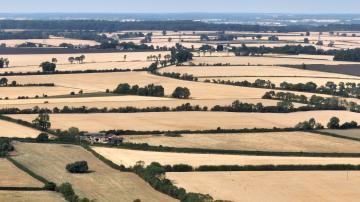
But this year “fall” may seem more descriptive than usual. It’s not likely to be  a bumper harvest of anything  after that drought nor is the economy looking too rosy. The next quarter doesn’t look like being a rich season at all.

Is Britain in drought yet? | The Times

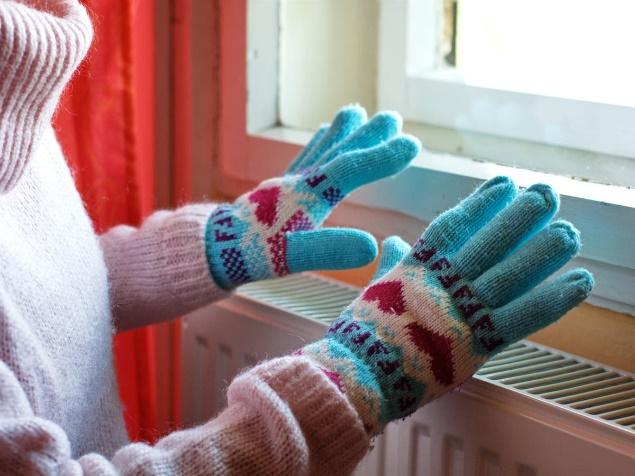
Meanwhile I’m fascinated to see how resourceful people are being. Ghastly thick knit sweaters are emerging from cupboards. Sales of foil are rising ready to be stuck behind radiators. Jamie Oliver is digging out money-saving family menus in his own inimitable cheerful way “oh my Lord – that’s gorgeous” style. We are entering a season of draught proof curtains, a season of mists and thermal underwear. 

What are warm banks and why are they opening? | The Independent


“Warm banks,” we’re told are to be set up in art galleries, museums and libraries to help people unable to heat their homes as energy prices soar. The Guardian reports that pensioners in Swansea are buying books from charity shops for just a few pence each and taking them home for fuel. With temperatures plummeting and energy costs rising , thick books like encyclopaedias are particularly sought after.

A certain, not entirely surprising, mood of hysteria has swept through  the British media as we await a new Prime Minister and cabinet. This is beginning to feel not like the fall of leaves but the fall of something more important. Like the fall of the Roman Empire. 

The Fall of the Roman Empire (1964) Poster #1 - Trailer Addict

The fall of assumptions that this good life we’ve been enjoying for so long is a given. Or the fall in a more biblical sense. There’s a song by The Little River Band (1978) with the lines

“I tried to explain our fall from paradise was meant to be

 it's written down for all to hear, there's not much time, the time is near “


Yes….something like that. We all probably feel that maybe it was all too good to last. Like a bull market. But we have those pragmatic series of energy saving and money saving strategies and one other thing. Optimism. Not the media who are predictably downbeat. Walk the streets of Brighton on Saturday and it’s a cheerful place. I remain astonished by how resilient and good humoured people are.


Finally a personal fall, spectacularly, from a ladder in our garden two weeks ago. I ended up with possibly cracked ribs and general aches and pains but, do you know, I really see the funny side, the Chaplinesque absurdity of my doing something really stupid and avoidable.

Safety Guidelines for Working with Ladders – SafeStart


So welcome to fall. We shall survive. And we’ll help those less fortunate than us as we always do. Happy soft landings.


Monday, 16 August 2021

IT'S THE SILLY SEASON AGAIN (AND WORSE)

They used to call August the silly season. 

Well, like Voldemort in the Harry Potter novels, it’s back. After months of competitive Covid with us out-vaccinating the EU (especially France) only to discover their infection levels are still below ours because of their more stringent controls - we’re now all talking about other things.

Anger however remains especially the rage of the anti-vaxxers who’ve convinced themselves that Covid is a conspiracy by global governments. In Brighton they attacked a vaccination centre forcing it to close. But here’s a nice story (for a change) from Russia. A 70 year old hermit whose 20 year life of isolation was induced by his dislike of society,  has come down from his cave to be vaccinated saying it seemed the sensible thing to do.

But anger has its place. Anyone who isn’t angry about the allied forces intemperate evacuation of Afghanistan and the potential harm this is bringing especially to its women is insensitive. It’s cruel that we’ve abandoned so much good work and hope.

We hear many more  children than usual have done well in their recent exams and that this grade inflation at A level and GCSE has enraged many. That’s ridiculous. Unlike Afghanistan this isn’t about life and death. So well done guys. And there’s more good news (unless, of course as a parent,  you’ve shelled out getting on for £ ½ million on your child’s private education to give them an edge in life). This is that the percentage of State Educated children getting into Oxbridge has gone up. So for you young Etonians with your A*s this must seem a silly season! This is diversity Britain and you can’t buy success easily anymore.

And talking of Etonians and buying success what a continuing dismal (and actually tragic) story is that of deluded David Cameron. He’s reputedly worth £40 million and has earned around £10 million from his Greensill Capital directorship, £800,000 for his book and £120,000 for each speech he makes. It seems his energy is focused on making money and now it’s coming home to plague him. In the silly season his pecuniary exploits (book or business), at neither of which he’s particularly excelled, will I suspect increasingly be in the spotlight. He’s always seemed to be effortlessly able until now. As Warren Buffett said:

“It takes 20 years to build a reputation and five minutes to ruin it. If you think about that, you'll do things differently.” 

My mood lightened recently when driving through Ditchling a Sussex village, the traffic in which suddenly becomes single-lane. In a moment of PG Wodehouse inventiveness, I exploited what I’ve called “the pre-emptive gratitude”. Quite simply on seeing a gap whizz into and through it smiling and thanking the previously oncoming traffic effusively. They will respond to your beaming thanks in kind. Silly but it works – maybe only in August . We’ll see.

Meanwhile the “say no to H20” brigade in America are at it. Here’s a comment in the magazine the Atlantic:

“12,167 hours of washing our bodies. That’s how much life you use, if you spend 20 minutes per day washing and moisturizing your skin and hair (and you live to be 100, as we all surely will).That adds up to nearly two entire years of washing.”

Apparently a lot of Americans agree and are avoiding washing.

‘I don’t smell!’ Meet the people who have stopped washing

Silly season? It’s the first time for ages when the media is crammed with strange stories. Is this normality? No just seasonal silliness I suspect.

Monday, 26 April 2021

BANANA SKINS

 I love banana skins

I’m not alone. It’s the minor disasters like throwing your car into Reverse rather than Drive and accelerating not as a prince of the road into a gap in the traffic but reversing noisily into the parked car behind. Doh!

A while back on a freezing winter day the banana skin became black ice on to which I confidently strode and my feet flew from under me pitching me on to my head. Fortunately, my hair hadn’t been cut for ages and it felt like falling on to a soft well-stuffed cushion. 

It’s the banana skin phenomenon that made The Play That Goes Wrong such a hit. But when it goes wrong for the high, mighty and humourless it’s best of all. Quentin Letts in the Times described a virtual International Earth Day conference of the Global Heads of State.  It was a techno-catastrophe from start to finish.

Kamala Harris, US Vice President, had voice feedback so every word was broadcast twice making her sound like the tannoy announcements at Paddington Station. Several speakers were on intermittent mute. The Chinese President was interrupted by a loud electronic pipping sound. The Japanese President spoke so fast the translator couldn’t keep up and had to be replaced. Best of all the President of France was introduced and on screen the President of Indonesia appeared, was swiftly removed and replaced by Vladimir Putin. He scowled (as he does) – silence – background technician mutterings (poor technician when Vlad gets hold of him). The rest was chaos – coughing fits from Brazil and scripts being flung about. It was, Letts says, the presentation from hell. Strangely it sounds great to me and a perfect depiction of the diplomatic status of our world right now.

Banana skins continued with a mass of bits of media advice on how to be greener. We’re told a glass of milk is much less green than a glass of wine. Great news but elsewhere I hear wine is “liquid fat” and we must reduce our alcohol intake to under 14 units a week. Who makes this stuff up? At 14 units the story is “Watch out! You are drinking at levels that could put your health at risk and you would benefit from cutting down.”  

There’s a depressing sanctimoniousness about a lot of medical advice unless you go privately, of course, in which case the classically suited medic says “I’d keep it under a bottle a day old boy unless it’s a fine claret if I were you”. No banana skins in Harley Street. 


Banana skins follow our Prime Minister around. We all recall him being stuck on a zip wire during the 2012 London Olympics – “this could only happen to Boris” was the good-natured response. And his zip wire performance continues now. At that mad conference he said “eco-politics should not be seen as bunny hugging” (what does that mean for heaven’s sake you pillock?). The banana skin was suffered by the sign-language interpreter who baffled had to resort to a Bugs Bunny ear-flapping gesture.

The big banana skin moment of the week was the fiasco of that calamitous launch of a Football Super League. J.P. Morgan who had been backstage orchestrators had a Ratner-like omelette on their face. And the owners of the clubs found to their mystification that they didn’t really own the clubs at all…they merely funded them. We should expect them to start selling players soon to fund their own dividends. 

I fear the “beautiful game” is about to turn very ugly. Not so much a banana skin story as a tragedy.


Monday, 4 January 2021

LOOK TO THE FUTURE NOW, IT'S ONLY JUST BEGUN

When Slade first sang this iconic Christmas song in 1980 it was against the background of the worst recession for over 30 years, inflation of 18% and mass unemployment. Slade’s lead singer, Noddy Holder, said it was their attempt to cheer up people and get them to visualise a better future. It’s how we need to begin 2021 when all many see is Casper David Friedrich’s extraordinary painting ‘The Sea of Ice’ (1824) depicting a shipwreck in the Arctic where the ship has been overwhelmed by a compressed mountain of ice.

Where are we? 

Intriguingly we moved up to 5th in Global Economic League of 2020 (source: IMF data from 2019) mainly because India’s economy did so badly. The top ten are shown below and in bold on the right the ranking of each of the top 10 in the 2020 Global Happiness League (source: United Nations/Gallup).

Economic rank

Country

GDP (US$ trillion)

Happiness rank

1

United States

20.49

18

2

China

13.4

94

3

Japan

4.79

62

4

Germany

4.00

17

5

United Kingdom

2.83

13

6

France

2.78

23

7

India

2.72

144

8

Italy

2.07

30

9

Brazil

1.87

32

10

Canada

1.71

11


Despite our problems we seem to be doing well. People like being British more than say the Germans like being German or the French are content with being French. So much for those lamenting how wrecked we are. But let’s not get complacent – there’s a lot of work to do.

What do we want to become?

Increasingly it became clear that the Brexit argument was not about negotiating a trade deal but about who we want to be. Like it not Brexit is done.


‘Sovereignty’ (which, allegedly, whenever he heard it used - which was often - reduced the European Commission's Head of Task Force for Relations with the United Kingdom, Michel Barnier, to uncomprehending rage) was the core issue for the Brexiteers. They believed we needed to feel free, to be on our own, to control our ‘identity’. 

Which is what? 

That’s the problem. No one seems to have nailed this down. Over Christmas I read an engaging book by Cees Nooteboom called ‘Venice. The Lion, the City and the Water.’ In it he quotes academic and author, C.P. Snow, from over 50 years ago, comparing the history of Venice and Britain:

“The Venetians  knew, just as clearly as we know, that the current of history had begun to flow against them. Many gave their minds to working out how to keep going. It would have meant breaking the pattern into which they had crystallised. They were fond of the pattern, just as we’re fond of ours. They never found the will to break it.” 

Which is why “getting back to normal” has always seemed to me such an anathema. We’ve has a far bigger shock to our economy in 2020 than any for around 300 years. GDP fell by 11% (only Argentina did worse). The Government has categorised swathes of what many thought made life worth living as “inessential”: bookshops, theatres, concerts, restaurants, hotels, travel, museums, sport and hugging.

That pattern of normal that’s crystalised in Britain needs breaking because as things stand we shan’t be Good Britain (let alone Great Britain after the Covid crisis ) unless we make some hard choices about where to focus next.

More good news

We have a certain inbuilt resourcefulness and resilience that we saw in action in the 1980s.  That’s when creative industries thrived most and our entrepreneurial boom began. We need more of the same. Much more. 

We need to become Silicone Island (we’ve already made a promising start in boom sectors like gaming) and the big techno-giants are investing in huge look-at-me HQs in London employing talented young people whose ambitions for independence will outstrip their employers soon enough. 

In film, music, fashion, theatre, literature, events, environmental technology and restaurants we have the talent and capacity to continue leading the world.  Treat these half as seriously as we treat fishing and the rebirth of  tourism and the hospitality sector will follow. By looking to the future and reinventing rather than restoring what we once had we will have a great opportunity to create important global businesses.

Pricking the Covid Bubble and learning some lessons

Lessons we must learn as the vacillating vaccination programme trundles through 2021 are:-

i) How to manage risk well. We’ve flip-flopped from reckless to paranoid in 2020.  We cannot and should not completely avoid risk. We just need to manage it and mitigate it. Risk management is a key theme for the next decade.                                   

ii) There are going to more Covids – this one was just a dress rehearsal. We need to invest in planning protective measures for round two and three now.

We need to think the unthinkable. We need to re-think education and examinations, hospitality, cities and towns. As Shopping Centres become increasingly defunct with old shopping venues like Westfield emptying of tenants the opportunity for creating world-class entertainment centres and tourist magnets exists. Time to blow away the dust of uncreative, profit-focused and old-formula thinking of developers and landlords.

Economists are always wrong

That’s one thing to be sure of. The fallibility of economists. So far I’ve heard two rock-solid predictions from them. First that we are on the brink of a boom the like of such we’ve never seen before, thanks to all that cash poured into the ailing economy to keep us afloat. Secondly, we’re doomed. Double dip recession, raging unemployment and company failures on an epic scale.

Long experience suggests it’ll be neither but a mixture of both - the first half of 2021 a storm to make 1980 look like a breeze but with boom sectors emerging in the second half with possible strong resurgence in some sectors. But the scale of sustainable growth will not depend on economics alone. It will depend on people.

So how do we feel? How will we react?

We learnt some strangely alien habits in 2020: working from home, missing those ‘off the record’ lunch conversations, Zoom, no informal meetings, social distancing, not being able to affirm our feelings by hugging, shaking hands or just brushing someone’s upper arm. We’ve become less human.

People are for the most part rule-abiding, well behaved and resilient. Overall we’ve done brilliantly in 2020 even if some of us feel a bit robotic sometimes. There’s a problem though. The excess of information, astoundingly clumsy communication from Government and the conflicting views of experts have made us, most of us, cynics about our leaders and about Professors, Doctors and other “important people”. Cynicism and a profound distrust of government is the biggest negative legacy of Covid.

I think the quest for transparency and full disclosure has damaged us all. Life is too busy and our individual tasks too demanding and important for us to spend our energy on subjects we don’t and never will understand. Social media has become a disruptive and corrosive influence in this respect so it’s interesting that a lot of young people I know have abandoned it completely as a time-waster.

Ultimately how we feel is mostly up to us but we can feel better just by looking at the future and determining that we, not a grey shroud of characters we call “they”, will shape our future.

A cautiously optimistic expectation

I believe in humankind, in our ability to help each other, to do creative things, to invent new ways of improving the world in which we live. We’ve just undergone what we can describe as global chaotic incompetence or, from a more optimistic perspective, a phase of “creative destruction.” No longer are we in an era of business as usual. The game has changed and all the pieces – education, housing, government departments, shopping, working, taxation, the environment and yes even the NHS – are in different places, in different shape and all need to change and be changed.

But this will take time. Consistently we’ve been promised quick fixes. It’s time to think longer term and forget tomorrow’s headline. Time to start under-promising and over-delivering. Time for calm and patience. Time for ambition, sure, but not for being reckless.

This could be the most exhilarating time any of us have seen for 40 years or longer.

Welcome to a truly Brave New World. 


Monday, 14 September 2020

SUNSHINE, LOLLIPOPS AND RAINBOWS...

This 1965 Lesley Gore song kept on coming into my head this week on my relentless crusade to cheerfulness. But even I have to admit the next line was rather cheesy

“Everything that's wonderful is what I feel when we're together.”

Provided, that is, there aren’t more than six of us. I thought this rule of six was sensible by the way – six is the perfect number for a supper. But…big but… we have a daughter and son in law with three children. I plan on sitting in the car outside their house waiting for my wife (or Number Six as she is now known). 

We had a glorious week. I’m reading again, at last – John Le Carré’s latest ‘Agent Running in the Field’ and ‘Hamnet’ the prize winning novel about Shakespeare’s son who dies when he was 11 by Maggie O’Farrell. 

I’ve walked – not much but the armchair is beginning to regard me now as something of a stranger. We’ve flirted with the idea of a lightning visit to Venice but the risks, as Covid spikes suddenly all over Europe, just seem too great and too unfair. Anyway what’s Venice like right now? 

Clear water in the  canals, emptyish squares. Venice as it was 50 years ago. But public feelings are running high. We read about a young German tourist who tried to board a vaporetto at San Zaccaria near San Marco…without a mask. Here are the rules in Venice and all Italy: “In Italy, masks are mandatory on all public transport, as well as in enclosed spaces. They must also be worn in outdoor spaces between the hours of 6pm and 6am.”

He was seized by outraged passengers and thrown off. Three times he tried to board and was beaten up each time until, bewildered, he fled. 

So instead of us going to Venice, Venice came to us. I decided we should have Fegato alla Veneziano – Venetian style calves liver strips in onions. If you don’t like liver you just won’t understand. Cin Cin. Yum Yum.

We also went to the glorious Leonardslee at Lower Beeding and drank in the tranquillity and glory of their trees especially those glorious Redwoods. So tall they put everything into perspective. It was like giving your soul a languorous, hot, soapy bath I suggested. My wife eyed me suspiciously at this with a “have you been drinking again?” look. So I modified it to “Pleasant here isn’t it?” Suspicion allayed.

My joys of the week were, first of all, the threatened prospect of the Shetland Islands declaring UDI and leaving Scotland. With a population of just 22,000, GDP over £1 billion, per capita income over £38k, rated the 3rd most desirable tourist destination by National Geographic Magazine, having a huge fishing industry and oil reserves shoving it up alongside Norway this is such a great story. Not for Nicola though.

My second was to learn very belatedly that John Lennon had a lengthy affair with Alma Cogan singer of songs like ‘You must never do a Tango with an Eskimo.’ Imagine! 

My week like all weeks had its lows as well as highs. The first was the reaction to the US election with so many people lamenting even the possibility of Trump winning again.  Why I asked if you all cared so much did you end up with a potential loser like Joe Boden, nice man as he may be? I felt vindicated as, in the polls the Latino vote in Florida seemed to be slipping to Trump. But I also felt sad and irritated. With the lead they had months ago this is the Democrats election to lose. And it’s getting closer.

Secondly it was the horror show of Philip Green in shorts on his monster yacht. Men in shorts seldom please the eye. Philip least of all. 


Monday, 15 June 2020

PUSSY CAT, PUSSY CAT WHERE HAVE YOU BEEN?


In our garden. On our plants. That’s where. Constantly. Last Thursday on my thriving Pulmonaria - all over its glorious leaves. A spectacularly loose bowel movement. Until recently I have never been ailurophobic (fear and loathing of cats). In my life I’ve had a total of 13 cats the most outstanding of which was a long-haired tabby imaginatively named Pussy.  But I have recently become a cat loather as I watch them slink with an unmistakable pre-lavatorial gait towards our recently stocked garden.

Enter technology. I have just purchased two waterproof, high-power, ultrasonic-lazer-light- flashing cat-repellers. This adds to the cat deterrent pepper-powder.


I confess I’ve become obsessed with cats, with toxoplasmosis a particularly nasty feline-feces disease that’s more frightening than Covid 19. It’s a feline trademark virus that will give you headaches, confusion, poor coordination, lung problems that may resemble pneumonia and blurred vision. Hang on. I have most of those already.

Cats aside, aren’t we all becoming a bit obsessed? Since the end of March we’ve been locked-down, switched-off and living performers of Groundhog Day, the film where every day is the same and you can’t get away. 

Most of my life I’ve been regarded as being energetic, spirited and upbeat. I’ve espoused the cause of banishing negative thoughts. I’ve even seen some positives coming from the pandemic – a growing support and understanding of climate-change, an improving sense of community, a scepticism about buying solely on price, a burgeoning support for local rather than global and, of course, an intensifying hatred of cats – did you know they kill 27,000,000 birds a year? Bastards.


But being upbeat is a pose hard to maintain when we watch a collision of racism, right wing extremism, incompetence in government – yes crude incompetence is always depressing – and a growing sense of nations simply growing apart, the EU and America collapsing politically and the currently widening divide of rich and poor. As I write this I hear the roar of crowds of 10,000 in Brighton affirming their support for the importance of black lives. 

Black lives matter. So do all lives. Because people matter. Love of mankind matters. In the hysteria of crowds this somehow gets obscured. Protest marches and mass rallies fill me with despair. I thought we’d solved a few issues but the scabs of healing wounds are being scratched off again.
 

Back to upbeat. 
 
Someone said what should we do? Create a movement I said (no mass rallies) whose mission is “to think the unthinkable and the unthought-of and recreate your business and your life”. They thought this rather ambitious but if we don’t try this this really will remain Groundhog Day.


I actually think we can do it – that we have no choices with a 20% decline in GDP. Mass unemployment and company failures will follow but new, brighter businesses can be created. Think Silicon Valley, think advertising in the 1970s, think about the future not the past.

And do not get a cat.

Monday, 20 January 2020

CARRY ON WORRYING

The funniest  film they never made would have been about hypochondria. I speak with great authority. Had there been a degree course in the topic when I went to University, many years ago, I should have certainly got a first, and for my piteous groaning, a straight alpha. Compared with many my health would be judged as pretty good but deep inside I know I am on the brink of some obscure ailment. And of course I also regard this as being quite funny too. I may be a hypochondriac but first of all I’m a comedian.

Since early this year I’ve had a wheezy cough and cold which has been disabling . As I’ve piteously groaned in bed taking to heart the medical advice that to recover I must rest and checking my temperature with a thermometer that is clearly under-reading,  I reflect on health.


A new coronavirus has hit Wuhan in China (some 800 km. west of Shanghai). It’s linked to Mers or Sars and there have been an estimated 1700 incidents and a few deaths.  I’m pretty certain this is a mild strain of what I’ve just had. I applaud my own courage and return to reading my latest copy of Undertakers Weekly.


Generally world health is improving dramatically. Recently I read that the average human temperature, which today is 37C, was probably 1.5C higher in 1800. As the planet warms, humans cool. This is probably because our immune systems are less frenetically warding off a host of infectious diseases like tuberculosis, malaria, measles and so on. Additionally our ancestors had inflammation in their bodies producing proteins called cytokines that ramped up the body's metabolic rate, thus generating heat.


Our temperature controlled lives, mostly at around 20c indoors, means we have less need to heat up which is yet another factor.

So Dickens, Keats, Shelley and the rest were “hot” and unwell most of their short lives. Dickens, that inveterate night walker, often covering 20-30 miles in a walk describes illness in a way with which we can identify. The description of Joe the Fat Boy in Pickwick papers has led to medical analysis up to 160 years later into narcolepsy. Being slightly unwell may not be a deterrent to creativity and success.  Byron at 36 found therapeutic bleeding weakened  him when he was ill, persisted and so died. But he got quite a lot done in his short life.


I’m feeling rather better already but I keep on recalling Mr Woodhouse the father of Emma, Jane Austen’s heroine, whom she described as a valetudinarian – the only time I’ve ever seen that word. It means a person who’s unduly anxious about their health.

C’est moi.

We’re  all getting healthier but also getting more anxious. About our weight, about our alcohol consumption, about our state of mind and  about newish causes of death – sepsis now exceeds cancer as a cause of death.  All I can advise is, if in doubt, rest. And stop worrying…….Goodnight. 


Wednesday, 1 January 2020

DON'T STOP THINKING ABOUT TOMORROW

A recent TV programme about Fleetwood Mac was a story of extraordinary, timeless brilliance. A high point for me was John McVie, the bass guitarist who, like so many of his generation, had been addicted to booze and other substances. When asked what he made of the song ‘Don't stop thinking about tomorrow’, allegedly a sermon written for him when at his lowest ebb, he said:

‘I never looked at the words … my only concern ever was to maintain the rhythm.’

This song was the theme music at the Clinton Inauguration Ball in 1993. 

“Don't stop thinking about tomorrow
Don't stop, it'll soon be here 
It’ll be better than before
Yesterday’s gone, yesterday’s gone”


Good advice to all of us as we move into 2020. The past two decades have been full of ill humour and rancour, short termism and being in thrall to high tech stocks.

A few things on my mind right now are all about tomorrow:-

What sort of world do we want?
What sort of work do we want to do?
In what sort of ways do we what to communicate to each other?
What will success look like?

Who are ‘we’?

The most striking thing about the yesterday that’s gone has been our failure to listen to each other. In this ‘woke’ world if we don’t like what another says we go ‘la, la, la’, cover our ears and refuse to hear unpalatable views. By 2030 those who are currently millennials will represent around 40% of the UK population and two thirds of the electorate and will be defining our world. They will be the key we.


Millennials are, in the main, the kindest and fairest generation we’ve seen. They haven’t  been imbued in red-blooded capitalism as we were. They don’t regard property ladders, car ownership and materialism as very much to do with them. They travel more, have less interest in ‘stuff’ and more interest in espousing worthwhile causes and in fixing iniquities. But don’t be fooled. Millennials want to create great, thriving businesses too.

Unless we listen to them (and they to us) we shall get in a mess. Me? I’m in listening mode, hopeful that things will be better than before and that the voices of sceptics and doomsayers will be quelled.

What sort of world do we want?

The emerging generation wants to build a circular economy, eliminate waste and stop global warming. Any manufacturer or a marketer should realise the entry-ticket to avoid being cold shouldered by your consumers is to have positive values about sustainability.

So environment is the number one issue.

The ability of young people from all parts of the world to talk to each other, develop common themes on this and hear what the other is saying – Russians, Chinese, Brazilians, Germans, French,  Americans, Africans – is fundamental and the glory for us is the primary language of communication will be English.


At the same time there’s an increasingly strong sense of home and a need to get home whenever you can. To our local communities which are buzzy, have self-sufficiency and their own character. Expect to see a continued revival in local pubs (it’s already happening.) But these pubs need to become proper communal hubs not just boozers. Centres that are repurposed to bring people together – we all know places this.

If we’ve learnt nothing else from the Brexit Struggle it should have been the passionate sense of Englishness many feel (and Scottishness – increasingly that - Irishness and Welshness). This is in our DNA – awkward, home-loving and resourceful. This is not a nationalist ultra-right feeling but a warm ‘my town/my home/my team’ feeling.

The compass points north now. Watch the increasing importance and effectiveness of City Mayors (Manchester and Birmingham stand out) and the trend to devolving power to the regions.

In the next decade the centralisation of the past two decades will, I believe, be reversed and local communities will thrive. We’ll see the disappearance of big and unwieldy out-of-town shopping and an erosion of retail chains. Online shopping will plateau and local high streets will be fashioned to appeal as destinations to wander through like the North Laine and South Lanes in Brighton, the Shambles in Chester and the Pantiles in Tunbridge Wells.

Independent specialist shops will become the thing. This trend will change our lives because big is not always beautiful and the economies of scale are often questionable.

What sort of work do we want to do?

In a recent survey 70% of millennials said they wanted to start their own business;  women are doing the same as their family grows up and if you’re 50 and voluntary redundancy is available you may do the same. There is a ‘Start-Up Revolution’ starting in the UK.

The British are not easy employees. The styles of management and leadership taught by business schools already look out of date and are likely to be counterproductive. It’s not just that the millennials and others want independence so much as their having an aversion to being told what to do. They will keep the reiterated ‘why?’  of young children. ‘Because I said so’ or ‘because it’s company policy’ won’t work in the future with such free spirits. As employees they have that British awkwardness and rebelliousness. Recently I was told about a Global CEO visiting R&D teams in the UK and USA. He said :

“We have a problem and we have to find a solution to this problem in six months”

The UK team said:  “Hmm! Unrealistic. Bad brief. Can’t be done”
The USA Team said: “Great brief. Super challenge. We’re on it.”

Six months later the UK reluctantly presented three viable and extraordinary solutions. The US Team had nothing but warm words “great work in progress.” We deliver, albeit  often with rather ill grace.

Two recently coined acronyms in the Times last Saturday SSDD and ADOH = "Same Stuff Different Day” and “Another Day of Hell" which describe how many feel about work. Yet it needn’t be like that.


There are increasing opportunities to create new businesses which have superb, responsive customer service. Not everything should be high tech.  Bigger opportunities for many are in creating new drinks, foods, clothes, recycling and lifestyle regimens – from dieting to exercising to self-improvement to services for busy confused people. Whatever else, people want to be a bit creative not just anonymous elements in a repetitive process.

Money will no longer be a prime motivator. Research shows more people want to leave a legacy and make a difference rather than simply be rich. If being rich is to be like Philip Green and Alan Sugar, forget it. Neither are appealing role models for 2020.

What sort of ways do we want to communicate with each other?

Has social media been the biggest tool for advancement in the 21st century?

It’s made the cost of entry into a new business low. It’s brought people together. It’s (theoretically) made us more efficient. It’s helped create friendship groups and been a tool for raising money for good causes.

It’s also a huge waste of time.

Increasingly young people come off Facebook, Instagram and Twitter because social media’s taking more from their lives than giving to their lives. 

I suspect we might see a revival in good writing paper. Could the letter have a renaissance? Not “snail mail”, as it was described by geeks, so much as “great mail”.  A crossover product which reintroduces handwriting is the Moleskine Smart Paper Tablet and Pen Set which allows you to share doodles and notes by e-mail but without the character-reducing format of ordinary type; just in your own characterful hand.


I believe social media has peaked. Face-to-Face is more rewarding than Facebook. The issue that tech has is explosive growth followed by a downside of fast decline where user migration becomes pandemic.  Witness My Space. Witness Fortnite.

What will success look like and when?

Success is going to look different that’s for sure.

For ages the Treasury has been lamenting our appalling productivity in the UK. Yet does it really matter? Are we measuring the right things? Are targets and KPIs in the NHS or other public services appropriate?

Increasingly the World Happiness Index is seen as more important. If we are valued and enjoy what we do we’ll be more productive. Britain comes 15th out of 156 countries in their 2019 league table. Finland comes top.

15th isn’t bad; it’s ahead of Germany, France, Japan and the USA. Britain is good at putting itself down.  But it has plenty to be proud of like the best Universities, our record in the creative industries, in the financial sector, a non-stop inventive success story, having the world’s number one city, producing the world’s leading film and theatre actors, writers and technicians. And lots more.

We have success now. We have the talent to do more.

What real success in the future will be is in feeling more united (more Team GB),  in lifting living standards (for everyone), in being a magnet for global talent and in creating a race of creators and optimists.

2020. Don’t stop thinking about tomorrow….there’s plenty to look forward to.

“It’ll be better than before
Yesterday’s gone, yesterday’s gone”