Showing posts with label leadership. Show all posts

Monday, 2 January 2023

IS IT MAYDAY, LACKADAY, OR HAPPY DAYS?

 Is it Mayday, Lackaday or Happy Days?

Things aren’t going so well in the UK.

We’re getting close to panic which would mean crying “mayday.” We’d prefer to be regretting where we are but putting up with it which would be “lackaday.” But “happy days” are some time in the future I’m afraid.

It’s become something that’s up to us to deal with – you and me - in the absence of the prospect of any kind of strategic leadership from the embattled government and hesitant opposition. We’re in, as I’d call it, a “leadershit crisis”. 

Your deeply held beliefs may just be wrong – 5 essential reads

So what can we do? Get angry, get involved, make a noise, talk to other people about it, meet and quiz our MPs, but, most of all, conduct our businesses and affairs in a much more resolute and positive way. Finally try to ignore all the media because with their short termism and over reaction they get in the way of progress.

Here are my ten personal strategies to consider in making us feel a little better:

  1. Resilience. We need to build our resilience to setbacks. In retrospect the reactions to Covid were excusable as nobody quite knew what we were dealing with. But the lockdowns have had an irreparably negative impact on our behaviour and our response to risk. We seem to try to avoid it totally instead of trying to understand it and manage it. We cannot thrive in a “cottonwool” world. But that’s what we created between 2000 and 2022. We simply  mustn’t do that again.

humans - A society wrapped in cotton wool - Worldbuilding Stack Exchange


  1. Optimism and positive thinking. By all means let’s be optimistic. Being upbeat is good, but we shouldn’t get drunk on optimism. Boris Johnson had only one gear which was “boosterism” and self-promotion.  As PM it didn’t work, couldn’t work and he became a shameful figure. He’s given optimism a bad name.  Tough but positive thinking is a more acceptable  way of describing optimism right now.

Boris Johnson is Labour's greatest asset – why not sit back and enjoy the  show? | The Independent


  1. Realism. The journalist Matthew Parris is often wise and his plea that we squarely face up to painful truths about taboo subjects like the NHS, are words of wisdom. We  can still be positive in the face of danger (apart from many politicians who seem terrified of the whips, number 10 and losing votes). Getting to the truth, painful or otherwise, is always our strongest way of solving problems. 

Louis Partridge on becoming Sid Vicious in 'Pistol'


  1. “The people” can be wrong. They were wrong in 1933 in Germany and in the UK in 2016.  The lesson of Brexit was assuming a democratic vote was stronger than truth. Too many of us accepted the will of the people ahead of the lies they were fed. Worse - the issue was too serious for a weak Prime minister to rebut so he didn’t fight the nonsense. We’ve suffered deservedly. But being intelligent and pragmatic we can resolve the issue. Being smarter economic partners of Europe would be a sensible start to recovery despite the crossness that would get from ardent Brexiteers.

350m Brexit claim was 'too low', says Boris Johnson - BBC News


  1.  It isn’t easy. Spurn people who offer what I call “superglue solutions,” solutions that work instantly and apparently permanently. When anyone says “it’s very simple, quick and easy to fix” disregard them. My wife says I used to say this a lot. No more. Life is just a little bit too complex now as Ms. Truss discovered to her (and our) cost.

Loctite Original Universal Super Glue – 3g Tube. | Superglue | YPO


  1. Momentum is vital. If you’re in business try to create momentum and a sense of movement, news and action for your brand and your company. If you aren’t in business just refuse to get stuck in a rut. In business, momentum is something the big “supertanker” businesses find hard to create. So beware if you’re a big “supertanker” brand or market leader. Watch out for competitive, nimble destroyers, small and agile craft who have less to lose and lots to gain. 

sonic faster faster by XAMOEL on DeviantArt


  1. Get to work. I’m currently reading more about our mental health than productivity. Yes, of course mental health matters but so too does productivity. Since lockdowns my sense is we’ve become just a bit lazy. After Covid the people  who were economically inactive grew significantly, many of whom were unlikely to work again. Many of these had long term heath issues but many didn’t. Surely we must all improve our work ethic to make ourselves more successful.  

The 'Work Hard & You'll Succeed' Mantra is NOT a Myth - The STRIVE


  1. Your customers – love them. The customers you have or have recently gained are more precious than those you hope to get. Customer loyalty is a prize too many businesses disregard (to their cost). Loyal customers need special attention especially when, as it is now, the going is tough for them - as well as you. Don’t relax your love, care and attention for them. They need you, not just your products. The harder you try to build your relationship with them the more of them you’ll keep. On a more personal level don’t take anyone for granted – your spouse, your relatives or your friends. It’s time to refresh friendships.

Love your customers, more than your products." | ADITYA BHAVSAR


  1. Be better not wacky. We hear a lot about the need for innovation nowadays, probably too much talk and not enough action given our collective, dismal track record in investment. But continuous improvement (this is the Japanese concept of Kaizen which stands for continuous improvement through evolution not just innovation) is what we really need. Breakthrough innovation is unusual and often resembles a solution seeking a problem rather than vice versa. Let’s focus on getting better not just getting interestingly different. After all “New Improved” has always been a compelling sales claim.

New Improved Rubber Stamp Royalty Free SVG, Cliparts, Vectors, And Stock  Illustration. Image 68343977.
  1. Make a resolution. 2023 should be our year for breaking the insidious grip of “doom-loop thinkers” with our own tough, positive thinking – “pragmatic optimism” if you like to call it that. It’s not the year to retrench, slow down or seem weak. One of the long term effects of Covid has been to undermine our ambition, make us lose our nerve and leave it to opportunists to make money. Happy Days will come, possibly by 2024 if we manage to be resolute, invest in the future and have self-belief in what we do. And remember pragmatic optimism. Pessimists just hate it. But so do competitors. On the other hand those close to you at work or at home should love it. 

Becoming A Pragmatic Optimist


         Happy New Year and remember hard work works.


Tuesday, 20 September 2022

MYTHS ABOUT LEADERSHIP

 I’ve always been an agnostic about the importance of leadership. Too often an autocratic leader like Fred Goodwin or Bob Diamond (respectively one-time CEOs of the Royal Bank of Scotland and Barclays) led their business close to destruction or ignominy. 

Fred the Shred wasn't all that bad, says RBS boss | Scotland | The Times

People have fallen in love with the idea of the “Leader” – the Mao, the Stalin. People who get things done. That was Boris Johnson’s claim – “Get Brexit done" except it’s getting undone messily unless the Irish Protocol is sorted out.

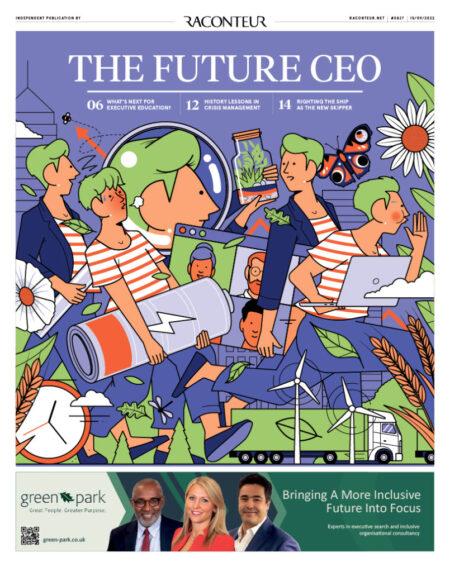
Actually I’m more than agnostic. I’m enraged by power seekers who muck up things steeped in their own self-worth. Putin does that, Xi Jinping does that, Trump does that. Yet the mythology continues. Last week buried under beautifully written royal tributes in the Times what they call “Raconteur” had a section on “The Future CEO”. 

Future CEO 2019 - Raconteur

It did not make riveting reading. Most of all I found it rather mechanistic MBA stuff when really what the leadership role is, as Jack Welch CEO  of GE said (the most sensible thing he ever said in fact):

“When you were made a leader you weren't given a crown, you were given the responsibility to bring out the best in others.”

If as a leader you were to do nothing else that’d be enough. It’s what we want from any manager of a sporting team. When they stop doing that they stop being a meaningful leader.

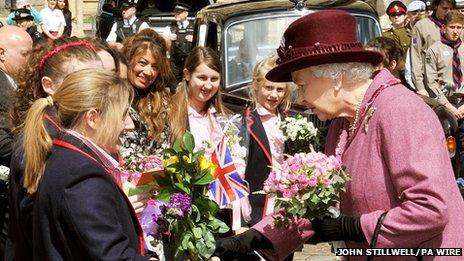
Emma Duncan recently wrote an interesting piece about the quiet leader. She reflected that Queen Elizabeth rarely put a foot wrong because she was very cautious about where she put her feet.

Diamond Jubilee: Queen takes Windsor walkabout - BBC News

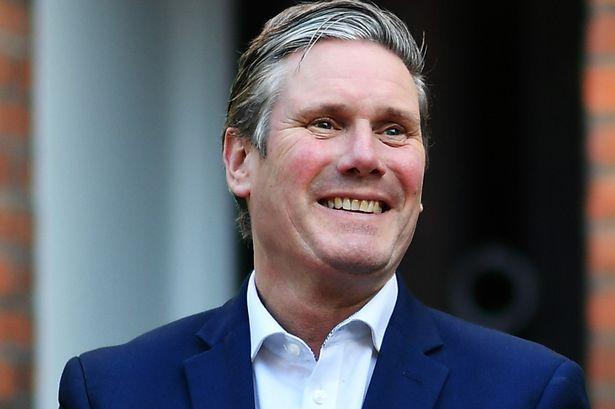
She was often quite dull. “Have you come far?” became a joke but she was always there smiling and being available. In private she was witty, I believe, and a mischievous mimic. She did her job quietly but her presence now, suddenly removed, has led millions to understand what she meant to us. Emma then compared her style to that of Keir Starmer who whilst a calm, sometimes dull, performer in the House of Commons is good company in private and, I’m told by those who’ve met him, “is very impressive.” Maybe bringing the best out of a talented Shadow Front Bench is what we need from him. More Atlee; less Churchill.

Keir Starmer: Boris Johnson made promises about reopening schools and broke  them - Keir Starmer - Mirror Online

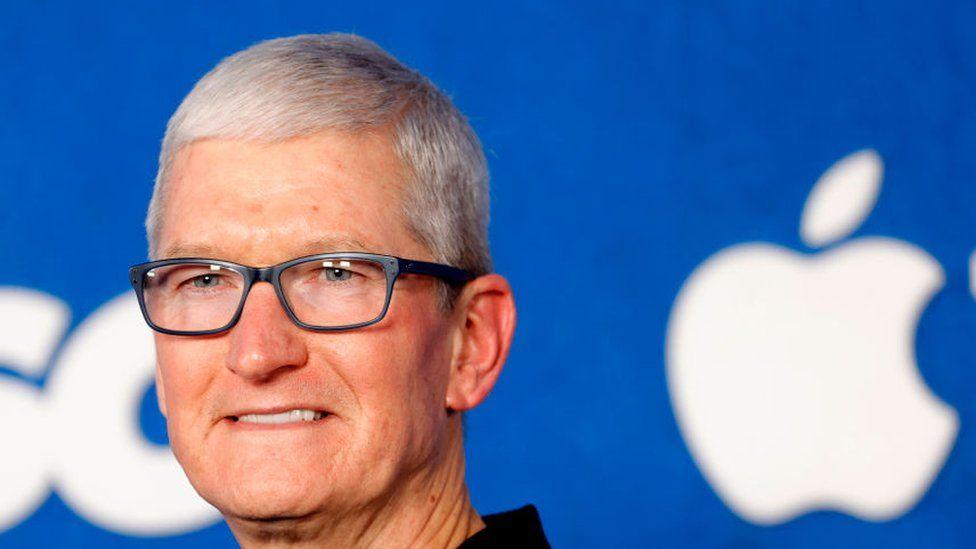
Yet I keep on hearing people talking about the need for charisma, presumably to wow the floating voters or, in business, the markets. I also hear people say the down to earth Stephen Cottrell, Archbishop of York, is more impressive than the supposedly charismatic Archbishop of Canterbury, Justin Welby. Equally after that wayward genius, Steve Jobs, we now have Tim Cook as CEO of Apple leading the biggest company in the world which is valued at around $2.4 trillion. The most low key leader you’ve ever seen… indeed he’s virtually invisible.

Apple boss Tim Cook faces backlash to £73m pay package - BBC News

If what you want is noise, excitement but not a clue how to do anything you choose Bolsonaro or Berlusconi (note – all the Bad Boys start with “B” – apart from Biden who is coping quietly.) They make great copy so the media loves them. They ride motorbikes, scantily clad girls or their luck.

But in the world today our leaders of business, governments or global institutions have a responsibility to others not just themselves. If nothing else the Queen has taught us keeping a low profile, being available for photoshoots (lovely clothes, lovely smile) but avoiding giving them a story is a profound legacy.

“When you were made a leader you weren't given a crown, you were given the responsibility to bring out the best in others.”

Yes. That’s it.

Monday, 2 May 2022

FOLLOW MY LEADER

Leadership’s been a hot topic recently. From Boris Johnson to Joe Root. The Ukrainian leader, Zelensky, from being ignored by EU leaders has become a global hero. Mr Bean to Superman in under a month. In contrast Putin has seemed remote and callous.  But I’m not sure that’s how most Russians would see him. To many of them, I suspect he's a strong, ruthless, very Russian leader – as leaders should be as opposed to that “decadent Zelensky.”

We’re short of leadership skills here in the West. How bad? This bad. 

Watch: Did Donald Trump really walk out of explosive interview with Piers  Morgan? Here's the truth - World News

Donald Trump on Talk TV, the new Piers Morgan channel, seemed more in touch with the nasty world we really live in. But remembering the clever advertisement the Kennedy’s ran to discredit Nixon, we can apply the same question to Trump (and to Boris) “would you buy a used car from this man?”  It’s a brilliantly pointed question about trustworthiness.

A yellow stuffed animal

Description automatically generated with medium confidence

Rather than looking at today’s leaders I’ve reflected on leaders whom I’ve known in my working life. Some of them memorable for their sadistic or otherwise character flawed eccentricities. There was one who had a glove puppet who did his dirty work. “I’m terribly sorry but Sooty says you’re fired”. He was an insomniac who phoned his executives at midnight saying: “get over here now we need to talk”. Did it end badly for this fellow? No, I’m afraid he made tons of money and was hugely successful. Being nice isn’t always the answer then.

Another had a very short fuse. Following yet another row he left in such a rage that in a futile exit from the car-park he battered his car from wall to wall until it slumped clanking to the ground.

This Is The Aftermath Of The World's Most Expensive Car Crash | Nafterli's  Car World

Another had obviously read a book that said be aggressive and always interrupt and keep on prodding people until they give in. He liked holding court in ten hour meetings. Finally there was a genius who was also a megalomaniac who loved and loathed his people depending on whim. He ended up years later in prison having squandered his riches on addictions.

Many so-called leaders were in it just for themselves and let the idea of leadership go their heads enjoying the terror their presence struck in their employees.

But there were also great guys who said – when appropriate – “thank you.” People who cared about you and your family. People you liked.

Peter Mead leads tributes to David Abbott

Salute the guys who founded Britain’s most successful advertising agency Abbott Mead Vickers. Peter Mead wrote a book “When in doubt be Nice” – it worked for him and his partners. It was their creative head, Abbott, though, who crafted the culture based on being nice and being kind.  But it was also demanding and did excellent work. They were winners.

The idea of Level Five Leaders was created by Jim Collins in his seminal book “From Good to Great”. He described them as leaders who displayed  a powerful mixture of personal humility and indomitable will. Good stuff…. but leaders must be winners to survive. Winning comes first. Doing so with courtesy and thoughtfulness is a wonderful bonus.   

Perhaps the era of strong, autocratic leaders like Stalin, Churchill and Roosevelt have come to an end. But “Mr/Ms Nice Guy” can’t simply replace them. We still need tough decision makers, leaders who demand excellence and set strong examples about succeeding and growing too. We need civilized winners and better role models.

Ruth Davidson - Building a stronger future for Britain
From The Eyelashes To The Cagoule, Plus The Anti-Government Anger:  Suddenly, We All Fancy Andy Burnham | British Vogue

So, what if pragmatic, credible leaders like Andy Burnham and Ruth Davidson were running the two main parties in the UK?

Ultimately, we deserve better people like them as well as better leaders.


Monday, 26 October 2020

WE'RE NO LONGER GOLDEN

Last week I spotted a piece in the Washington Post, a worldwide poll which indicated a growing disenchantment with democracy as an effective form of government. The negative response was more pronounced amongst millennials than any other age cohort.  There was also a rising  preference for strong leadership instead of elections. It was slight in the UK, pronounced in Germany and strong in Spain, South Africa and Russia.

This is surprising given a conversation I’d been having a few days earlier about how in my youth in the 1960s  there’d been a global rebellion against the establishment. From the music revolution in the UK to the Paris riots to Woodstock to the Washington anti- Vietnam War protests in Washington to the more extreme Baader-Meinhof terrorists in Germany. Millennials were seemingly all into free love, flower power and revolution.

The words of Joni Mitchell’s “Woodstock” linger in my mind recalling that  world which was finding its voice and swinging leftwards:

“We are stardust
We are golden
And we've got to get ourselves
Back to the garden” 

We believed we were golden as the old order crumbled. 


(All shades of red above and getting redder as authoritarianism strengthens.)

Like it or not we’ve recently been swinging towards totalitarianism

Trump is not an aberration. He’s a sign of the times and of things to come. There are reactions of course like BLM and environmental activists like Greta Thunberg but they are ultimately being drowned out. People are frightened and when that happens they veer right. They’re frightened that things seem out of control. 

The second conversation was with someone who’s lived and worked in China for 20 years. He described a country where Covid is now over (no more face masks) and where the economy is booming.  The rules to contain the pandemic were and are still rigorous. Anyone – Chinese or foreign -  entering the country or returning to the country is quarantined for two weeks, isolated in a hotel room near the airport…quite a nice hotel but, nonetheless, a prison. In China no one breaks out of their bio-secure bubble; everyone obeys the guidelines and the law. One shudders to imagine how the Chinese authorities would have treated those rugby players, the  Barbarians’ twelve, who evaded their security guards to have dinner together at an Italian Restaurant on Thursday night breaking the Covid code of conduct to which they’d agreed. 

It’s behaviour like that that inspires so many people to say they want a more strict enforcement of rules and a more widespread lockdown.

China is a country without compromise when it comes to law enforcement and although the liberal in me shrinks it’s seemed to work. Interestingly within China there seems to be a widespread acknowledgement that they’d “been eating the US lunch for years” and that the election of Donald Trump was of a US President that China deserved.

But look at China today and you see the second biggest global economy emerging relatively unscathed from the pandemic that’s wrecked the rest of the global economy.

(Jan. 2019 – Aug. 2020)

China unlike most other nations has a long term strategy to achieve stability and growth. They seem intent on avoiding unnecessary trouble. When I asked about Hong Kong my friend looked puzzled – “well that’s all over now. China is in charge. Stability is the winner once again.”

How curious to regard China as a role model. We don’t want to know about what happens to those who step out of line. So much has happened that we want to ignore like Tiananmen Square massacre in the past, like the repression of the Uighurs now. But  the fact that China has 61 self-made women billionaires  (2/3 of all those in the world) and that they have a new generation of aspiring, linguistically adept and smart young people is rather impressive.

Many are wondering if “benevolent” dictatorship works. “Benevolent”? Just let me think about that.


Monday, 16 December 2019

WHAT IS LEADERSHIP?

We’ve been hearing a lot about leadership, that Corbyn is a weak leader, that Johnson is a decisive leader (albeit a bit of a rascal.) At Christmas we’re told about the burning need for a leader 2000 year ago. But I no longer think we really understand what a leader is.


Is it the command-and-control, “follow me” hero who storms the hill? Is it the charismatic,  inspiring thought-leader or is it anyone who has a title which automatically confers on them respect and deference?

The old fashioned concept of leader like Elizabeth 1st, Churchill and Thatcher is not what is needed today. Indeed different businesses in different conditions require different leadership skills.  It’s this that makes me loathe the absurd Alan Sugar’s depiction of leader.


We have too many examples of Attila the Hun in the boardroom and few leave businesses in good  shape. Martin Sorrell is rumoured to have called his Chief Executives on Christmas morning not, as they’d hoped, to wish them the season’s greetings but to ask them why their staff to turnover ratio had slipped by a % point in December.

Phil Green, Harriet Green and Steve Jobs were successful as leaders for a while but at what cost? Values take a kicking when the “number” is the only thing that counts.

Modern business is more like football than chess. The flow of play that a well organised team can achieve is what counts. My sense is that most businesses need to have executive teams where everyone knows their role and who are all aligned to achieve the same objective.


Winning with style and purpose. Author and academic Jim Collins defined “Level Five Leaders” as the holy grail. He describes it as comprising:-

“a powerful mixture of personal humility and indomitable will. They're incredibly ambitious, but their ambition is first and foremost for the cause, for the organization and its purpose, not themselves.”

The idea of selflessness has always been locked into the philosophy of the Civil Service where the importance of the role is rewarded in generous pension arrangements rather than big salaries. But in general Civil Servants are what it the title says “servants” not “leaders”.


The idea of employees – as obedient factotums not as people showing initiative and freedom of thought – is especially appealing to the old fashioned leaders with a military bent for command and control. But unfortunately for them we have spent a generation encouraging creativity.  The upside of this is the surge in new inventions and breakthroughs in all the tech sectors. Wouldn’t we rather have a bunch of wealth creating geniuses motivated with “concierge-management” - great food, services and a stress free lifestyle rather than a controlling leader?

Great leaders will leave great legacies or achieve the unexpected but above all they’ll get the best out of their people who’ll  be coached into being great, dedicated followers.


Followership matters more than leadership now. The task is to make them believe following is worthwhile. That’s what leaders do.

Monday, 15 April 2019

THE ART OF THE MODERN LEADER

The art of the modern  leader

In a recent poll by the Hansard Society and Ipsos Mori, most people polled said they wanted a “strong” leader (whatever that means) and 54% approved of a leader who’d break the rules.


I’m deeply suspicious of this.

Currently the most successful leaders in sport and business are a more consensual breed. They recognise we no longer live in a world where blind obedience is demanded.  I once witnessed something in an American business to whom we were consulting. The Chairman had a bee in his bonnet about introducing colour variants to their flagship brand to make to more appealing to children. We begged his top team to tell him this was insane, wrong and doomed to failure. They wouldn’t … and it was.

Obedience is over-prized. “Because I said so” was always the worst reason to give a child for doing something they disagreed with. And our world is slowly changing in recognition of  this. “So what about loyalty to the company?” I’m asked. Loyalty goes both ways and all the loyalty in recent years has been to investors and top management rather than to the downsized workforce. 


I was once asked to do a presentation on Generation Z to a household name in office
equipment. All the available research and that I did myself showed they were mostly fair minded, determined to do a good job,  unimpressed with material  possessions, sceptical about things like simple  “career paths” or “property ladders” and most of all disinclined to take instruction at face value. They interviewed rather than were interviewed and took instruction reluctantly. The senior executives listened to this with stony faced incredulity whilst at the back of the room the interns were applauding.


Today leaders like Donald Trump and Vladimir Putin are praised  by those who might in the past have applauded Stalin, Hitler or Mussolini – men who made things happen – people who saw things in black and white and in capital letters. In business such leaders would be characterised by comments like “at least you knew where you were with Tom” which is rather like saying you know where you are with Ebola.

In the 2020s, as they approach, we need a new breed of leader and top team that coaxes the best out of their people rather than tries to beat it out of them.  Above all they need to be leaders who are selfless, better listeners and great coaches. Leaders who say “we” not “I”. Here’s what gurus at Harvard say:

“People will be more effective leaders when their behaviours indicate that they are one of us, because they share our values, concerns and experiences, and are doing it for us … rather than their own personal interests.“  (Kim Peters and Alex Haslam Harvard Business Review August 2018)

Old fashioned attitudes to leadership exist because we’re reluctant to discard our worship of historical role models. But the world is changing so leaders had better change too or be changed.

Monday, 19 March 2018

THE GENTLE ART OF MANAGEMENT

I have watched mismanagement played out on a micro and macro stage recently. On a micro level – in businesses I know -  I have watched train crashes develop in slow motion as ill chosen words in e-mails have provoked anger and then irreconcilable differences, resignations and recriminations.


I suspect social media and digital communication may  be responsible for more current catastrophes than anyone realises. Recently exposed e-mails from within Oxfam make the point. Most e-mails are poisonously incautious.

On the bigger world stage it’s fascinating that we seem to have collectively embraced a need for the “smack of firm government” … a concept which seems closer to the relationship of the egregious Jacob Rees-Mogg and his nanny than anything else.

What is it that makes Putin, Erdogan, Macron, Trump, Xi Jinping and yes even Kim Yung Un so appealing to so many? Why do people admire dictators or leaders who, with the exception of Kim Yung who is a ‘monarch’ by inheritance, emerge from nowhere. In a recent TV programme ‘Putin; the New Tsar’ the question is asked how a poor boy from a tiny flat in St Petersburg was transformed into an untouchable dictator and the richest man in the world through breath taking kleptocracy? It didn’t answer that question by the way.


Is it because we’re secretly drawn to nasty people that so many monsters succeed? How did Hitler do it? From the “cowardly pig” corporal that fellow soldiers in the first world war allegedly called him, to Supremo Nazi nightmare. Although apparently he was fond of dogs so he wasn’t all bad then. Putin likes dogs too as he showed by introducing his huge labrador to dog-hating Merkel –nice one Vladimir!

The better news is that such rotters are being ousted – Gadaffi, Sadam Hussein, Mubarak, Robert Mugabe and Jacob Zuma. But the cost of their removal  is considerable.

Jim Collins in a legendary book about leadership “From Good to Great” (2001) wrote about what he called ‘Level Five Leadership’ where humility and fierce resolve triumphs over egocentricity. Leaders who are great listeners and coaches are what we need not loud-mouths.


So do we need more women at the top? Lady Barbara Judge - ironically named following her management misjudgements leading to her departure from the position of Chair of the IOD – suggests not. She sounded tough and rough-talking like most alpha men wielding the managerial mace and chain.

No,  what we need are more good people to run our lives. Kind, well mannered and selfless people. The idea of thieves and thugs being in position of great power may appeal to the students of great dictators like Timur the Lame, Genghis Khan or Bonaparte but is clearly barmy.


Not everything in life is about winning.

It’s about doing things well and collaboratively. And it’s about setting a good example. Nearly all the mistakes in history are made by creating needless offence. Gentleness is a great art. Don’t underestimate it.


Monday, 2 May 2016

LET'S START ALL OVER AGAIN

The morning sun is shining on the Royal Geographical Society, London Business School MBA students are smiling as they meet the torrent of delegates to the 2016 TED x event they’re hosting here. The event is called “CntrlAltDel”. There are sixteen speakers TED style - 18 minutes each. It’s day of reflection, a day of “Alt”. A day of “Ant” too…. Anticipation…


There were some interesting insights and thoughts. Here are my top six:

  • Don’t be frightened of AI …the quicker it grows the smarter we’ll get because that’s what human beings do; they improve as the bar is raised. Watch out for chess standards going up.
  • We tend to be in conflict denial (in case we make things worse and have a row). The energy from conflict is a bonus. So embrace conflict - work with it.
  • Two models. Aviation and Medicine. In aviation every mistake is admitted to, analysed and learnt from. Result: continually improving safety record. In Medicine there’s cover up, denial and blame on luck not human error.
  • We talk about leadership. How about “followership”? How about creative, reactive followership as in Tango dancing? How can I (follower) respond to their (leader) moves to build on and enhance their directions?
  • Innovation? Forget blue-sky thinking. How about, instead, a programme to stop doing those stupid things which have settled into the default behaviour of an organisation?
  • How about a new way of creating imagery in sexual education. Instead of, as in Baseball…”pitcher, catcher, getting to first, second, third base, home-run, striking out”, how about instead of that scenario a Pizza metaphor? Sharing, having the usual (or being more adventurous) or simply asking what someone wants?


It’s Pizza and Tango that have most stayed in my mind. In creative thinking (not just sex) it’s Pizza that wins as it is interrogative. It’s not about command and control. You can do it anywhere and you don’t need to dress up.


“Shall we?
What would you like?
Shall we share?
How about a Take-Away?”

The Tango model is even more intriguing. It’s also described as “partner dancing”. (And incidentally a therapeutic version was created a decade ago called Tangolates - derived from the core position strengthening concepts of Pilates.) The three stage process that speaker Sue Cox described as “embrace> connect> collaborate” sounds like a useful way to start working together and a better model than “the leader tells and the rest obey” model.

Was the day worthwhile? Of course. Entertaining, refreshing and thought-provoking.

By the way I wonder if TED as a format isn’t a bit TIRED…speeches, many too long for our shortening attention spans…all a bit too self-important?

In today’s world everyone is a competent speaker. Presenting is uniformly good. Note free, relaxed and articulate. This brings its own challenges. You have to be really exceptional to stand out.
But as an experience my conclusion is this. Prolonged listening and thinking is good for our weary brains.


Monday, 25 January 2016

ISSUES OF LEADERSHIP

I’ve just finished Robert Harris’ “Dictator,” the last in his quadrilogy of books on Cicero. It’s about leadership as much as about Cicero. We have a smorgasbord of leadership types. Cicero himself, Pompey, Mark Anthony, Octavius and the so called, self-styled God called Julius Caesar, clearly insane but brilliant at building a fighting force of employees through non-stop action making all of them feel that they are irreplaceable and unstoppable.


Ernest Saunders at Guinness was a bit like that…he had the best foot soldier/marketers any general/CEO in business ever had. Talk to them now and they are still in awe of each other, of what they achieved with “the black stuff” as they called Guinness and having been part of the highest performing team they could remember.


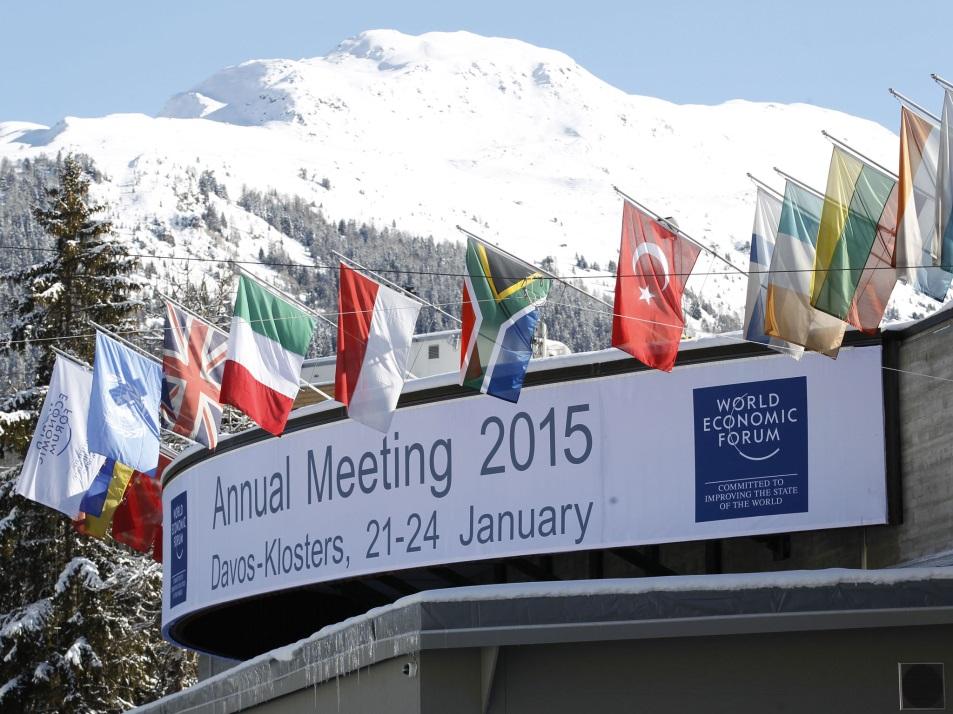
The conversation about leadership is thrown into relevance by Davos where the movers and shakers are gathering like sleek vultures. The recently published Ipsos Mori Veracity Index which has been charting levels of public trust in various professions for 32 years is even more relevant.
Business leaders are now amongst the least trusted groups. As Matthew Parris spluttered in Saturday’s Times:- “the typical FTSE CEO makes 183 times more than their average employee…” Leadership is being measured, he implies, by how much they earn not by how effective they are.

What do we really expect from leaders?

In the Roman Republic they spent most of their time trying to construct checks and balances to avoid the Julius Caesar “I am God” problem. We spend our time today trying to create images of leadership perfection. Tim Cook, Charlie Mayfield, Howard Schultz and so on but whichever way it’s not going to be a long list.

When Tony Hayward ex BP CEO and running that business during the Deepwater Horizon crisis took a "day off" to see Bob, his co-owned boat, participate in the Round the Island yacht race off the Isle of Wight with his son saying he wanted to get “his life back”. In truth he was paid all those millions not to have a life of his own.


Leaders are needed to be different things in different situations. We choose the leaders we think we need. Churchill in 1940; Reagan in 1981; Thatcher in 1979; Blair in 1997. Sometimes we need inspirers, sometimes martinets, sometimes healers, sometimes role models and sometimes visionaries.

Reflect on the deluges that came after Lord Browne, Tim Leahy, Justin King, Alex Ferguson, Marjorie Scardino … and increasingly we realise leadership is as much to do with luck as skill.

To understand the role of leader, watch this Ted Talk:-


This a stunning story about conductors and styles of leadership from Itay Talgam, the Israeli Conductor and Business Consultant. It’s both insightful and very funny.


But don’t people need the smack of strong leadership…people like Trump and Putin?

No. I think people need leaders who manage to draw the best out of them…who make them surprise themselves.

Surely the age of the bully-leader is over.

Monday, 11 May 2015

TWO ESSENTIALS WE CAN DO WITHOUT

I’ve written quite a lot on leadership. Shelves in bookshops are crammed with beastly tomes on the subject (“Leadership Plain and Simple”; “the Top 100 Ways to be a Great Leader”; “The Three Levels of Leadership” and over 24,000 more on this subject). I worked out that being conservative there’s around 1 ¼ billion words on the topic and counting.


And I’m not sure that I really believe in the concept of the leader, well not the Genghis Khan sort of leader we keep pretend we’re seeking. It’s the terminology that goes with leadership that worries me. We don’t talk about the calming of leadership or the guidance of leadership. Instead we talk about the “smack of firm leadership”.


We had the legendary workaholic Harriet Green ex CEO of Thomas Cook who allegedly fired people whilst painting her nails. Nice. We had Steve Jobs who when at Pixar, fired people and didn't give any severance pay. Pamela Kerwin, a Pixar employee, pleaded that employees at least be given two weeks’ notice.

"Okay," he said, "but the notice is retroactive from two weeks ago."

Frank Lowe, the advertising man who founded Lowe Howard Spink, being an insomniac, would summon senior executives at midnight to a meeting. They returned home exhausted and he’d call to get them back saying there was other stuff to go through.


Recent research into football management suggests changing managers in general has little effect. The irony of the David Moyes’ debacle at Manchester United was his successor’s record, whilst he was being praised for being so much better, was actually pretty much the same as David’s.

The nearest to making sense of the leadership cult came from Jim Collins in his book “From Good to Great” when he talked about what he called ‘level five leaders’. These were leaders “in whom genuine personal humility blends with intense professional will.”

The second thing I wanted to comment upon is the pointlessness, indeed the destructive capability, of much market research. Anyone in advertising always knew it was futile to expect the average consumer to know what day it was let alone whether an ad was any good. Steve Jobs was smart as well as behaving boorishly from time to time. Dismissing the idea that people knew what they wanted he said average people just can’t predict. Instead: “We figure out what we want. And I think we’re pretty good at having the right discipline to think through whether a lot of other people are going to want it, too. That’s what we get paid to do.”

The polls in the recent election rather prove the point. The one below was pretty typical of a week ago. Scores an F.


Look at trends and think of basics. The conservatives had a better economic plan which just made more people feel safer. A few weeks earlier Benjamin Netanyahu, predicted to lose badly in Israel, won
comfortably by making more people feel safer too.

So don’t ask people. Just work it out…that’s what we get paid to do