Showing posts with label Lucy Kellaway. Show all posts

Monday, 15 May 2017

SOME MORE IDEAS WORTH SPREADING

TED has transformed the world of presenting. Presenters now learn their presentations - no scripts, barely any notes. They line up with their stories and they practise, boy, do they practise.


The 2017 London Business School TEDx event was on Friday; the standard was higher than ever. But there’s a problem. In a world of virtually universal competence and consistency little stands out unless it’s exceptional.  Here were some highlights from the day’s insights and entertainment during which some ideas worth spreading were spread.

We had  presentations on the importance of dance, on radical developments in reading for the blind - “seeking the holy braille,” on how bilingualism is like having two eyes whilst we monolinguists are one-eyed unfortunates, on finding whose live saving heart tissue was donated to you and the emotions this stirred, on narcissism, on colonising Mars and much, much more.

Here are a few “aha!” observations:


Sangeeta Bhatia who talked about nano-sized cameras - in effect tiny particles that can roam your body seeking cancer cells and which are flushed out in your urine.

She said:
“OK where are we going with this?”

I love that - where we are going is early cancer detection and longer lives…is that a dream? Not much longer…anyway

“We all need dreams to help us keep pushing forwards”

***


Lucy Kellaway who has given up her cushy job writing for the Financial Times and writing so well that she is probably the foremost management writer of our times constantly pricking the pomposity of the corporate world. On being asked how she would make Maths (which she’ll be teaching) more fun she retorted:
“Fun? Why should Maths be fun? I want to make it clearer.”
***


Rafe Offer who set up Sofar Sounds abandoned a career in global marketing with companies like Diageo. Sofar organises intimate, secret and small musical gigs for people who want to listen and savour quietly. It’s gone global and is operating in 300 cities worldwide. You only get to hear what’s happening, and where, the day before they happen. Inevitably (this is the London Business School hosting this TEDx event after all)

Rafe was asked:

“How do you scale this?” to which he replied
“We scale it by staying small.”

Interesting and right. The root of Sofar’s success is its intimacy and lack of big scale concert-venue paraphernalia. These are not events; they are “happenings.” Too many brands betray their original magic in the quest to grow. I don’t see Rafe making that mistake.
***


Renier Zeldenrust is in the construction business in complex environments. Like Mars. Why go to Mars and beyond? The silica rich earth on Mars and the precious metals like titanium and nickel in the Asteroid Belt between Mars and Jupiter that’s why. There’s a gold rush into space about to happen.


We need to have more radical, important and inspiring conversations like these more often. We just need to think and debate more deeply.

Monday, 30 January 2017

DOES IT REALLY MATTER IF WE'RE HAPPY?

In the recently compiled global “2016 Happiness Index” compiled for the United Nations the UK comes 23rd (we were 21st in 2015 and 18th in 2012 when the report was first published.) No one can be happy to see us sliding down the table but nor can they be surprised. We’ve become a grumbly society dissatisfied with our lot. Denmark on the other hand comes consistently top.

 
Apparently the UK was at its most content in 1957 the year in which Prime Minister Harold McMillan won the election with the slogan which was true for most

“You’ve never had it so good.”

But you can’t keep on saying that (even if it’s true.) Broadly speaking everything, despite newspaper headlines in the Mail and Express, is actually getting better. Yet research in the workplace for instance would say otherwise. FT columnist Lucy Kellaway wonders why. Offices are nicer, with better, cleaner facilities, and bosses are more civilised and attentive, trained in empowerment, delegation and being nice. Despite there being less bullying and harassment people are nonetheless less happy.


We aim to delight our workforce yet that is unlikely to happen. Quite simply their expectations are never quite met and they never have it as good as they’d like. What makes it worse is those at the top of companies are earning disproportionately more and the sense amongst the rest of us of exploitation grows in line with that.
   
So are we pursuing an impossible target? In Julian Barnes collection of short stories, “The History of the World in 10 ½ Chapters,” “The Dream” is about his dreaming of heaven. Everything is perfect there. He can do anything and everything, eat as much of what he wants, play impeccable golf, see his favourite football team win the FA cup and yet after a while it becomes boring. Perfection is dull. Beauty relies on slight misalignments to be striking, happiness often happens in adversity rather than when everything is just so. We need rain as well as sunshine, ice as well as warmth, tears as well as laughter.


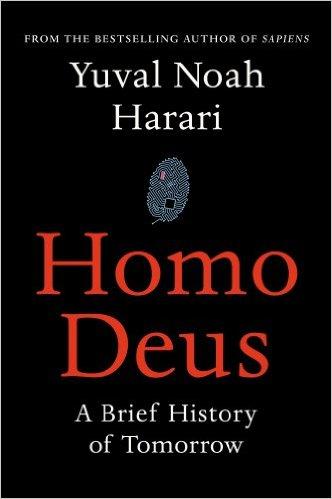
 What makes our world so fascinating is we still don’t understand the human brain. In his book “Homo Deus” Yuval Noah Harari reflects:

“As long as we have to decipher the mysteries of consciousness we cannot develop a universal measurement of happiness”…

Yes - not just a measurement - nor a way of creating happiness consistently either. Neither more money, nor more leisure nor more anything can be guaranteed to work.
Our life spans seven conditions:

  • Rapture
  • Happiness 
  • Contentment
  • Apathy (“whatever” mode)
  • Discontentment
  • Unhappiness
  • Misery

On any given day we could go through several phases and the more we do the richer the first three states will be.

Stop trying to be happy, start trying to be more interested and engaged. Happiness is only ever a phase so trying to be consistently happy is to be consistently disappointed. Sorry about that.

Monday, 15 February 2016

HANGOVER FROM HELL OR A BIT OF INSIGHT?

Yes. It’s Conference Time again…or Leadership Summit or Kick-Off. Our loved ones expect us to come back reeking of cigarettes, cheap perfume and a four-day-hangover…”but Richard you don’t even like whisky”.  


What I don’t like at these do’s are elephants in rooms (like a forthcoming redundancy programme no-one mentions), inspirational speakers (who having climbed Everest singlehanded talk about teamwork…as if they knew), mind games and sports exercises which bring the worst out of anyone halfway intelligent. I hate the phoney nature of skill-set transfer - cook tapas or play the drums and learn to lead. But it’s those £15,000 speakers who really drive me crazy. I heard one last year whom the CEO dryly observed seemed to be “something of an over achiever.” He’d saved countless companies, engineered innumerable start-ups, played international sport, walked to the North and South Poles several times and was utterly loathsome. (Not Ranulph below who’s lovely but barking.)


Asked for his comments about this meeting of a huge, mature, leading brand name company in a declining sector he responded:-

I can’t understand the lack of ambition here - you’ve said 3% growth is ambitious. It’s not. It’s pathetic. You should be looking for 40% growth or 400% …settling for less is weak.

I also cringe at the acronyms like TEAM (Together everyone achieves more).

But occasionally like a really good party these things just come off. The magic ingredients seem to be to treat everyone like grown-ups, create a pleasing ambiance, have good food and drink and conversation and be entertained by the professionalism of your own people.


I’ve just been at one like that.

It was inspiring, informative and full of debate; there was good bonding and it was highly enjoyable and never silly.

I thought the amassed salaries in the room of say £15 million might have been inspired to throw in 10% extra aligned effort as a result of their highly focused experience - worth at least £1.5 million - which made it a great investment.


Lucy Kellaway, lead writer on the Financial Times who is the chief naysayer of corporate jamborees and alpha males on the rampage would have approved.

She would have liked these nice people talking about their work and how to do it better. She’d have liked the absence of bullshit (and sport). She’d have approved that the central topic of conversation was selling more or coaching better not trying to discover the parallel between people’s day-job and potholing…
”the deeper you go the more you learn, but you need your team around you because it’s dark as hell down there and if you slip you die…. just as it is in this Toilet Tissue market we’re in right now.”

It’s all about being grown up, focused and talking about what really matters. Harry Potter is all very well but please keep him out of the boardroom.

Let’s talk about business instead. It’s more important. And it’s more fun.

Tuesday, 24 November 2015

BACK TO WORK - OR A BIT LESS OF IT

What happened in Paris has put a lot of things into a sharper perspective like work/life balance.  It’s a subject on a lot of agendas right now. The debate includes Yahoo’s CEO, Marissa Mayer, insisting her workforce comes to the office rather than working from home and Lucy Kellaway, the sparking FT writer, advocating the return to the 9-5 working week as a way of increasing productivity, innovation and morale.


In the Harvard Business Review researchers discovered the tipping point of competence was a 56 hour week. After that they remarked darkly not only was the work done no good, it almost certainly had to be redone or reversed. Or worse; it created problems that doing nothing at all would have avoided.

According to the Times on Saturday the number of men working part time is now topping    1 million, up three times since 1992. Quite successful and greasy-pole-climbing men are abandoning their hundreds of thousands of pounds, the Michelin stars and the 70 hour weeks for occasional consultancy, school runs, helping with homework and DIY. Work has for some become a paid hobby. The other side of this equation is that wives can get to work too and fulfil their own ambitions.

Indeed working for yourself as opposed to a big corporate allows you to work when you feel like it. Lunches, shopping when it’s less crowded, reading a book or going to an art gallery begin to be part of a broader education programme rather than being seen as goofing off. Maybe what justifies all this is the brain doesn’t stop thinking when our body isn’t stuck behind an office desk.


But there is a cost and Lucy Kellaway is eloquent on observing that having a real job in a real office allows you to build a much more interesting time between nine and five than working on the kitchen table can ever do.

In the end it comes down to this. Is what you do worthwhile, interesting and inspiring? The best advice on this comes from Netflix that extraordinary, newish company with a market capitalisation of over $40 billion. Only ever hire and work with stunning people they say.

Is this foolishly idealistic? Perhaps but the best memories I have ever had of work has involved brushing up against and interacting with great talent.

Because the conversation about how hard we work is the wrong one; it should be about how good the work we do is.

Quality not quantity always wins.