Showing posts with label Steve Jobs. Show all posts

Tuesday, 20 September 2022

MYTHS ABOUT LEADERSHIP

 I’ve always been an agnostic about the importance of leadership. Too often an autocratic leader like Fred Goodwin or Bob Diamond (respectively one-time CEOs of the Royal Bank of Scotland and Barclays) led their business close to destruction or ignominy. 

Fred the Shred wasn't all that bad, says RBS boss | Scotland | The Times

People have fallen in love with the idea of the “Leader” – the Mao, the Stalin. People who get things done. That was Boris Johnson’s claim – “Get Brexit done" except it’s getting undone messily unless the Irish Protocol is sorted out.

Actually I’m more than agnostic. I’m enraged by power seekers who muck up things steeped in their own self-worth. Putin does that, Xi Jinping does that, Trump does that. Yet the mythology continues. Last week buried under beautifully written royal tributes in the Times what they call “Raconteur” had a section on “The Future CEO”. 

Future CEO 2019 - Raconteur

It did not make riveting reading. Most of all I found it rather mechanistic MBA stuff when really what the leadership role is, as Jack Welch CEO  of GE said (the most sensible thing he ever said in fact):

“When you were made a leader you weren't given a crown, you were given the responsibility to bring out the best in others.”

If as a leader you were to do nothing else that’d be enough. It’s what we want from any manager of a sporting team. When they stop doing that they stop being a meaningful leader.

Emma Duncan recently wrote an interesting piece about the quiet leader. She reflected that Queen Elizabeth rarely put a foot wrong because she was very cautious about where she put her feet.

Diamond Jubilee: Queen takes Windsor walkabout - BBC News

She was often quite dull. “Have you come far?” became a joke but she was always there smiling and being available. In private she was witty, I believe, and a mischievous mimic. She did her job quietly but her presence now, suddenly removed, has led millions to understand what she meant to us. Emma then compared her style to that of Keir Starmer who whilst a calm, sometimes dull, performer in the House of Commons is good company in private and, I’m told by those who’ve met him, “is very impressive.” Maybe bringing the best out of a talented Shadow Front Bench is what we need from him. More Atlee; less Churchill.
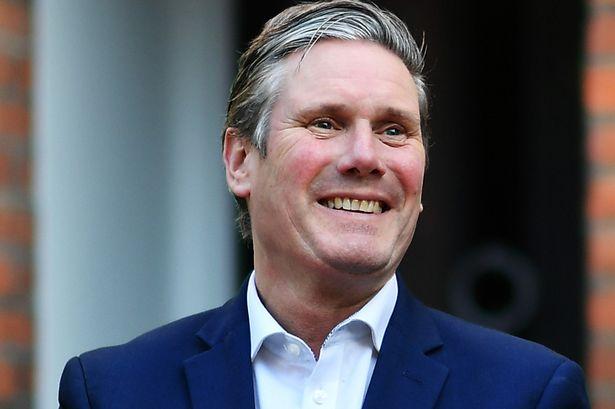
Keir Starmer: Boris Johnson made promises about reopening schools and broke  them - Keir Starmer - Mirror Online

Yet I keep on hearing people talking about the need for charisma, presumably to wow the floating voters or, in business, the markets. I also hear people say the down to earth Stephen Cottrell, Archbishop of York, is more impressive than the supposedly charismatic Archbishop of Canterbury, Justin Welby. Equally after that wayward genius, Steve Jobs, we now have Tim Cook as CEO of Apple leading the biggest company in the world which is valued at around $2.4 trillion. The most low key leader you’ve ever seen… indeed he’s virtually invisible.
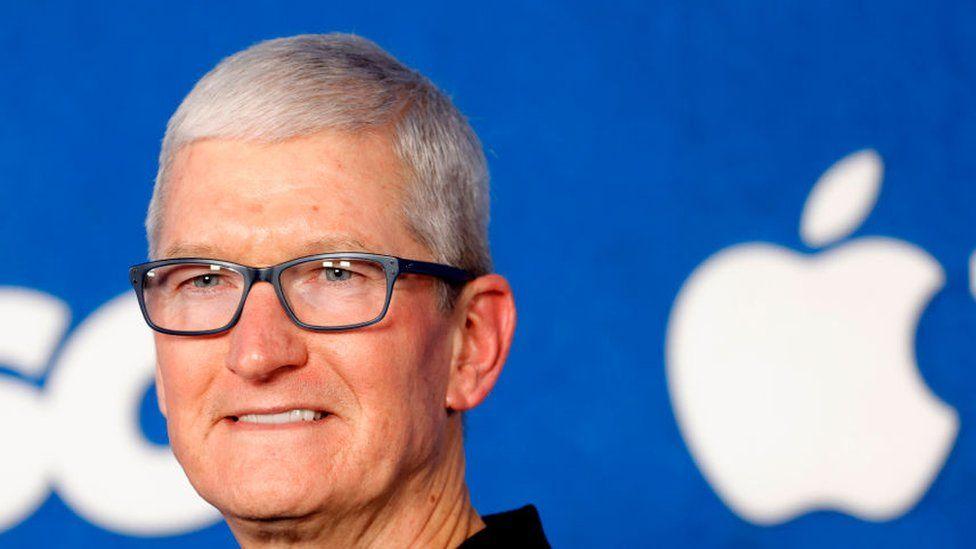
Apple boss Tim Cook faces backlash to £73m pay package - BBC News

If what you want is noise, excitement but not a clue how to do anything you choose Bolsonaro or Berlusconi (note – all the Bad Boys start with “B” – apart from Biden who is coping quietly.) They make great copy so the media loves them. They ride motorbikes, scantily clad girls or their luck.

But in the world today our leaders of business, governments or global institutions have a responsibility to others not just themselves. If nothing else the Queen has taught us keeping a low profile, being available for photoshoots (lovely clothes, lovely smile) but avoiding giving them a story is a profound legacy.

“When you were made a leader you weren't given a crown, you were given the responsibility to bring out the best in others.”

Yes. That’s it.

Monday, 6 May 2019

BAD BLOOD OR BLOODY SILLY?

I’ve been reading “Bad Blood: Secrets and Lies of a Silicon Valley Start-Up” about a company that promised to become enormous. Founded in 2003 it raised $900 million from funders,and at its peak in 2013 was valued at $10 billion yet in 2018 was worth nothing. Such things have happened before – the South Sea Bubble 1711, the Florida Property Boom 1926, Enron 2007 – but this scandal had a particular frisson.


Its founder, a 19 year old college dropout called Elizabeth Holmes, modelled herself on Steve Jobs. She set out to create a method of testing blood by taking very small amounts extracted by a painless prick in the thumb. The test machines were intended to be compact like a large laptop. Her dream was eventually to transform diagnostic medicine by having these machines in homes. She had a dream.


She was clearly a charismatic sales person as the funders included Rupert Murdoch putting in $150 million; her board included Henry Kissinger and Fortune Magazine said: “With three former cabinet secretaries, two former senators, and retired military brass, it’s a board like no other.” 

The problem was the blood testing never worked properly and the machinery to do the tests was only ever in laboratory prototype form. Somehow Elizabeth managed to persuade a lot of smart people including Larry Ellison the founder and Chairman of Oracle that she was a genius and, like Jobs was going to change the world. She managed to get distribution of Theranos “blood-testing machines” into Walgreen and Safeway.


It’s not a very pretty story. Elizabeth and her CEO and lover (as it transpired) Sunny Balwani, ruled the company with a mediaeval level of terror. The place was full of ex-government heavyweight security guards. Key staff were fired on a regular basis for any minor offence like asking awkward questions and ex-employees were terrorised by the rottweiler law firm Boies, Schiller & Flexner. This was not a place to work however good the remuneration. It’s a story of self-delusion and a single woman’s ambition to achieve the seemingly impossible whatever it took and whoever was destroyed en route.
Or is it? Carreyrou’s book is a prosecution case and a comprehensive indictment but there’s something missing for me. I’m not convinced that Elizabeth was a fraudster. I think she had an idea, pursued it rigorously and by dint of her personality enrolled an unlikely bunch of eminent advisors who fell for her charisma and saw what they wanted to see – the next Steve Jobs and this time a woman. And their admiration drove her on to believe in the infallibility of her idea and herself.


She’s obviously a genius at creative communication and a salesperson who deserves better than being burnt at the stake of moral outrage. She had an idea that everyone wanted and she got everything right:  packaging, advertising and media coverage.

Only one thing was missing. A reliable product that actually worked.

And that was just bloody silly.

Monday, 1 October 2018

VANITY OR IS IT COMMON SENSE?

I’m on one of my biannual diets. The time comes when my trousers don’t fit (correction- they seem to have shrunk) and I become a geography teacher, floppy corduroy and podgy. And I believe that I can still get away with it quaffing my pint of Harveys,  munching on my pork pie, and fattening up prudently to withstand a cold winter. More in curiosity than anything else I clambered on to one of those weighing machines in Boots that gives weight, height and  BMI. Well it says I’m borderline obese with an excessive BMI. I ask more questions online (being truthful about once being a heavy smoker and an enthusiastic drinker) and my life expectancy prediction says I died five years ago.


I am not prone to panic but it’s not good to learn you are probably a zombie.  So I go on the carb free, booze free, food free diet  - the one Tom Watson (the politician not golfer) went on and lost 7 stone. He now looks svelte, healthy and almost credible. See you at the gym Tom, I too am on a roll – not a bacon roll either.


As I embark on this incredible shrinking journey I reflect on food (I wish), no I reflect on why it is so many of us fail to do ourselves justice.  I am a presentation coach and spend a lot of time watching people let themselves down by being lazy; by spending too little time preparing; by failing to edit; by doing the equivalent of failing to comb their hair (only Boris can do that and even with him I’m not sure.)

Jeremy Corbyn belongs to this tribe of sloppy presenters doing so under the bogus umbrella of authenticity. Until Liverpool. In the General Election, whenever it comes, remember my words “Until Liverpool.”  Jeremy has been coached. It shows. He was concise, audience responsive and impressive. He looked up for a much bigger job. I should hate to be Teresa May at the best of times but, for her these are definitely not the best of times. She has a lot to live up to.  In Brighton Liberal leader Vince Cable ‘s speech was good in content but apologetically delivered and lacklustre. You have got to be slim, fit and sleek if you’re on stage. Ken Clarke would have been Prime Minister and probably a good one if he’d bothered to look better. A pity.


I have seen so many presentations where the content was great and the delivery deadpan dreadful. The ones where the content was mediocre but the delivery energetic were a bit better, not great just better at the time rather than in retrospect.

Maya Angelou said: “people will forget what you said, people will forget what you did, but people will never forget how you made them feel.

How you look and talk are the magic ingredients in making people feel great about you. People will never forget Steve’s presentation.


Monday, 19 October 2015

BASTARDS DON'T ALWAYS WIN

Pete Shuttleworth, the founder of a new and very successful Film Production Country, Hoi Polloi, leaned over the table of Café Coho near Brighton Station and asked me if “bastards always won”.

Outside the sun was shining and people trudged along the pavement. In Brighton there’s a curious “sod you,” lumbering walking style which I put down to a shortage of hunger. In London everyone sprints.

Being a bastard works best if you’re a rich genius like Jobs, Bezos or Zuckerberg. It worked for Stalin and Attila too. Bezos comes up with great put-downs like:

Are you lazy or just incompetent?


Twitter CEO Jack Dorsey tried not to be a bastard. He sent an internal memo out last Tuesday announcing that 336 employees were leaving the company. He wanted to avoid corporate speak, messed up by talking about “roadmaps” and “streamlining” but, to be fair, it was a reasonable try. The corporate bastard took over in the hands of HR (aka the Grim Reapers) closing down Twitter and e-mail accounts of the unfortunate 336 with the cryptic words  “you have been removed”. 


Anyone who hasn’t seen the opening of “Margin Call” should. In a major downsizing exercise, HR assassins in the film swoop into the New York offices of a New York Investment Bank slaughtering as they go,.

But the fictional CEO (Jeremy Irons) and Dorsey aren’t bastards, they are just doing what CEOs do when under critical profit pressure, they cut cost.

The really nasty people are the prevaricators and those who stop talent being as good as it should be. These are the death-eaters of management who suck the energy and creativity from people who work with them. I worked for one of these. There are a lot of them around. And one of their characteristics is they interview well and they’re brilliant presenters. But deep down they are evil. They feed greedily on the talent of others and they are devoid of any generosity of spirit.


Back to those lumberers outside the café in Brighton - well at least they were all smiling - and Pete who got it spot on in saying the key to the business who knew best - advertising - was to be “smart and hard.” 

You also have to strive to work with the best people. As Bezos (again) said:

“Life's too short to hang out with people who aren't resourceful”

At Netflix they say what makes a great business is not perks but “stunning colleagues” who are smart, hard and driven to do great work. When you work alongside really great people, as they also discovered at Pixar, great stuff happens.


But this is a competitive world and to win you have to remember this - the words of George C. Scott in the film “Patton":

Now I want you to remember that no bastard ever won a war by dying for his county. He won it by making the other poor bastard die for his country.

Monday, 17 August 2015

WHY SMALL ISN'T BEAUTIFUL

Years ago when I was in advertising at a 50 person advertising agency with quite important clients like Heinz, Panasonic, Mazda and P&O we had a lot of small government contracts. What was frustrating was their smallness. This was explained by the commissioning body for Government advertising, The Central Office of Information, who said:

We worry about your size and the resources you have available. Even if you are more creative and astute than say Ogilvy and Mather or JWT they have such depth of resource”

At the time I thought this was nonsense but now I’m not so sure.

The trouble with sole traders or small businesses which abound in places like Brighton and in the new media sector is they tend to be introverted and slack at customer service. Great food that takes an inordinate time to reach you in a restaurant somehow tastes less than wonderful (however wonderful it may be) when put into a mouth dry with impatience.


As I watch the cohorts of sloppily dressed laptop tappers in coffee bars doing extraordinary things I wonder if what they are doing for their clients is on brief, on time and on budget. As I get cut up in my car by white vans with paint caked ladders on top and signage like “WePaint4U”, I know they are probably balancing three jobs in conjunction in their 10 to 4 world of under-delivery.


These sole trader/small enterprises are all working on a knife edge of panic. Too much work and they’re risking client wrath on a wide front; too little work and they face starvation.

Yet the alternative of being an employee carries its own problems of subservience, unreasonable demands and long hours. What we all want really is to be like Steve Jobs. We want to have our own way, be surrounded by brilliant executors of our ideas, be allowed to have tantrums and be treated like a God. Oh yes and have unmeasurably vast wealth.

Being part of a high achieving team sounds great too. But making it work is, as history shows, pretty hard. Human egos and incompatibilities of culture are the Goodwin Sands on which so many ships of ambition founder.


Human resourcefulness should be able to crack it but too seldom does.  We should be able to scale up the turnover and cash reserves of our businesses and at the same time retain our individuality and values. We should be able to find a place of like-minded people where we spend the 70% of weekly waking time which is working time.

My conclusions?

We must work harder. Britain has low productivity because we’re lazy - not driven enough to achieve fast results - not hungry enough.

We have to get better at working with each other. Especially with the people who give us money - our customers.

Unless we can lavish customers with care and attention we haven’t got a business worth developing. Big or small.

Monday, 11 May 2015

TWO ESSENTIALS WE CAN DO WITHOUT

I’ve written quite a lot on leadership. Shelves in bookshops are crammed with beastly tomes on the subject (“Leadership Plain and Simple”; “the Top 100 Ways to be a Great Leader”; “The Three Levels of Leadership” and over 24,000 more on this subject). I worked out that being conservative there’s around 1 ¼ billion words on the topic and counting.


And I’m not sure that I really believe in the concept of the leader, well not the Genghis Khan sort of leader we keep pretend we’re seeking. It’s the terminology that goes with leadership that worries me. We don’t talk about the calming of leadership or the guidance of leadership. Instead we talk about the “smack of firm leadership”.


We had the legendary workaholic Harriet Green ex CEO of Thomas Cook who allegedly fired people whilst painting her nails. Nice. We had Steve Jobs who when at Pixar, fired people and didn't give any severance pay. Pamela Kerwin, a Pixar employee, pleaded that employees at least be given two weeks’ notice.

"Okay," he said, "but the notice is retroactive from two weeks ago."

Frank Lowe, the advertising man who founded Lowe Howard Spink, being an insomniac, would summon senior executives at midnight to a meeting. They returned home exhausted and he’d call to get them back saying there was other stuff to go through.


Recent research into football management suggests changing managers in general has little effect. The irony of the David Moyes’ debacle at Manchester United was his successor’s record, whilst he was being praised for being so much better, was actually pretty much the same as David’s.

The nearest to making sense of the leadership cult came from Jim Collins in his book “From Good to Great” when he talked about what he called ‘level five leaders’. These were leaders “in whom genuine personal humility blends with intense professional will.”

The second thing I wanted to comment upon is the pointlessness, indeed the destructive capability, of much market research. Anyone in advertising always knew it was futile to expect the average consumer to know what day it was let alone whether an ad was any good. Steve Jobs was smart as well as behaving boorishly from time to time. Dismissing the idea that people knew what they wanted he said average people just can’t predict. Instead: “We figure out what we want. And I think we’re pretty good at having the right discipline to think through whether a lot of other people are going to want it, too. That’s what we get paid to do.”

The polls in the recent election rather prove the point. The one below was pretty typical of a week ago. Scores an F.


Look at trends and think of basics. The conservatives had a better economic plan which just made more people feel safer. A few weeks earlier Benjamin Netanyahu, predicted to lose badly in Israel, won
comfortably by making more people feel safer too.

So don’t ask people. Just work it out…that’s what we get paid to do

Tuesday, 4 November 2014

LEARNING TO SEE THINGS

Steve Jobs said:   "Creativity is just connecting things. When you ask creative people how they did something, they feel a little guilty because they didn't really do it, they just saw something. It seemed obvious to them after a while."  

Steve is probably over-quoted by anyone who writes about creativity but this is really good. A friend who went to art school told me she was not taught to draw and paint so much as to see things. Try standing in front of a painting for half an hour really looking at it, trying to see everything. Not done it before? Well it’ll probably give you a headache and it’ll also show you just how little you normally see or how casually you look at things.


But here’s the trick. Seeing things isn’t something you can force. Let thoughts and observations come to you. And when they do come to you relish them. To get the most out of great food you need to chew gently quite a lot.

Seeing things and making connections is the essence of all great creativity. But creative thinking requires two other things:

  • Great memory
  • A bit of rebelliousness

The memory allows us to make better and more enlightened connections more easily. The rebelliousness allows us to break the mould or do something utterly surprising and ahead of the herd. There was I recall a Levi Jeans ad which said “when the others zig, zag”.

Be zaggers if you want to make a bit of impact.

Jefferson said that a little rebellion was a good thing - having just help drive the British from America we can see why he might say this.

As a brief formula for successful creative thinking this isn’t bad but of course it slips into the standard thinking fallacy of oversimplifying. Being an accomplished creative thinker takes time and experience too. Malcolm Gladwell in his book ‘Outliers’ reckons even the greatest creative minds take 10,000 hours to attain mastery.


That means a lot more learning, looking, listening and reading for most of us.

How to solve problems and make brilliant decisions. (Business Thinking Skills that really work) published by Pearson is coming out on November 12th 2014

Monday, 28 July 2014

WHAT DO YOU THINK?


We all spend too much time worrying about what other people think. John Carey’s wonderful book “The Unexpected Professor” describes him wandering through his favourite books and poems and describes a life of literature and learning in Oxford.  He made even the formidable Milton fun. He talked and wrote in simple English and with a lightness of touch. Carey laments the poverty of insight in most literary criticism.


I’d extend that to management books, to political books to virtually everything. Why do so many of us live in a world of recycled views, a kind of air-conditioned world where many of the interesting bits have been filtered out? Asking “what do you think?” may for many seem a bit dangerous. Because if it happens to be at odds with what your boss thinks then you  don’t think it, even if you do (if you see what I mean.)

In his book “Creativity.inc” Ed Catmull (joint founder of Pixar) says they decided early on:
“if we made something we wanted to see , other people would want to see it too.
The über- creative Steve Jobs (also Chairman of Pixar) put it like this “people don’t know what they want until you show it to them.

Because most people don’t think because they’re scared to, they either agree with what someone else they like says or the group says or their boss says even if it’s daft. Psychological experiments show that in a rigged focus group with a bunch of plants saying line A is longer than line B
__________________________  line A
_____________________________________________ line B

Then the rest of the group, denying the evidence of their eyes, will be cajoled to into agreeing line A is definitely longer.

There was an old story about the management consultant who being allegedly very good at his job was also in consequence very rich. In being asked by a client what the time was he countered oleaginously “what time would you like it to be?”

But the real entrepreneurs, the risk takers who believe they are right and others are wrong, the people who have an idea and focus on making that idea better are the characters I want to spend time with.
I loved the recent report of Lidl who are mounting an assault on the other retailers with exceedingly good low priced claret.


Paul Goldschmidt, owner of Chateau Siaurac , who is supplying a 2007 Réserve de la Baronne at £13.99, said: “Some retailers bargain on quality — but Lidl didn’t."

Lidl didn’t because they know what they think and I bet their expenditure on market research is infinitesimal, if it exists at all, compared to Tesco. Poor Tesco who are listening to their customers giving them what they say they want and being accordingly shafted.

Too few people are spending enough time doing what matters. Deciding what they think, being true to their own values and doing and saying accordingly - clearly, loudly, and proudly.

Monday, 12 May 2014

WHY I HATE CUSTOMER SERVICE

It’s the phrase itself.

Because it makes customers sound like clapped-out cars going in for a service or a cow being serviced by a bull (remember that next time you feel shafted by a retailer).

Now it’s become a discipline in its own right so we actually have “Customer Service Managers”.

Now isn’t that what everyone in a company should be doing - looking after the customer? But maybe we’re coaching customers to have unreasonable expectations and, in so doing, educating a bunch of hooligans who’ll treat those people selling them stuff unreasonably and rudely.

It leads to mediocrity when a young brand manager, about whom I recently heard, bullied a designer to do a solid week’s work in two days having taken several weeks to write the brief. The design company capitulated because the client company was so important.

Charles Orvis opened a Fishing Tackle shop in Manchester, Vermont in America in 1856. Today, internationally, it has around 1,500 employees. Charles (or one of his successors) said this:
The customers right even when they’re God-dammed wrong”.
For years I used this with people working for me. But I’m beginning to question it. The subservient role of brand owner this implies is liable to coach a breed of employee who doesn’t think or suggest to their customer that there might be a better way. Worse, it encourages customers to be spoilt brats. Anyone who’s travelled at the front of the plane sees the most outrageous behaviour from the rich and indulged customers, people who behave in a “do you know who I am?” way.


This is all about manners and relationships. We always get the best from each other when we trust each other.

Let’s imagine having an adult relationship with our customers so they don’t feel patronised, short changed or deceived and we actually learn how to do a better job so they get a better deal and we run a better operation. Great customer service - sorry let’s call it “looking after customers properly” - comes from listening, understanding and responding in a grown-up way. This week I read that Waitrose is supporting dementia organisations and is offering personalised shoppers to people with memory problems. That’s grown-up.


But here’s the clincher. Steve Jobs (yes I know - over-quoted and maladjusted when it came to human relationships) said:
 
people don't know what they want until you show it to them.

Customers are not stupid. But we can make them stupid by never saying “no” and explaining why brilliance takes time and being unprepared to have a grown up conversation with them. Servants don’t answer back but brand owners who behave like servants won’t learn much or last long.

That’s why the wrong, subservient and bland kind of customer service does such a disservice to marketing.


Monday, 10 February 2014

WE'VE GOT TO TALK ABOUT KEVIN

This is not just about cricket I promise. It’s about management and marketing.


There were two things I came across this week following the Kevin Pietersen debacle. The first was from my wife who having a very sharp sense of the zeitgeist said:

“It’s ridiculous they’ve fired him. He’s our top scorer and he’s cute.”

The second was in an article by Simon Barnes lamenting the folly of his departure. He quotes from an English swimming coach:

“He faced his swimmers and asked “who here wants to be mediocre?” It seems to me had the same question been addressed to the England cricket team they would have been holding up their hands.”

So to a non-cricket fan it’s talent, sex appeal and charisma that counts. And to a highly intelligent pundit the standards have deliberately been lowered to read “England lose harmoniously”.


Let’s lament the following disruptive influences – Ian Botham, Shane Warne, Fred Trueman, Ian Poulter, Nick Faldo, John McEnroe, Steve Jobs, Vincent Van Gogh and Wolfgang Amadeus Mozart.

The world would have been better, would it not, without these show-off virtuosos?

I used to work with a talented advertising man called Richard French. He believed the role of management was to manage the unmanageable. I realise now he meant me as well as others. Interesting that Pietersen, who ranks as a self-preening, adolescent genius – but maybe the best batsman to have played for England since Hutton – has divided the ranks so clearly between journeymen and stars. Of course he was a pain and a challenge. The sort of challenge Mike Brearley, the England Captain, faced with Botham in 1981.

If calm, reasonable, group-think HR ran the world none of the mavericks above would have been allowed near a cricket pitch, golf course, tennis court or boardroom. Because talent when it reaches the level of a Jeff Bezos (head of Amazon) or a Steve Jobs (late head of Apple), spills over into outrageous behaviour. Indeed one questions whether a Lloyd George, JF Kennedy or Bill Clinton would have been allowed anywhere near high office in the 21st century.

More to the point why do we all let people with such genius get backed into an isolated corner of disapproval from which disgrace or dismissal seems the best solution? The two jobs of management are to manage these unreasonable people with oodles of talent, not to be scared of them.


And to inspire winning performances whilst marketing is there to delight audiences with spectacular achievements.

I don’t think either course was necessarily best served this week.

In fact I think we settled for bronze.


Monday, 3 February 2014

THAT NEW, NEW THING LA, LA, LA


I came across the word “neomania” this week. Well, that overactive excitement derived from innovation seemed spectacularly absent from Demis Hassabis this week. He’s the Brit who’s just sold his artificial intelligence company DeepMind Technologies to Google for £400 million. He was photographed clutching a vintage ZX Spectrum in his hand as if to make the point I’m about to make.


Nowadays we get so thrilled by breakthroughs. Do you suppose Hero of Alexandria got as excited in 10AD? You haven’t heard of this Hero – hero in fact in every sense? Me neither but he is regarded as the most prolific inventor of all time – sorry Leonardo.


He was a Greek mathematician and engineer and many of his inventions were used in the theatre which he loved. These include: the first steam engine (see above), a railroad system for transporting boats across dry land, ‘robots’ – these figures controlled by strings and pulleys and powered by a rotary cylinder appeared in a 10 minute automated play, a wind-powered pipe organ, a coin operated wending machine, the syringe and the extraordinary list goes on. 2000 years ago. Yes, 2000.

As we get very excited by that next new thing over our next lunch we might just think about Hero and wonder where our next Hero is because sorry he isn’t going to be another Steve Jobs. Actually it’s probably a she (but that’s another story). Because one thing is for sure. New isn’t as much part of our life now as we like to believe.


At that very stimulating lunch in a restaurant (over 2,500 years old are restaurants) we’ll be wearing shoes that haven’t much changed in their design for over 5,000 years, eating food cooked by fire (discovered over 1,000,000 years ago), using knives and forks (over 5,000 years old), drinking wine (over 8,000 years) in glasses (3000 years although drinking vessels date back 11,000 years). The point being, and I’m sorry to go on about it, some of the most basic day to day things haven’t changed much at all for a very, very long time.


Nassim Taleb whose extraordinary book “Antifragile” inspires and informs much of this blog has a law which is that for non-perishable things their robustness is proportionate to the length of their life. In other words we can expect Coca-Cola to go on for another hundred years or so and Facebook for another ten. And that feels about right. Richard Gott the physicist has shown something similar in studying how long an existing West End or Broadway play will run; he does this to an accuracy of 95%.

In the intoxication of looking at change and the thrill of technological innovation we sometimes forget this game is being played out over a long time. It matters less whether it’s new than whether it works and is useful.

Interestingly Taleb thinks wheels on suitcases (invented 40 odd years ago) maybe one of the great inventions in our lifetime. So according to Gott and Taleb we can expect them to be with us till at least 2057 long after Twitter has been reclaimed by ornithologists.

Monday, 27 January 2014

THE CUSTOMER IS RIGHT EVEN WHEN THEY ARE GOD DAMNED WRONG


That’s what Charles Orvis said - he who founded the legendary high-end fishing, hunting and outdoor retail and mail order business. Most of us have taken this pretty well for granted as the byword in customer service. Marketers worldwide have sought to meet what they think theirs customers want. If Fawlty Towers is the paradigm of how not to do it then Orvis is the complete opposite.

But then along came Steve Jobs to turn all the arguments on their heads with his refusal to do consumer research and with a fixed view on the need to create consumer needs rather than just fulfil them.


The trick is surely to give the customer what they hadn’t imagined they’d wanted but when they get it they realise it’s exactly what they wanted all along.

It’s the Heston Blumenthal trick.

Which brings me to NatWest. I bank with them and I like them. Their refurbished branch in Brighton is well run, smart and with bright and charming staff. (Yes boys and girls this is a a bank not a fairy story although being Brighton there are eccentrics around.)


Well they get a bit busy in there so they introduced a ticketing system whereby rather like in the delicatessen area of Waitrose you’d get say ticket 345 and seeing that there were 20 people ahead of you you’d go for a coffee, do some shopping and then come back and lo and behold you were now five away from the head of the queue. Great idea? Well they’ve canned it. The staff in the bank are disappointed because it made their life easier and more ordered and I am as mad as hell. Why did it go? “Customer survey,” I’m told “they did a survey and our customers didn’t like it”.

So Nat West has gone back to a system we all like – queuing in hope and ignorance in a long line.
Either the research methodology was wrong or they asked the wrong customers or they are lying and merely want us to give up and bank online.

I’d have asked the staff not the customer- day by day they feel the pulse of their customers. If the staff preferred the system that’s been abandoned maybe it was because they understood the effect it had on customer behaviour whilst the research only asked about customer attitude. Customer attitudes would, incidentally have shown that most people have been conditioned by the media, politicians and the economic crash to hate bankers. That’s their attitude towards them. This does not mean they want them to shut up shop and commit suicide.

In Room 101 recently Joan Bakewell said how she loathed customer surveys especially the kind that ask “were we good, very good or excellent?”


Agreed. But I’d go further. Most customer research perversely tells you the wrong things because (would you believe) customers don’t actually know what they want any more than patients in hospitals do.

Except to be made better and that’s our job.

Be nice to your customers, listen to them but be firm about giving them what they need (really, really need) not what they say they think they want.

Monday, 10 September 2012

I WANNA TELL YOU A STORY


This week Max Bygraves died. 


He was a comedian, entertainer and impresario and was huge a few decades ago. Think Michael Parkinson + Michael McIntyre + Jonathan Ross and you’ll get the idea.  And this was his catchphrase. He was was always telling a story.

Now storytelling has invaded the business scene. We no longer have ‘business strategies’. We have ‘corporate narratives’ (although they look much the same and with a shudder I wonder what Lord of the Rings would look like written by McKinsey – ‘Frodo Objectives, SWOT analysis of the Hobbits etc.)

The real power of the story is shown in Walter Isaacson’s biography of Steve Jobs which teaches more about what really happened at Apple and why (ultimately) it worked.


  The story about Job’s passion for product and that belief that he was at the intersection of technology and art tells it all as does his love of design. Dewys Landon, a designer, expressed what Apple achieved beautifully when he said;

Our job is to give the client, on time and on cost, not what he wants, but what he never dreamed he wanted; and when he gets it, he recognizes it as something he wanted all the time."

And then there’s Madmen, the TV story of 60’s and 70’s advertising – was it really like that Don? Don Draper lit a Marlboro and thought wistfully for a while.


No. In Britain it was much better and much worse. Sex, drugs and rock’n roll. The skirts were short and the tempers shorter. Account Directors had races in their Porsches down Park Lane. Sexual harassment was the norm. People lost days of their life in an alcoholic haze and still did great ads. And that was the real point to the story. Great, brave, funny and new advertising that clients never dreamt they wanted and then realised they wanted all the time.


Poor boring madman Don. He should have settled on being an accountant.

The real story of breakthrough success is always accompanied by excess. The bankers at their peak, British advertising, Australian cricket at its pomp, Tracey Emin, Gordon Ramsay, and Christopher Hitchens. True genius seems to burn life’s candle at both ends (and in the middle.)

The story of success, endeavour and risk is usually exciting, fun and a journey of surprises.

I wanna tell you a story because stories look truth in the face.

Stories are about people and as the Gradgrind of advertising Martin Sorrell tells us:
“All business decisions are marketing decisions and all marketing decisions are about people”
And all people are into stories. Because that’s what life is – one big story and not a spreadsheet.