Showing posts with label make brilliant decisions. Show all posts

Thursday, 1 January 2015

A NEW YEAR. SUPERSTITION, PREDICTION, RESOLUTIONS AND RENEWAL

More people go out on New Year’s Eve than any other night of the year. More people are kissed and pissed. The Lord of Misrule is having a ball having “give-me-an-F-fun.”


“Superstition”. I read recently that years ending in “5” are lucky. Really? Well there was 1815 (Waterloo), 1945 (end of WW2), 2005 (economic boom). Tosh! Or how about 8 being a lucky number? 2+0+1+5 = 8! So prepare for lottery wins this year.

“Prediction”. I went to watch Brighton play Fulham recently. People I’d never met kept asking in genuine interest “What do you think the score will be?” We know that no one could possibly know. We only have one certainty - economists are hopeless at predictions.

“Resolutions”. They’re like business plans of which it’s been said “paper plans are paper planes” Most good resolutions barely last though January so I’ve decided to make bad resolutions in future:


  • To drink much more good claret
  • To laze around a lot more
  • To eat fattening food

The consequence, based on how contrary human nature is, will probably turn me into a teetotal, busy, health freak.

It’s that contrariness of human nature that makes our lives so interesting. No one can really read the likely behaviour of electorates or consumers. A certain perversity of spirit seems to be in the air. But in a year of Putin putting it all about, an imminent, chaotic Greek election, a potentially  hung UK parliament, Tea Party antics in the USA, oil prices continuing to fall and economic slowdown we should be in for a great deal of …. ”fun”, which is how Mervyn King described the 2008 crash. I guess a Bank Governor’s “fun” is a Chinese philosopher’s “interesting”.


So on to “renewal”.

I came across the “Change House” recently.

“The Four Rooms of Change” was created by Claes Janssen at Stockholm University in the 1960s. Since then it has been used by management teachers including Roger Harrop, the motivational speaker who calls himself the “CEO Expert”. His books include “Win! How to Succeed in Business” in which he says:
“These really are the most exciting of times for business! Nothing is a given any more. Technology is moving at an incredible speed and the winners are keeping it simple - because it is!”

It’s a simple idea. You get lucky and complacent (“Contentment”).

Inevitably competition gets stronger and things go wrong - not your fault, of course (“Denial”)

You don’t know what to do (“Confusion”)

Until you tear up your preconceptions and create a new strategy (“Renewal”).

Quite a lot of businesses are in the “Dungeon of Denial” right now whilst I feel I’m probably on the Sun Lounge about to get a nasty tan.


We need to be ahead of change though what those changes will be is unpredictable so I advise you to get into that “Renewal Room” fast.

Have a happy New Year, enjoy change and learn a lot.

Monday, 22 December 2014

DECK THE HALLS WITH BOUGHS OF HOLLY


Yes, even now Christmas is being hijacked by people like me. And it’s this marketing exercise that especially fascinates me.

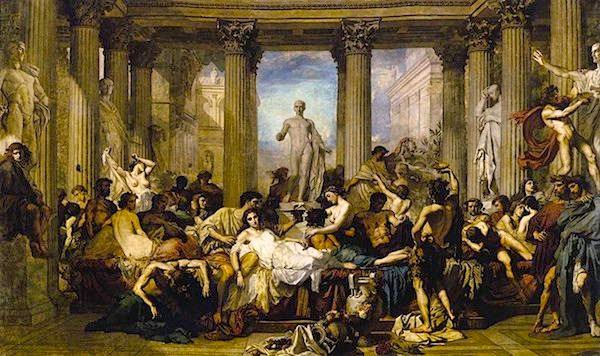
The marketing started in 300AD when in the Rome of the Emperor Constantine (recently converted to Christianity) the celebration of Christ’s birth was made to coincide with Saturnalia. The feel- good of a great blow-out got the Christian bandwagon rolling along nicely.

.
This coincidence of celebrating Christ’s birth and roll-out-the barrel party time continued happily until typically the mean old sod, Mr Austerity Cromwell banned Christmas. Back to normal and a lot more when Charles 11 returned to England.

Enter the four great apostles of Christmas early in the 19th century, first Washington Irving in America and his “Old Christmas” and the virtual invention of the Christmas that we know.


Then Clement Moore - a Theology Professor whose “The Night before Christmas” was written for his children, then was picked up by the New Yorker and has become a defining Christmas idea.
Dickens and Cruikshank, his illustrator, followed in 1836 and 1843 with Pickwick Papers and a Christmas Carol.

Around the same time Prince Albert, gluhwein king and Victoria’s husband brought us German Christmas - snow, sleigh bells, decorated trees and Victorian Christmas was born.

The bandwagon accelerated with Coca Cola’s Christmas advertising and the resounding “ho, ho, ho”s amplified as the toy business burgeoned and Christmas feel-good films filled our media.


Christmas became big business - lasting until January 6th in most of Eastern Europe and Russia but it’s the way marketers have shaped the event to such smiley and profitable effect that’s most striking. Washington Irving put it like this in his efforts to create a ‘marketing’ campaign (he wouldn’t have called it that) to quell social violence and appeal to everyone’s good nature:-

In the depth of winter, when nature lies despoiled of every charm, and wrapped in her shroud of sheeted snow, we turn for our gratifications to moral sources. The dreariness and desolation of the landscape, the short gloomy days and darksome nights, while they circumscribe our wanderings, shut in our feelings also from rambling abroad, and make us more keenly disposed for the pleasures of the social circle. Our thoughts are more concentrated; our friendly sympathies more aroused. We feel more sensibly the charm of each other's society, and are brought more closely together by dependence upon each other for enjoyment. Heart calleth unto heart; and we draw our pleasures from the deep wells of living kindness, which lie in the quiet recesses of our bosoms; and which, when resorted to, furnish forth the pure element of domestic felicity.

It has something else which enthrals me. It evokes and sustains such great stories and the felicitous layering of Christian, pagan, commercial and romantic stories and myths from  different geographies. Christmas stories are like Christmas cake, mixed and rich.


The pageantry and the atmosphere of this time never fail to astonish even hardened cynics and make those two words “bah! humbug” sound wonderfully festive too.


Happy Christmas.

Saturday, 22 November 2014

ALL WE NEED IS...EMPATHY

Here’s how Alexander Solzhenitsyn described empathy:

“If you want to change the world who do you begin with - yourself or others? I believe if we begin with ourselves and do the things we need to do and become the best person we can be we must have a better chance of changing the world for the better.”

The more we study this subject of people and their behaviour and ourselves and our own behaviour, the more we realise we aren’t irrational we’re just rather inconsistent. For instance we might speculate quite dramatically about how someone potentially might behave towards us and we might get cross about their hypothetical potential unreasonableness and end up having a fight in our minds with them.

“I’ll never speak to him again. Bastard!!”

But hang on….you’ve just made this all up. Get back to reality. Step into his shoes. Assume good nature might prevail…what then?


Sam Richards is a brilliant speaker and academic. His “radical experiment in empathy” on TED asks his American audience to imagine how they’d feel if the Chinese invaded the USA on a “peacekeeping mission” but with the generally understood motive of protecting their coal interests. And then switches to making the audience empathise with the Iraqis - yes even the terrorists. It’s compelling. It also shows empathy isn’t always comfortable. Sam asks us to “swap one tiny world for another tiny world” and quotes Dostoyevsky…“Nothing is easier than to denounce the evil doer; nothing is more difficult than to understand him”. If this doesn’t help you want to learn how to empathise then nothing will.

Unlike other psychological areas like creativity, empathy is an area of psychology that is being widely and excitingly explored. An example is the remarkable BrenĂ© Brown who’s an academic exploring how people connect with each other. She suggests we’re neurobiologically programmed for human connection and identifies that in this quest for authentic connection people really learn to empathise. Essential to it, though, is an acceptance that life is a bit messy (she confesses, as someone who likes order, she herself finds this disconcerting) and that admitting to and accepting our own vulnerability is essential to good

If you think about that it flies in the face of years of alpha males practising “don’t show fear” and Harvard Business School and others teaching the necessity of displaying confidence. BrenĂ© says that in her studies what matters most is not people asking “what’s in it for me?” but the increasing cohort asking a much more important question -  “what’s in it for us?” If she’s right, and I think she is, the implication of this for management is significant.


Talent wins games, but teamwork and intelligence win championships.

Michael Jordan

Given more people are asking “what’s in it for people like us?” not “what’s in it for me?” this means we’ve got to think more about groups not individuals. Because it’s the group not the individual who’s winning the climb up that greasy pole now.

How to solve problems and make brilliant decisions. (Business Thinking Skills that really work) published by Pearson

Monday, 17 November 2014

BIG DATA IS BRILLIANT

Everyone is talking about “Big Data.” It’s transforming the way we think and analyse stuff. We have discovered that correlation has become more important than causality. That what happens is more important than why it happens. The book by Viktor Mayer-Schonberger and Kenneth Cukier published last year - “Big Data: A Revolution That Will Transform How We Live, Work and Think” is highly recommended.

We know the increase of information is accelerating. For instance all the information and data that currently exists will double in the next three years. With more information we need less exactness. Nowadays the equation 2+2= 3.9 is good enough. We don’t need to be exact if we can see the big

Today social media and CCTV may be more useful research tools than anything else we have. Google Translate has extraordinarily proved to be the best translation service around. The software uses “corpus linguistics” techniques, where the programme "learns" from professionally translated documents, specifically UN and European Parliament proceedings but increasingly from all kinds of documentation – lots and lots of sources – big, big data. (In passing how it is nice that the forest of paper produced by the UN and EU can go to such good use.)


Intriguingly they say the service improved since the linguists they’d hired when they started up (well you would want linguists in a translation service wouldn’t you?) left the business because they wanted linguistic perfection whereas this being a product of big data is not that subtle. This is one of the few examples I’ve come across where big trumps clever.

The existence of robust data obviating the need for the tabloid use of anecdote allows us to spend more time using our brains to think rather than using them as pickaxes to mine for information. Anyone who tells you that guessing is more fun than knowing hasn’t come across the thrill of irrefutable information.

Its application is critical in the medical field where the speed of big data via social media allows a disease to be detected before it becomes an epidemic (and because detected early it can never become a pandemic.) We hear less about avian flu today in part thanks to big data.


So the big data  boom is happening and we have however sufficient glimpses of the future to see we’ll be doing less intellectual “grunt-work” in the future and more intellectual “stunt-work”.
To be sure there can and will be issues of data protection that arise from increasing access to data but the excitement lies in big data allowing us the freedom to think more clearly.

How to solve problems and make brilliant decisions. (Business Thinking Skills that really work) published by Pearson

Tuesday, 4 November 2014

LEARNING TO SEE THINGS

Steve Jobs said:   "Creativity is just connecting things. When you ask creative people how they did something, they feel a little guilty because they didn't really do it, they just saw something. It seemed obvious to them after a while."  

Steve is probably over-quoted by anyone who writes about creativity but this is really good. A friend who went to art school told me she was not taught to draw and paint so much as to see things. Try standing in front of a painting for half an hour really looking at it, trying to see everything. Not done it before? Well it’ll probably give you a headache and it’ll also show you just how little you normally see or how casually you look at things.


But here’s the trick. Seeing things isn’t something you can force. Let thoughts and observations come to you. And when they do come to you relish them. To get the most out of great food you need to chew gently quite a lot.

Seeing things and making connections is the essence of all great creativity. But creative thinking requires two other things:

  • Great memory
  • A bit of rebelliousness

The memory allows us to make better and more enlightened connections more easily. The rebelliousness allows us to break the mould or do something utterly surprising and ahead of the herd. There was I recall a Levi Jeans ad which said “when the others zig, zag”.

Be zaggers if you want to make a bit of impact.

Jefferson said that a little rebellion was a good thing - having just help drive the British from America we can see why he might say this.

As a brief formula for successful creative thinking this isn’t bad but of course it slips into the standard thinking fallacy of oversimplifying. Being an accomplished creative thinker takes time and experience too. Malcolm Gladwell in his book ‘Outliers’ reckons even the greatest creative minds take 10,000 hours to attain mastery.


That means a lot more learning, looking, listening and reading for most of us.

How to solve problems and make brilliant decisions. (Business Thinking Skills that really work) published by Pearson is coming out on November 12th 2014

Wednesday, 29 October 2014

WE KNOW LIKE NOTHING

That’s what a doctor said recently when I asked him about current knowledge on the human mind. He exaggerated of course. Like he always does when talking about diet and the amount one should safely drink.

Since I’ve started studying the subject prior to writing the book on thinking in business and how to think more effectively, I’ve realised this is true. If we knew as little about the body as we do about the human brain we would regard the heart as a no-go area  and the word bypass would be a term reserved exclusively in Transport circles.

US Journalist, Dan Hurley’s book “Smarter - The New Science of Building Brain Power” describes an attempt to discover whether we can and how we can improve our brain power. Perplexingly despite the number of professors and terribly clever people he talks to it is pretty well a journey into terra incognito.


That’s the bad news but here’s the good news.  It’s the top headline in everything but the tabloids. People are going on “good fats” as they seem to speed up the metabolism and make you smarter. Pundits like Brian Cox reflect there’s more going on in our head than there is in the Universe. Daniel Kahneman, Nobel prize-winning psychologist, at 80 years old bestrides the lecture circuit and does so to sell-out audiences.

Our knowledge about the way we think is improving, indeed compounding daily and people are beginning to realise you can neither judge a book by its cover nor a candidate by their A*s. We are looking for a complexity of intelligence and an ability to think fast, slow, empathetically, decisively, creatively and smartly. Understanding thinking has gone to the top of the business agenda. Get with it.

How to solve problems and make brilliant decisions. (Business Thinking Skills that really work) published by Pearson is coming out on November 7th 2014


Tuesday, 28 October 2014

THINKING

Over the next few weeks I’ll be writing a daily blog on “thinking” which reflects on some of the content of my new book which will be published in early November. A subject as vast as how we think which also considers how we can improve our thinking skills will inevitably provoke thought. Well, it’s certainly done that to me - hence these thoughts on thinking.


How to solve problems and make brilliant decisions. (Business Thinking Skills that really work) published by Pearson is coming out on November 7th 2014.