Showing posts with label Harvard business school. Show all posts

Monday, 14 November 2022

THE GROWTH MYTH

This is not going to be about the folly that occurred in the UK with Ms Truss last month or at least not much about that. 
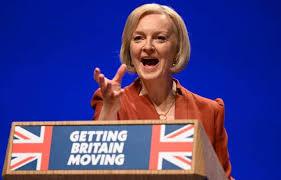
Liz Truss blames 'anti-growth coalition' for UK's problems in conference  speech | NationalWorld

Instead it’s a reflection on the thinking that has driven business and the management of money over my lifetime. Increasingly in a world currently talking now about recession, growth seems rather irrelevant.  Yet I know few people in business, consultancy or finance who don’t still talk passionately about growth plans.

Last Tuesday the founder and owner of FTX, the high-growth crypto currency platform, Sam Bankman-Fried (hang on - read that name again. Who’s teasing whom?) sent out this message:

“I’m sorry. I fucked up”
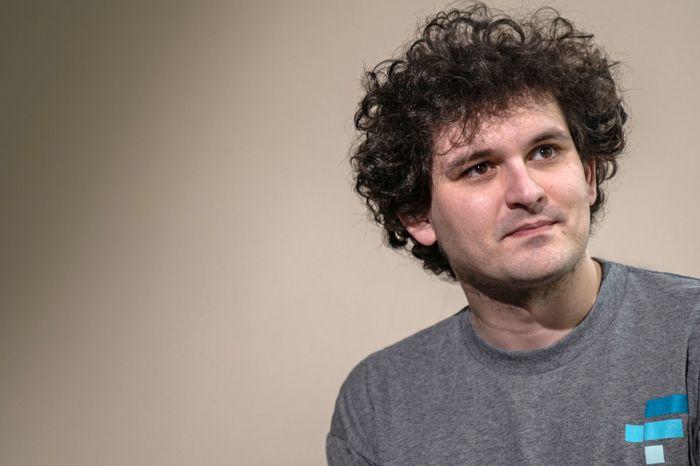
The $26 billion rise and fall of FTX crypto king Sam Bankman-Fried -  MarketWatch

From a valuation of over $36 billion earlier this year to nothing today. Can I spell out that value in numbers? $36,000,000,000. Wow. That was impressive growth for a business founded in just May 2019.

At least Sam is honest in his admission but he represents in his quest for growth the underlying horrors that can accompany it. Here’s what he said in an interview:  

“Sometimes the only thing standing between what is and what could be is the will to get there, whatever it requires”

I agree with the thought that determination and ambition are necessary qualities for success in business but, hang on, “whatever it requires” absolutely terrifies the hell out of me.

The “growth thing”, as I’m inclined to call it, is strongly present in the USA. Over half a century ago J.F. Kennedy said: 

“Conformity is the jailer of freedom and the enemy of growth.”

10 Things You May Not Know About John F. Kennedy - HISTORY

But I’m beginning to wonder now whether it isn’t growth that’s the enemy, whether the determination to get bigger, to scale your business isn’t a kind of madness. Whether those seeking double digit growth or, in Sam’s case much more than that, haven’t created a nightmare of personal burn out and concomitant catastrophes socially, environmentally and politically.

Recently I was in a restaurant called Wild Flor with perhaps 36 covers. It started in 2019 and now it’s food gets better every time I’ve been there. It’s gradually moving from tasty to dreamily delicious.  But how should they grow? Wrong question. How could they improve? How do they gain even better reputation and become the best? Sam (poor Sam) said “Better is bigger”. No it’s not – not when I’m eating my lunch. 

Wild Flor Hove | Local reviews, interviews, menus and booking

 Growth is a new form of aggression thus the founder of the martial art Aikido, Morihei Ueshiba (1883 -1969) once said:

“If we stop growing, technically and spiritually, we are as good as dead.”

Like many great quotes it’s flawed and just plain wrong. If we merely seek to grow we’re doomed to disappoint ourselves and others because, sunshine, there’s much more to life than growth.


I may sometimes be rather unkind about Business Schools and MBAs. This has mainly been because of their use of historic and often misleading case studies like one called “Royal Bank of Scotland, The: Masters of Integration” by: Nitin Nohria and James Weber of Harvard.
Harvard Business School - YouTube

As tech stocks dive and growth is hard to achieve maybe it’s time now to replan the gardens which represent our lives, dig up the failed plants, replenish nutrients in the earth and adopt a strategy of better not bigger. In 2022 things have moved on and that “growth thing” with it. The adulation  of the unicorn (billion dollar businesses are called this) seems yesterday’s fad. Time now to maximise customer contentment, product quality and producer skills not growth.


Growth will come when it’s good and ready not because we seek it for its own sake. 

Saturday, 22 November 2014

ALL WE NEED IS...EMPATHY

Here’s how Alexander Solzhenitsyn described empathy:

“If you want to change the world who do you begin with - yourself or others? I believe if we begin with ourselves and do the things we need to do and become the best person we can be we must have a better chance of changing the world for the better.”

The more we study this subject of people and their behaviour and ourselves and our own behaviour, the more we realise we aren’t irrational we’re just rather inconsistent. For instance we might speculate quite dramatically about how someone potentially might behave towards us and we might get cross about their hypothetical potential unreasonableness and end up having a fight in our minds with them.

“I’ll never speak to him again. Bastard!!”

But hang on….you’ve just made this all up. Get back to reality. Step into his shoes. Assume good nature might prevail…what then?


Sam Richards is a brilliant speaker and academic. His “radical experiment in empathy” on TED asks his American audience to imagine how they’d feel if the Chinese invaded the USA on a “peacekeeping mission” but with the generally understood motive of protecting their coal interests. And then switches to making the audience empathise with the Iraqis - yes even the terrorists. It’s compelling. It also shows empathy isn’t always comfortable. Sam asks us to “swap one tiny world for another tiny world” and quotes Dostoyevsky…“Nothing is easier than to denounce the evil doer; nothing is more difficult than to understand him”. If this doesn’t help you want to learn how to empathise then nothing will.

Unlike other psychological areas like creativity, empathy is an area of psychology that is being widely and excitingly explored. An example is the remarkable BrenĂ© Brown who’s an academic exploring how people connect with each other. She suggests we’re neurobiologically programmed for human connection and identifies that in this quest for authentic connection people really learn to empathise. Essential to it, though, is an acceptance that life is a bit messy (she confesses, as someone who likes order, she herself finds this disconcerting) and that admitting to and accepting our own vulnerability is essential to good

If you think about that it flies in the face of years of alpha males practising “don’t show fear” and Harvard Business School and others teaching the necessity of displaying confidence. BrenĂ© says that in her studies what matters most is not people asking “what’s in it for me?” but the increasing cohort asking a much more important question -  “what’s in it for us?” If she’s right, and I think she is, the implication of this for management is significant.


Talent wins games, but teamwork and intelligence win championships.

Michael Jordan

Given more people are asking “what’s in it for people like us?” not “what’s in it for me?” this means we’ve got to think more about groups not individuals. Because it’s the group not the individual who’s winning the climb up that greasy pole now.

How to solve problems and make brilliant decisions. (Business Thinking Skills that really work) published by Pearson