Showing posts with label Thomas Cromwell. Show all posts

Monday, 23 February 2015

AVOID BEING BUSY OR BEING OBEDIENT


We live in a world where being busy is most people’s default position.

A friend of mine told his sons, “if you snooze you lose”. And children have never worked so hard. Five year olds do more homework than I did when I was 11.

And the badge of courage is to seem even busier than you really are. It’s pretty bad anyway isn’t it? You have a shortage of breath, a vile temper, are sleeping badly, getting up early to cram in extra work and really needing that glass of wine in the evening. Somewhere recently I saw this fantastic insight. People are so busy they don’t eat, they “inhale” their food.
So how are you? “So busy I can’t believe it, it’s ridiculous”.

Combine the following: self-pity, stress and a curious sense of pride and satisfaction. Welcome to 2015.
But is it true that everyone’s unusually, mind-numbingly busy or have we all just lost our sense of proportion?
I think Thomas Cromwell was pretty busy apart from being multilingual and seeming to manage what was the Tudor Civil Service pretty well singlehandedly.

Yet in Wolf Hall we see him thinking at least as much as rushing around. And he doesn’t rush anyway. He prowls. Take up prowling - it might change your life.


Anthony Trollope wrote a lot of great novels as well as holding down a huge and successful job in the Civil Service.  They used to call someone who such had a broad portfolio of activities a Renaissance Man.
Stop being stressed, start celebrating. Having a lot to do gets you nearer to changing the world. Being active feeds your brain. Be a Renaissance man not an ungracious moaner. And you know what? It isn’t that bad. Trollope had to learn French and German in a year for his job which makes AS levels look just a bit easy in comparison.

And now for obedience: Thomas Jefferson said: “A little rebellion now and then isn’t a bad thing”. Nor is it - it was only when I started to be a pain in the arse at school arguing, disagreeing with masters, looking for new ideas that my brain started to work.


In most workplaces I’m beginning to detect a lemming-like obedience which worries me a lot (and it’s worrying a lot of CEO’s I know). Here’s Sam Goldwyn’s contribution: “I don’t want yes men around me. I want people who tell me what they think - even if it costs them their jobs.”

I think he was joking. I hope so.

We need to think more, plan better, choose to do what matters and start arguing if something’s being done that’s wrong, illegal or which could be done better.  In a world of great change we need to prowl more, think more and question more. We’ll enjoy our jobs more and we’ll get on better too.  Because few things are worse for everyone’s morale that being a busy sycophant.


Monday, 22 December 2014

DECK THE HALLS WITH BOUGHS OF HOLLY


Yes, even now Christmas is being hijacked by people like me. And it’s this marketing exercise that especially fascinates me.

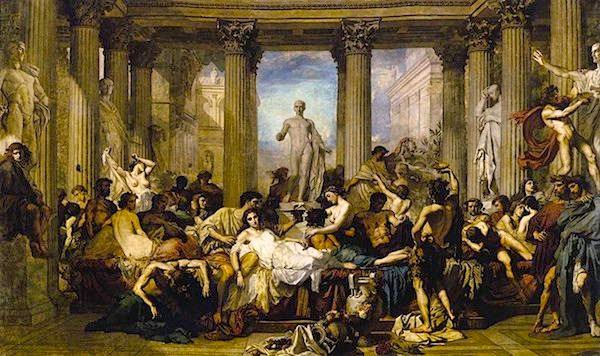
The marketing started in 300AD when in the Rome of the Emperor Constantine (recently converted to Christianity) the celebration of Christ’s birth was made to coincide with Saturnalia. The feel- good of a great blow-out got the Christian bandwagon rolling along nicely.

.
This coincidence of celebrating Christ’s birth and roll-out-the barrel party time continued happily until typically the mean old sod, Mr Austerity Cromwell banned Christmas. Back to normal and a lot more when Charles 11 returned to England.

Enter the four great apostles of Christmas early in the 19th century, first Washington Irving in America and his “Old Christmas” and the virtual invention of the Christmas that we know.


Then Clement Moore - a Theology Professor whose “The Night before Christmas” was written for his children, then was picked up by the New Yorker and has become a defining Christmas idea.
Dickens and Cruikshank, his illustrator, followed in 1836 and 1843 with Pickwick Papers and a Christmas Carol.

Around the same time Prince Albert, gluhwein king and Victoria’s husband brought us German Christmas - snow, sleigh bells, decorated trees and Victorian Christmas was born.

The bandwagon accelerated with Coca Cola’s Christmas advertising and the resounding “ho, ho, ho”s amplified as the toy business burgeoned and Christmas feel-good films filled our media.


Christmas became big business - lasting until January 6th in most of Eastern Europe and Russia but it’s the way marketers have shaped the event to such smiley and profitable effect that’s most striking. Washington Irving put it like this in his efforts to create a ‘marketing’ campaign (he wouldn’t have called it that) to quell social violence and appeal to everyone’s good nature:-

In the depth of winter, when nature lies despoiled of every charm, and wrapped in her shroud of sheeted snow, we turn for our gratifications to moral sources. The dreariness and desolation of the landscape, the short gloomy days and darksome nights, while they circumscribe our wanderings, shut in our feelings also from rambling abroad, and make us more keenly disposed for the pleasures of the social circle. Our thoughts are more concentrated; our friendly sympathies more aroused. We feel more sensibly the charm of each other's society, and are brought more closely together by dependence upon each other for enjoyment. Heart calleth unto heart; and we draw our pleasures from the deep wells of living kindness, which lie in the quiet recesses of our bosoms; and which, when resorted to, furnish forth the pure element of domestic felicity.

It has something else which enthrals me. It evokes and sustains such great stories and the felicitous layering of Christian, pagan, commercial and romantic stories and myths from  different geographies. Christmas stories are like Christmas cake, mixed and rich.


The pageantry and the atmosphere of this time never fail to astonish even hardened cynics and make those two words “bah! humbug” sound wonderfully festive too.


Happy Christmas.

Monday, 6 October 2014

THE WEALTH PARADOX

Just a short time ago we accepted as a universal truth that a company belonged to the shareholders and since the shareholders wanted dividends our job was just to deliver profit.

Go back longer and owners of companies stumbled upon the idea of adding value to make a buck (or if you were Henry Heinz a bean.) Take a commodity, add some magic ingredients, trumpet your existence and make sure you could hardly move without finding it. Result a profitable, valuable brand.


A long time ago a less subtle technique for achieving wealth was used. Smash and grab. Attila, the Romans, Walter Raleigh, Thomas Cromwell, the British Empire, the American Railroad entrepreneurs all went out and took what they wanted - money, jewels, property, land and slaves. Some Russians copied this ‘honourable’ activity after perestroika and the Yeltsin liberation of state assets. These oligarchs haven’t exactly worked for their wealth. Most have simply stolen it.


The game’s changing. After the banking crisis and the astonishing valuations of high tech companies there’s a widespread reaction against corporate wealth. As I stumble in search of Nurofen through crowds outside Boots baying “pay your taxes” I realise how much it’s changed.

Quite simply the consumer of tomorrow will say in the cliché from the 1976 film Network:

I’m as mad as hell and I’m not going to take this anymore

(I just watched Peter Finch in the film ‘Network’. Look at the clip on YouTube - it’s still chilling nearly 40 years on.)


Ron Paul, the former US Republican congressman and two-time Republican presidential candidate said “Don't steal - the government hates competition” and if you look at what governments in the past have taxed he has a point. In the UK fireplaces, hats; in Russia beards; in Ancient Rome urine (which was used in leather and the treatment of cloth). The Americans have been and in some States are no less inventive. There’ve been taxes on blueberries, pumpkins - those going to be carved, body piercings and in 2005,Tennessee began requiring drug dealers to anonymously pay taxes on any illegal substances they sold.

The world operates globally yet small players in a given market like UK retail can shake the foundations, the might of Google and Amazon are being increasingly criticised on the grounds of their failings as good citizens and respectable occupations are shifting.


A French patisserie maker came to live in the UK recently to set up business.  This new neighbour was invited to a drinks party - “what do you do?” someone asked. “Je suis un…baker” Horror! “What’s wrong?” he asked. “We don’t like bankers” they said “I’m a baker not a banker” he protested. They gave him more to drink and embraced him fondly.

Slowly we are beginning to treat big wealth like big anything.

So is this the age of the baker?

Maybe not but it’s certainly an age of refreshed values as Wonga found out last week. Their age of funny-money is ending. And shortly the slogan will read “Wonga is no longer”.


Monday, 29 July 2013

THE ELEPHANT IN THE ROOM IS FOREIGN


The elephant of course is the EU which, having been heavily exercised in the Spring, now appears to have bored politicians, The Tories have sprinted off on their holidays in fine spirits after seeing DC beat up Ed Miliband in the Commons and then being fed burgers at No. 10. Quite simply elephants have stopped being important.

Yet an “in-out” referendum will determine our grandchildren’s lives. And the debate, in so far as there has been one or ever is one in the political forum, is neither particularly rational or thoughtful.


It’s clouded with prejudice, short termism and narrow self-interest. Too much bluster, not enough calculation.

Even Matthew Parrish, not unknown for saying what he thinks, confesses he just doesn’t know what to think when it comes to Europe.

We start from the fact that many of us simply don’t seem to like foreigners at all. It’s in our DNA. And the Europeans are the most convenient to dislike.  And then we seem short of the skills which we used to have and which inspired that board game “Diplomacy”. I’ve been watching the “White Queen” on BBC TV and listening to Philippa Gregory and others on the Wars of the Roses and the purposeful way the major players of that time worked out how to secure advantage.

Give Margaret Beauford, Elizabeth Woodville or, a few years later, Thomas Cromwell the situation we face and they’d come up with a somewhat more creative solution than one involving taking your bat and just leaving the game. (Machiavelli from about the same era would have loved it too.)


All our competitors have been seriously weakened by recent events, particularly France, but also Spain and Italy and even Germany. Meanwhile Britain stands in reasonable stead with  an economy on the upturn and  reputational kudos through a good Olympics, recent great sporting successes, London being acknowledged the capital city of the world as is our status as the global arts centre.

Weak competitors mean it’s time to advance not to retreat.

If we choose we can be a real lead player inside Europe helping Germany re-construct it. Our 15th and 16th century strategy role models would unblinkingly have seen the opportunity of advancing Britain by such a powerful alliance.

When it comes to being rational I have to imagine that the vast majority of businessmen who want us firmly in the centre of the EU represent left brain thinking. Why would they say this if they couldn’t see how important it was?


(Incidentally I thought a potent downside of separatism was well expressed by a top Scot who confided that wealth and talent would flood out of Scotland if independence were to be voted in there.)  And it’s not just the world of business. Ask America or Japan (and probably China and India too) and they’re mystified why we aren’t striding up to the Board Table as the player to replace the role the waning and woeful France once had.

Britain at 1% of global population isn’t a great world power any more but it’s a great European power.

That’s where we can exert real influence and where we’re needed.

Those who disagree probably take a similar view of social media…they don’t like it, understand it or even want it. They say they’ll ignore it and that it’s not that important. Yet 93% of business use it in their marketing and, like it or not, Facebook, were it a country, would in terms of population be the third largest in the world.

The elephant can’t be ignored.

The debate may be tough and nasty.

But a bit of a thoughtful punch up is better than potentially acceding to a generation or so of isolation and decline, isn’t it?

www.colourfulthinkers.com