As you get older your memory seems to worsen but it’s more complicated than the just the onset of senior moments. Quite simply you have much more to remember than someone younger who’s been to fewer places, met fewer people and done less. The attic of your mind or, if you prefer, your “Mind Palace” is crammed to the rafters and finding that name or that reference is hard as it’s lying behind all those memories, thoughts and experiences.
The mind is also good at being a therapist. Forgetting things can often be very helpful. If we could vividly recall as though it were yesterday each root canal procedure we’d had, every embarrassing faux pas and every crisis and tragedy we’d soon become a gibbering wreck. Our mind filters this stuff and sometimes deletes the names of people we actually didn’t like but had felt we ought to have because they were important. Our mental search engine is on our side and it even rewrites history casting us in a better light than we deserved.
Remember that horrible confrontation with a mugger who was about to hit you when you cried: “don’t - please don’t”, and at that moment a passer-by intervened and drove him off. In the recut version of the play you smite the beastly ruffian with one blow of your fist and it is he who cries in a quavering voice “don’t please don’t, please don’t hit me again” and you laugh and send him on his way. Yes!
Daniel Kahneman in his epic “Thinking fast and slow” describes the distorting power of memory and how we can decide, if we choose, that a favourable reconstruction of history makes us happier people. If we can only remember things as they were as vividly as if they’d happened today we should never forgive. The Irish Peace Agreement, the cordial relationships we have with Germany and Japan and so on would be impossible. Forgetfulness and shading of memory enables forgiveness.
It’s in a court of law where two people of good character, with no incentive to tell anything other than the truth, very often claim honestly to see things from a completely contrary point of view. It’s why our legal system is so robust and effective. It understands that people unblinkingly and unwittingly lie and it seeks to unravel this.
Less importance is attached to memory than ever…why try to remember when Google can do it for you? But memory matters. Nearly all speakers at conferences feel they speak without notes (that’s memory); making creative connections is done by … memory; avoiding plagiarism is done by good memory (plagiarism is done by simple memory); good human relationships depend on memory (remembering birthdays and anniversaries).
The mind is kind. It responds to our needs and our desires. You can train your memory, you can focus on what you need to remember but you can also filter out bad stuff. Remember, your mind is on your side.
Showing posts with label memory. Show all posts
Monday, 21 September 2015
A TRICK OF MEMORY
Labels:
ageing memory,
colourful thinkers,
Daniel Kahneman,
memory,
mind palace,
remembering,
Richard Hall,
Richard Hall author
Posted by
Richard Hall
at
09:30
Tuesday, 11 November 2014
IT'S IMPOSSIBLE TO THINK WELL WITHOUT A REASONABLE MEMORY
Today our memory is on our iPad or smartphone. Today children at school are not taught to memorise things. Today we’ve forgotten about our memory (how ironic is that?) Yet memory today is still a vital thinking tool.
Joshua Foer is a journalist and writer (“Moonwalking with Einstein: the art and science of remembering everything” is the book he wrote). He became interested in memory and especially the feats of memory some achieve in remembering hundreds of numbers in sequence or the cards in several packs of cards.
So he visited the USA Memory Championship where his interest deepened. So much so that in 2006, just out of interest, he trained for and entered the championship.…and he won it. Jonathan Foer became US Memory Champion almost by chance. How? In his book he explains how techniques invented 2,500 years ago still work today.
In around 500 BC the Greek lyric poet Simonides had a wonderful memory. During the excavation of the rubble of one Scopas' dining hall that had collapsed in an earthquake, Simonides (who’d luckily left before the disaster) was asked to identify each guest killed. Although their bodies had been crushed beyond recognition he successfully finished the task by remembering who was who from their positions at the table before his departure. He used what became known as the 'memory palace', a system for mnemonics widely used until the Renaissance …when things we needed to remember were printed so our memories weren’t called on with quite the previous urgency.
Imagine a lawyer who can’t cross reference relevant cases. Imagine a writer who couldn’t remember the references that enrich his assertions. You cannot busk when you have poor memory. And in business you occasionally need that memory-friend to remind you of a piece of evidence or of something that needs doing.
One of our biggest problems is that our mind attic is stacked full of rubbish that we don’t need. So, in specific areas we really want to focus on, we need to do a “Spring Clean”. Learn some stuff by heart, put some structure around a subject in which we have a keen interest and see what happens.
Look after this, one of our precious assets. Having a good memory makes us so much more efficient, impressive and productive.
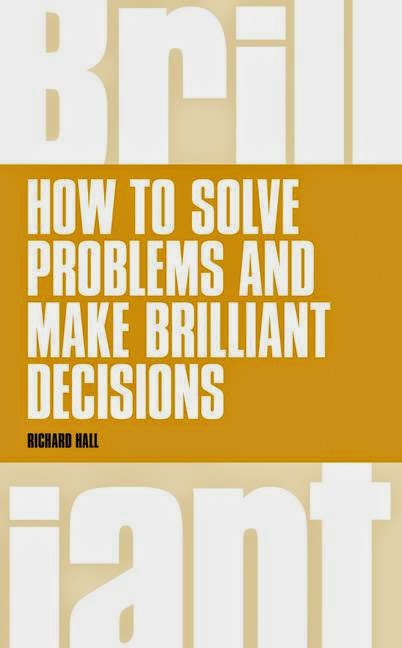
How to solve problems and make brilliant decisions. (Business Thinking Skills that really work) published by Pearson is coming out on November 12th2014.
Joshua Foer is a journalist and writer (“Moonwalking with Einstein: the art and science of remembering everything” is the book he wrote). He became interested in memory and especially the feats of memory some achieve in remembering hundreds of numbers in sequence or the cards in several packs of cards.
So he visited the USA Memory Championship where his interest deepened. So much so that in 2006, just out of interest, he trained for and entered the championship.…and he won it. Jonathan Foer became US Memory Champion almost by chance. How? In his book he explains how techniques invented 2,500 years ago still work today.
In around 500 BC the Greek lyric poet Simonides had a wonderful memory. During the excavation of the rubble of one Scopas' dining hall that had collapsed in an earthquake, Simonides (who’d luckily left before the disaster) was asked to identify each guest killed. Although their bodies had been crushed beyond recognition he successfully finished the task by remembering who was who from their positions at the table before his departure. He used what became known as the 'memory palace', a system for mnemonics widely used until the Renaissance …when things we needed to remember were printed so our memories weren’t called on with quite the previous urgency.
Imagine a lawyer who can’t cross reference relevant cases. Imagine a writer who couldn’t remember the references that enrich his assertions. You cannot busk when you have poor memory. And in business you occasionally need that memory-friend to remind you of a piece of evidence or of something that needs doing.
One of our biggest problems is that our mind attic is stacked full of rubbish that we don’t need. So, in specific areas we really want to focus on, we need to do a “Spring Clean”. Learn some stuff by heart, put some structure around a subject in which we have a keen interest and see what happens.
Look after this, one of our precious assets. Having a good memory makes us so much more efficient, impressive and productive.
How to solve problems and make brilliant decisions. (Business Thinking Skills that really work) published by Pearson is coming out on November 12th2014.
Labels:
Apple,
ipad,
memory,
memory tricks,
Moonwalking with Einstein,
Richard Hall,
Richard Hall author,
USA Memory championship
Posted by
Richard Hall
at
08:30
Monday, 31 March 2014
MEMORIES ARE WHAT SHAPE OUR LIVES
Joshua Foer is a journalist and writer (“Moonwalking with Einstein”). He became interested in memory and especially the extraordinary feats of memory some achieve some remembering hundreds of numbers in sequence or the cards in several packs of cards. He was intrigued that the seemingly impossible could be memorised. He wanted to know more so he visited the USA Memory Championship. There’ve been sixteen such championships in New York City. His interest deepened. So much so that in 2006, just out of interest he trained for and entered the championship.
There he discovered people specialists in things like remembering as many decks of playing cards as possible, 5min Historic Dates (fictional events and historic years) and memorizing the order of one shuffled deck of 52 playing cards as fast as possible. World record: 21.90 seconds. There are ten exercises in all.
Jonathan was blown away. He realised he was in the presence of mental gymnasts of an extraordinary order. Yet in 2006 he entered just for interest and…and he won it. Jonathan Foer became US Memory Champion almost by chance. How? Well he explains on TED how you have to make things you want to remember meaningful and tangible. He explains how techniques invented 2,500 years ago still work.
The lyric poet Simonides had a wonderful memory. During the excavation of the rubble of one Scopas' dining hall that had collapsed in an earthquake, Simonides (who’d luckily left before the disaster) was asked to identify each guest killed. Although their bodies had been crushed beyond recognition he successfully finished the task by remembering who was who from their positions at the table before his departure. He later developed what became known as the 'memory palace', a system for mnemonics widely used until the Renaissance …when things we needed to remember were printed so are memories weren’t called on with quite the previous urgency.
Today of course our memory is on our iPad or smartphone. Today children at school are not taught to memorise. Today we’ve forgotten about memory. Yet memory today is still a vital thinking tool.
I’d go further. It’s virtually impossible to be a great success without a reasonable memory. Imagine a lawyer who can’t cross reference relevant cases. Imagine a toymaker who can’t recall similar toys to his latest idea. Imagine a writer who couldn’t remember the references that enrich his assertions.
You cannot busk when you have poor memory.
One of our biggest problems is our mind attic is stacked full of rubbish we don’t need. So, in specific areas we really want to focus on, we need to do a “Spring Clean”. Learn some stuff by heart, put some structure around a subject in which you have a keen interest and see
what happens. Look after one of your precious assets.
(By the way the 17th USA Memory Championship was on March 29, 2014 at Con Edison headquarters, 4 Irving Place, New York City.)
There he discovered people specialists in things like remembering as many decks of playing cards as possible, 5min Historic Dates (fictional events and historic years) and memorizing the order of one shuffled deck of 52 playing cards as fast as possible. World record: 21.90 seconds. There are ten exercises in all.
Jonathan was blown away. He realised he was in the presence of mental gymnasts of an extraordinary order. Yet in 2006 he entered just for interest and…and he won it. Jonathan Foer became US Memory Champion almost by chance. How? Well he explains on TED how you have to make things you want to remember meaningful and tangible. He explains how techniques invented 2,500 years ago still work.
Today of course our memory is on our iPad or smartphone. Today children at school are not taught to memorise. Today we’ve forgotten about memory. Yet memory today is still a vital thinking tool.
I’d go further. It’s virtually impossible to be a great success without a reasonable memory. Imagine a lawyer who can’t cross reference relevant cases. Imagine a toymaker who can’t recall similar toys to his latest idea. Imagine a writer who couldn’t remember the references that enrich his assertions.
You cannot busk when you have poor memory.
One of our biggest problems is our mind attic is stacked full of rubbish we don’t need. So, in specific areas we really want to focus on, we need to do a “Spring Clean”. Learn some stuff by heart, put some structure around a subject in which you have a keen interest and see
what happens. Look after one of your precious assets.
(By the way the 17th USA Memory Championship was on March 29, 2014 at Con Edison headquarters, 4 Irving Place, New York City.)
Labels:
Foer,
I-phone,
iphone,
Jonathan,
memory,
memory tricks,
moonwalking with Einstien,
US memory champion
Posted by
Richard Hall
at
06:00
Subscribe to:
Posts (Atom)