Showing posts with label Harvard. Show all posts

Monday, 14 November 2022

THE GROWTH MYTH

This is not going to be about the folly that occurred in the UK with Ms Truss last month or at least not much about that. 

Liz Truss blames 'anti-growth coalition' for UK's problems in conference  speech | NationalWorld

Instead it’s a reflection on the thinking that has driven business and the management of money over my lifetime. Increasingly in a world currently talking now about recession, growth seems rather irrelevant.  Yet I know few people in business, consultancy or finance who don’t still talk passionately about growth plans.

Last Tuesday the founder and owner of FTX, the high-growth crypto currency platform, Sam Bankman-Fried (hang on - read that name again. Who’s teasing whom?) sent out this message:

“I’m sorry. I fucked up”
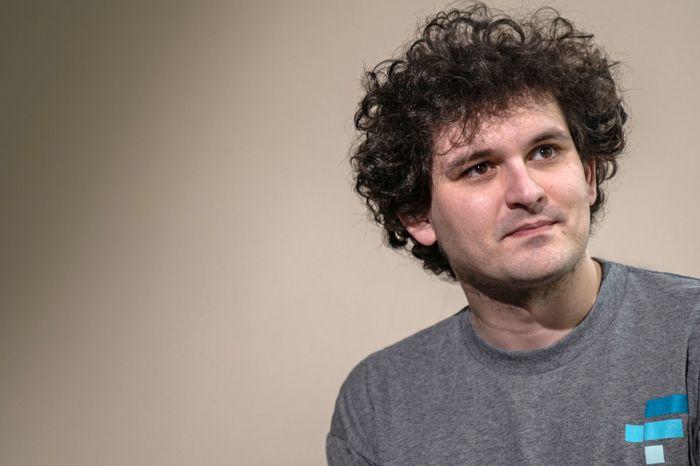
The $26 billion rise and fall of FTX crypto king Sam Bankman-Fried -  MarketWatch

From a valuation of over $36 billion earlier this year to nothing today. Can I spell out that value in numbers? $36,000,000,000. Wow. That was impressive growth for a business founded in just May 2019.

At least Sam is honest in his admission but he represents in his quest for growth the underlying horrors that can accompany it. Here’s what he said in an interview:  

“Sometimes the only thing standing between what is and what could be is the will to get there, whatever it requires”

I agree with the thought that determination and ambition are necessary qualities for success in business but, hang on, “whatever it requires” absolutely terrifies the hell out of me.

The “growth thing”, as I’m inclined to call it, is strongly present in the USA. Over half a century ago J.F. Kennedy said: 

“Conformity is the jailer of freedom and the enemy of growth.”

10 Things You May Not Know About John F. Kennedy - HISTORY

But I’m beginning to wonder now whether it isn’t growth that’s the enemy, whether the determination to get bigger, to scale your business isn’t a kind of madness. Whether those seeking double digit growth or, in Sam’s case much more than that, haven’t created a nightmare of personal burn out and concomitant catastrophes socially, environmentally and politically.

Recently I was in a restaurant called Wild Flor with perhaps 36 covers. It started in 2019 and now it’s food gets better every time I’ve been there. It’s gradually moving from tasty to dreamily delicious.  But how should they grow? Wrong question. How could they improve? How do they gain even better reputation and become the best? Sam (poor Sam) said “Better is bigger”. No it’s not – not when I’m eating my lunch. 

Wild Flor Hove | Local reviews, interviews, menus and booking

 Growth is a new form of aggression thus the founder of the martial art Aikido, Morihei Ueshiba (1883 -1969) once said:

“If we stop growing, technically and spiritually, we are as good as dead.”

Like many great quotes it’s flawed and just plain wrong. If we merely seek to grow we’re doomed to disappoint ourselves and others because, sunshine, there’s much more to life than growth.


I may sometimes be rather unkind about Business Schools and MBAs. This has mainly been because of their use of historic and often misleading case studies like one called Royal Bank of Scotland, The: Masters of Integration” by: Nitin Nohria and James Weber of Harvard.
Harvard Business School - YouTube

As tech stocks dive and growth is hard to achieve maybe it’s time now to replan the gardens which represent our lives, dig up the failed plants, replenish nutrients in the earth and adopt a strategy of better not bigger. In 2022 things have moved on and that “growth thing” with it. The adulation  of the unicorn (billion dollar businesses are called this) seems yesterday’s fad. Time now to maximise customer contentment, product quality and producer skills not growth.


Growth will come when it’s good and ready not because we seek it for its own sake. 

Monday, 5 May 2014

SIZE BEATS PUNY - FIGURE IT!

I’ve been listening to the arguments all week. It’s become increasingly clear that size matters. That’s why China is now tipped by the Economist to overtake the USA as the world’s biggest economy by the end of this year.


It’s why the Astra Zeneca takeover by Pfizer makes so much sense….. but I’ve got a bit confused by this. Apparently the most significant recent breakthroughs by pharmaceutical companies have actually been achieved by midsized companies.  The fact is too many big mergers have been disasters for us to assume this one will work.


The Huffington Post notes that 70 to 90 percent  of mergers fail . Here are a series that we can all recall - AOL and Time Warner - disaster; EBay and Skype - disaster; Quaker buying Snapple for $3.6 billion and then selling just 27 months later for $300million and worse, Daimler Benz buying Chrysler for $36 billion and then paying Cerberus Capital $650 million to sever the ties a few years later.

My biggest concern is this Pfizer/Astra Zeneca story is about innovation and learning. No wonder that tiny little academic institutions like Oxford, Cambridge and Harvard with student populations of just 22,000, 18,000 and 21,000 respectively are struggling when there are mighty organisations like the Indira Ghandi University (3.5 million and number one in the world); The Payane Noor University, Tehran (800,000 and number 8) and even the lowly Modern University for the Humanities in Moscow at 48th in the league table has 100,000 students.


So innovation and excellence go with size.

I’ll say that again so you can fully appreciate how absurd the equation of scale with excellence is.
Innovation and excellence go with size. Unless you mean “go” in the “disappear, are absent from and destroyed by” sense of the word because the reality is, as we should by now have learned, scale fails. Creativity is killed by size.


John Lewis Christmas 2013 created by a little agency - Adam and Eve

Any of you who are thinking of setting up Goliath Advertising Inc. forget it.  The hot agencies in the UK right now are I’m told Adam and Eve, Weiden Kennedy, Droga5 and Corner. None are big and although Adam and Eve was bought by Omnicom it is still aggressively independent. More start-ups like the Counter are happening whereas Abbott Mead,with as many as 400 staff as the London number one agency, is described by some as a “behemoth”.

This mad merger will probably happen but I doubt, no,  I do more than doubt, I’ll be confounded and astounded if there’s any addition of value, innovation or human  advancement as a result of such folly. Ian Read the Pfizer CEO will get rich plus a few others but breakthroughs, achievements and success - forget it. Big isn’t beautiful it’s just barmy and the mid-sized and small businesses are where the big brains will go. Oh and to Oxford, Cambridge and Harvard too.

www.colourfulthinkers.com

Wednesday, 27 March 2013

THE ROYAL SOCIETY OF PUBLIC AFFAIRS


Look, I have a confession to make. I love the RSA (Royal Society of Arts). 

I love the building, the people there, the library and the events. But hardly any of the events are about culture or the arts – we’ve got Sir Peter Bazalgette shortly – but for something with Arts in its title that’s a bit sparse. And the library is more McKinsey meets Harvard Business School than “hand me the prussian blue and the burnt sienna, sweetheart”.


The RSA's mission expressed in the founding charter was to:
 "embolden enterprise, enlarge science, refine art, improve our manufacturers and extend our commerce".
But in its website, the RSA describes itself as
"an enlightenment organisation committed to finding innovative practical solutions to today’s social challenges".

Whichever way you look at it art has been demoted whilst we’ve been looking at the front of the building and feeling happy in the warm embrace of the name.

What Matthew Taylor has done brilliantly is indeed to make the RSA an enlightenment and  mind-opening organisation. What the RSA says today carries the weight of considered opinion but it’s missing a trick.
A trick I heard on Saturday Live on the Radio 4 when following a piece on GF Watts Richard Cole and Alain de Botton reflected that “art can really change the world”.


Who would deny the explosion of pop culture in the early 1960s changed the way we felt and saw things or that the beauty and power of Titian and Tintoretto helped build the character of 16th century Venice or that Dickens helped explain and change Victorian Society?  William Morris, Ruskin and we might have add the Bloomsbury Group and latterly Conran were people who believed art was part of and helped define a good life. Graffiti and rap, alien to many, helps shape today’s world. When we hear the Mozart Requiem it isn’t just a succession of tunes, it lets us see the “world in technicolour” as Eric Whitacre put it.

Art, quite simply, changes the way we feel, think and see things.

The current epidemic of book clubs and choirs is about something more profound than self-improvement. And as Gareth Malone discovered, and has harnessed, society is inspired by the art that lies unexplored within people.

The GF Watts Gallery in Compton near Guildford, the topic on Saturday Live, is a tribute to the Victorian artist whose painting “Hope” has inspired Barack Obama – it’s his favourite painting.


Through the period when Watts lived, Britain was characterised by urbanisation, mechanisation, poverty, a rapidly growing economy, Imperialism and an explosive arts scene – the Pre Raphaelites, the Romantics and the great Victorian Novelists.

And the RSA thrived.

Now as part of its mission to enlighten we’d like to see a little more focus by the RSA on the economic, social and global impact that the arts in the UK can have. If nothing else the influence this organisation might bring to bear on successive governments, who are deaf to the importance of the arts, might improve the current funding famine.

As Sir John Tusa (CEO of the Barbican Centre) mildly observed:
I have no doubt whatever that we behave in a much better way because of the time we spend with the arts.

He might have added that the RSA isn’t spending enough time with them.


Written for and first published on 'Business of Culture'

www.colourfulthinkers.com