Tom Goodwin is an Executive Vice President and head of Innovation at Zenith Media. Here’s what he said last week on Linkedin:
“Living in New York and working in advertising I rarely see people over the age of fifty. I'm never exposed to, let alone have the pleasure of working alongside them. This is one of the worst things about working in marketing right now. As an industry we're obsessed with youth, we're endlessly trying to get "upwardly mobile Millennials" or "hard to reach youthful influencers" or some nonsensical and largely broke crowd who can't afford the premium SUV we have on offer. Meanwhile we've not looked around the BA First Lounge or the Hyatt Hotel lobby, or the Emirates Business class cabin to see that all the people with money and influence are actually rather old. And wise.
Occasionally, on the rare events where I get to listen to some of the wonderful old folk of advertising, it quickly makes me realize how much we as an industry suffer from a lack of wisdom. We have incredible levels of vision, an abundance of precociousness, brilliant creativity, but as an industry we pretty much have no wisdom at all.”
Personally being one of those “wonderful old folk of advertising” I found myself in profound agreement with Tom who is still in his 30s.
In Japan where the concept of mentoring has always been taken more seriously, “senpai” is someone of a higher age, or senior and “kōhai” is a protégé or junior. Wisdom there is a prized commodity whereas here it’s all over when you hit 50 or 60. Yet watching Liz Truss our Justice Secretary, a gangling 42 year old and clearly out of her depth, I lamented the lost wisdom of predecessors like Ken Clarke and Jack Straw, Poor, young Liz. There was no justice in putting her in that job without the gravitas and wisdom to clothe her naked inexperience.
Cats like the aged have a problem too. They kill allegedly 55 million birds a year in the UK. Their DNA is shockingly obvious. They are predators and pretty selfish creatures. But the most successful pets in the world numerically.
Their relaunch comes in a new design. The more sedate pussy. Welcome to the “sausage cat” - apparently it’s a fashion wow (or miaow) in America coming your way soon - slowly.
Cats and the aged are not much alike but like cats we aged need to become more visible. We need to review how we’re perceived and relaunch ourselves if our “wisdom” and thoughtfulness is to be treated more seriously. Too many of us are grumpy, petulant lamenters of lost youth - critics of the young rather than enthusiastic spectators and coaches of a youth potentially better than we ever were. We need to get out of BA First lounges and start working again to show how useful we can be and how we can complement the skills of today’s dynamic leaders.
TOMORROW - an additional blog from Richard.
Monday, 20 February 2017
THE OLD NEED REINVENTING...LIKE CATS
Labels:
advertising,
British Airways,
Liz Truss,
Millenials,
New York,
Richard Hall,
Tom Goodwin,
Zenith Media
Posted by
Richard Hall
at
09:12
Monday, 13 February 2017
PREPARE FOR LIFT-OFF AND A DODGY FLIGHT
Increasingly what defines our lives lies in the execution of stuff. A great recipe badly cooked and carelessly served is a disaster. An ordinary recipe beautiful cooked and lovingly served is a triumph.
We are living in a world of change, innovation and contradiction, a world where nothing is quite as it seems, where long held assumptions about civil rights, equality and being nice to each other were just taken for granted.
Let’s consider gastroenterology and the state of chronic constipation. That’s how the EU bureaucratic has felt for some time as has the US dominated by its MBAs, Silicon Valley and its Financiers. Enter the two best laxatives known to humanity - Donald Trump and an elixir called Brexit.
Here’s how Dave Barry a Pulitzer prize-winning columnist for the Miami Herald described his own laxative moment:
“On the day before my colonoscopy, I began my preparation. In accordance with my instructions, I didn't eat any solid food that day; all I had was chicken broth, which is basically water, only with less flavour. Then, in the evening, I took the MoviPrep. You mix two packets of powder together in a one-litre plastic jug, then you fill it with lukewarm water. (For those unfamiliar with the metric system, a litre is about 32 gallons.) Then you have to drink the whole jug. This takes about an hour, because MoviPrep tastes - and here I am being kind - like a mixture of goat spit and urinal cleanser, with just a hint of lemon.
The instructions for MoviPrep, clearly written by somebody with a great sense of humour, state that after you drink it, 'a loose, watery bowel movement may result.' This is kind of like saying that after you jump off your roof you may experience contact with the ground.
MoviPrep is a nuclear laxative. I don't want to be too graphic, here, but: have you ever seen a space-shuttle launch? This is pretty much the MoviPrep experience, with you as the shuttle. There are times when you wish the commode had a seat belt. You spend several hours pretty much confined to the bathroom, spurting violently. You eliminate everything. And then, when you figure you must be totally empty, you have to drink another litre of MoviPrep, at which point, as far as I can tell, your bowels travel into the future and start eliminating food that you have not even eaten yet.”
In political terms that is what we’ve just started to go through.
In years to come we’ll describe not draining the swamp but emptying the body of its waste so we can start to behave sensibly again. Neither Trump nor Theresa are permanent fixtures - they are watery movements and they’ll pass on quite soon.
Am I unduly optimistic? We are - I suggest- going through a curious phase as this cartoon suggests. Time to use these laxative tools and then get back to down to earth again
We are living in a world of change, innovation and contradiction, a world where nothing is quite as it seems, where long held assumptions about civil rights, equality and being nice to each other were just taken for granted.
Let’s consider gastroenterology and the state of chronic constipation. That’s how the EU bureaucratic has felt for some time as has the US dominated by its MBAs, Silicon Valley and its Financiers. Enter the two best laxatives known to humanity - Donald Trump and an elixir called Brexit.
Here’s how Dave Barry a Pulitzer prize-winning columnist for the Miami Herald described his own laxative moment:
“On the day before my colonoscopy, I began my preparation. In accordance with my instructions, I didn't eat any solid food that day; all I had was chicken broth, which is basically water, only with less flavour. Then, in the evening, I took the MoviPrep. You mix two packets of powder together in a one-litre plastic jug, then you fill it with lukewarm water. (For those unfamiliar with the metric system, a litre is about 32 gallons.) Then you have to drink the whole jug. This takes about an hour, because MoviPrep tastes - and here I am being kind - like a mixture of goat spit and urinal cleanser, with just a hint of lemon.
The instructions for MoviPrep, clearly written by somebody with a great sense of humour, state that after you drink it, 'a loose, watery bowel movement may result.' This is kind of like saying that after you jump off your roof you may experience contact with the ground.
MoviPrep is a nuclear laxative. I don't want to be too graphic, here, but: have you ever seen a space-shuttle launch? This is pretty much the MoviPrep experience, with you as the shuttle. There are times when you wish the commode had a seat belt. You spend several hours pretty much confined to the bathroom, spurting violently. You eliminate everything. And then, when you figure you must be totally empty, you have to drink another litre of MoviPrep, at which point, as far as I can tell, your bowels travel into the future and start eliminating food that you have not even eaten yet.”
In political terms that is what we’ve just started to go through.
In years to come we’ll describe not draining the swamp but emptying the body of its waste so we can start to behave sensibly again. Neither Trump nor Theresa are permanent fixtures - they are watery movements and they’ll pass on quite soon.
Am I unduly optimistic? We are - I suggest- going through a curious phase as this cartoon suggests. Time to use these laxative tools and then get back to down to earth again
Labels:
Brexit,
colourful thinkers,
Donald Trump,
great recipes,
laxative,
recipe,
Richard Hall,
Theresa May
Posted by
Richard Hall
at
09:10
Monday, 6 February 2017
DECKCHAIRS, ICEBERGS AND FARCE
Maybe I’m tired or maybe the world really is falling apart. My day had started badly. I’d read the papers and the name Trump was getting me down.
He loves breaking eggs but does he know how to make omelettes? And with omelettes in my mind I started worrying about France. Marine Le Pen? They can’t, they won’t … will they? According to comedian Andy Hamilton they won’t because she’s a fake. Never served in the armed forces and has certainly never been a marine. Truth will out. But I’m no longer sure of that
Life is all smoke and mirrors. Take this morning. I bounded happily from the house and clicked my key at my silver, shining beast of a car expecting that welcoming beep, flash of lights and wing mirrors opening like a butterfly’s wings. But nothing happened. I tried again. Peering in I saw the lights had been left in the ‘on’ position. Flat battery. A vivid torrent of language flowed from my lips. First Trump and then this. Fate had taken advantage of me once too often, once too often. This was payback time. I kicked the car’s tyres and vowed vengeance. I called Jaguar and shouted a bit. And then I sulked. After a while bored with sulking I went out to whack my car again. And when I got to it I realised it wasn’t …my car that is. The same make, the same colour, the same interior but different number plate. Looking up I saw my own car further down the road. My blameless silver beast.
Laughing at myself my mood lifted. I thought about grandchildren and great nieces with whom everything seems so much simpler. Their games are more fun. I’d played shops with my two year old granddaughter whose pricing concepts are strikingly at odds with dynamic pricing. Everything seemed to cost £30 although everything my wife bought seemed to be cheaper. Tea, wine, Eurostar rail tickets all £30 until I trumped (sic) her strategy by asking “do you sell trumpets?” She gazed at me saying “I think I have one - can you ask your friend there what the price is?” My wife chipped in with a price “£12.50 will do” and so off I trotted with an imaginary bargain trumpet. This interlude compared favourably with our grown up world.
Donald has a certain bully-in-the-playground, childlike quality as have virtually all our politicians. Last week they meekly voted “yes” despite most of them strongly disagreeing with it, to the motion to action the Brexit article 50. Jazz fan, portly, Tory Kenneth Clarke stood alone in saying “No” and therefore representing the 16,000,000 who voted remain. First past the post referendum politics has served us very badly.
Yet the country’s economy is outstripping expectation. So all is well then? Not exactly, no. However fast we go there’s still an iceberg ahead. And there’s a farcical belief that we can avoid it. As our granddaughter would say “oopsy.”
He loves breaking eggs but does he know how to make omelettes? And with omelettes in my mind I started worrying about France. Marine Le Pen? They can’t, they won’t … will they? According to comedian Andy Hamilton they won’t because she’s a fake. Never served in the armed forces and has certainly never been a marine. Truth will out. But I’m no longer sure of that
Life is all smoke and mirrors. Take this morning. I bounded happily from the house and clicked my key at my silver, shining beast of a car expecting that welcoming beep, flash of lights and wing mirrors opening like a butterfly’s wings. But nothing happened. I tried again. Peering in I saw the lights had been left in the ‘on’ position. Flat battery. A vivid torrent of language flowed from my lips. First Trump and then this. Fate had taken advantage of me once too often, once too often. This was payback time. I kicked the car’s tyres and vowed vengeance. I called Jaguar and shouted a bit. And then I sulked. After a while bored with sulking I went out to whack my car again. And when I got to it I realised it wasn’t …my car that is. The same make, the same colour, the same interior but different number plate. Looking up I saw my own car further down the road. My blameless silver beast.
Laughing at myself my mood lifted. I thought about grandchildren and great nieces with whom everything seems so much simpler. Their games are more fun. I’d played shops with my two year old granddaughter whose pricing concepts are strikingly at odds with dynamic pricing. Everything seemed to cost £30 although everything my wife bought seemed to be cheaper. Tea, wine, Eurostar rail tickets all £30 until I trumped (sic) her strategy by asking “do you sell trumpets?” She gazed at me saying “I think I have one - can you ask your friend there what the price is?” My wife chipped in with a price “£12.50 will do” and so off I trotted with an imaginary bargain trumpet. This interlude compared favourably with our grown up world.
Donald has a certain bully-in-the-playground, childlike quality as have virtually all our politicians. Last week they meekly voted “yes” despite most of them strongly disagreeing with it, to the motion to action the Brexit article 50. Jazz fan, portly, Tory Kenneth Clarke stood alone in saying “No” and therefore representing the 16,000,000 who voted remain. First past the post referendum politics has served us very badly.
Yet the country’s economy is outstripping expectation. So all is well then? Not exactly, no. However fast we go there’s still an iceberg ahead. And there’s a farcical belief that we can avoid it. As our granddaughter would say “oopsy.”
Labels:
2 year old,
bargain,
Brexit,
bully,
Donald Trump,
Eurostar,
France,
Jaguar,
Kenneth Clarke,
Marine Le Pen,
Richard Hall,
sulking,
trumpet
Posted by
Richard Hall
at
08:48
Monday, 30 January 2017
DOES IT REALLY MATTER IF WE'RE HAPPY?
In the recently compiled global “2016 Happiness Index” compiled for the United Nations the UK comes 23rd (we were 21st in 2015 and 18th in 2012 when the report was first published.) No one can be happy to see us sliding down the table but nor can they be surprised. We’ve become a grumbly society dissatisfied with our lot. Denmark on the other hand comes consistently top.
Apparently the UK was at its most content in 1957 the year in which Prime Minister Harold McMillan won the election with the slogan which was true for most
“You’ve never had it so good.”
But you can’t keep on saying that (even if it’s true.) Broadly speaking everything, despite newspaper headlines in the Mail and Express, is actually getting better. Yet research in the workplace for instance would say otherwise. FT columnist Lucy Kellaway wonders why. Offices are nicer, with better, cleaner facilities, and bosses are more civilised and attentive, trained in empowerment, delegation and being nice. Despite there being less bullying and harassment people are nonetheless less happy.
We aim to delight our workforce yet that is unlikely to happen. Quite simply their expectations are never quite met and they never have it as good as they’d like. What makes it worse is those at the top of companies are earning disproportionately more and the sense amongst the rest of us of exploitation grows in line with that.
So are we pursuing an impossible target? In Julian Barnes collection of short stories, “The History of the World in 10 ½ Chapters,” “The Dream” is about his dreaming of heaven. Everything is perfect there. He can do anything and everything, eat as much of what he wants, play impeccable golf, see his favourite football team win the FA cup and yet after a while it becomes boring. Perfection is dull. Beauty relies on slight misalignments to be striking, happiness often happens in adversity rather than when everything is just so. We need rain as well as sunshine, ice as well as warmth, tears as well as laughter.
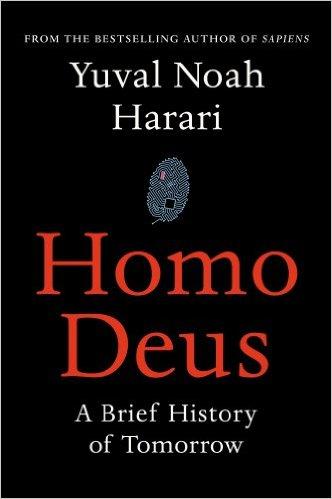
What makes our world so fascinating is we still don’t understand the human brain. In his book “Homo Deus” Yuval Noah Harari reflects:
“As long as we have to decipher the mysteries of consciousness we cannot develop a universal measurement of happiness”…
Yes - not just a measurement - nor a way of creating happiness consistently either. Neither more money, nor more leisure nor more anything can be guaranteed to work.
Our life spans seven conditions:
On any given day we could go through several phases and the more we do the richer the first three states will be.
Stop trying to be happy, start trying to be more interested and engaged. Happiness is only ever a phase so trying to be consistently happy is to be consistently disappointed. Sorry about that.
Apparently the UK was at its most content in 1957 the year in which Prime Minister Harold McMillan won the election with the slogan which was true for most
“You’ve never had it so good.”
But you can’t keep on saying that (even if it’s true.) Broadly speaking everything, despite newspaper headlines in the Mail and Express, is actually getting better. Yet research in the workplace for instance would say otherwise. FT columnist Lucy Kellaway wonders why. Offices are nicer, with better, cleaner facilities, and bosses are more civilised and attentive, trained in empowerment, delegation and being nice. Despite there being less bullying and harassment people are nonetheless less happy.
We aim to delight our workforce yet that is unlikely to happen. Quite simply their expectations are never quite met and they never have it as good as they’d like. What makes it worse is those at the top of companies are earning disproportionately more and the sense amongst the rest of us of exploitation grows in line with that.
So are we pursuing an impossible target? In Julian Barnes collection of short stories, “The History of the World in 10 ½ Chapters,” “The Dream” is about his dreaming of heaven. Everything is perfect there. He can do anything and everything, eat as much of what he wants, play impeccable golf, see his favourite football team win the FA cup and yet after a while it becomes boring. Perfection is dull. Beauty relies on slight misalignments to be striking, happiness often happens in adversity rather than when everything is just so. We need rain as well as sunshine, ice as well as warmth, tears as well as laughter.
What makes our world so fascinating is we still don’t understand the human brain. In his book “Homo Deus” Yuval Noah Harari reflects:
“As long as we have to decipher the mysteries of consciousness we cannot develop a universal measurement of happiness”…
Yes - not just a measurement - nor a way of creating happiness consistently either. Neither more money, nor more leisure nor more anything can be guaranteed to work.
Our life spans seven conditions:
- Rapture
- Happiness
- Contentment
- Apathy (“whatever” mode)
- Discontentment
- Unhappiness
- Misery
On any given day we could go through several phases and the more we do the richer the first three states will be.
Stop trying to be happy, start trying to be more interested and engaged. Happiness is only ever a phase so trying to be consistently happy is to be consistently disappointed. Sorry about that.
Labels:
apathy,
FT,
happiness index,
Harold McMillan,
Homo Deus,
Lucy Kellaway,
misery,
rapture,
Richard Hall,
The history of the world in 101/2 chapters
Posted by
Richard Hall
at
08:30
Monday, 23 January 2017
ARE YOU REALLY WORKING HARD ENOUGH?
“The time for empty talk is over. Now arrives the hour of action.”
Those were the words of President Trump at his inauguration. Yes those were the words of President Trump at his inauguration. Have you noticed, whether for emphasis or whatever, he repeats himself….constantly saying the same thing twice.
“The time for empty talk is over. Now arrives the hour of action.”
There you go again.
So is the USA embarked on four years of blood, sweat and toil? Will Trump be dragging people back to sweaty manual labour like coal mining whilst the rest of us are in driverless cars moving towards the inevitable digital economy?
In Japan this week there was something of a panic surrounding people working too hard. 50 hour weeks, they say, are killing people. They’re considering stopping work at 3pm every Friday so people can go shopping and stimulate the economy. Yet 50 hours is only a five days from 8am to 6pm. Every executive I know does at least that.
The myth that any work in excess of 40 hours a week is counter-productive is as arbitrary as the weekly alcohol limit of 14 units for men and women unless you’re Spanish and male when it’s 35 units. “Aclamaciones!!”
Hunter/Gatherers in the distant past only worked a 22 hour week. And now some of us are envisaging a virtually work free life waited upon by good looking robots. But I actually don’t get what all the fuss is about. If you get it even vaguely right there is hardly any distinction between work and play.
But there are times when being a workaholic just seems misplaced. I recently heard about a friend who had undergone heroic surgery on his heart. I asked how he was doing to be told he was not doing all that well especially as his recent promotion meant he had to work even harder.
Like that lady in a senior post in Intel saying: “I have this work/life balance thing nailed.
It’s work, work, work.” But acting busy rather than enjoying being busy is tiresome. Alpha Go is an Artificial Intelligence system owned by Google. Against expectation it beat the “Go” World Champion Lee Sedol recently. Philosopher Mark Rowlands got it perfectly when he described the game at its most intense:
“There is the joy of focus, the experience of being completely immersed in what one is doing.”
And that’s what real work is like.
Leisure on the other hand can be rather boring. Read a Jane Austen novel and reflect on how tedious having nothing much to do in 1800 was for many of what are the now-busy middle class. Certainly small town social politics in places like Chawton where she spent the last twelve years of her life seems rather depressing.
The real trick is in wanting to do what you have to do. Because involvement is always better than being disengaged.
Just as Barack Obama will already be discovering.
Those were the words of President Trump at his inauguration. Yes those were the words of President Trump at his inauguration. Have you noticed, whether for emphasis or whatever, he repeats himself….constantly saying the same thing twice.
“The time for empty talk is over. Now arrives the hour of action.”
There you go again.
So is the USA embarked on four years of blood, sweat and toil? Will Trump be dragging people back to sweaty manual labour like coal mining whilst the rest of us are in driverless cars moving towards the inevitable digital economy?
In Japan this week there was something of a panic surrounding people working too hard. 50 hour weeks, they say, are killing people. They’re considering stopping work at 3pm every Friday so people can go shopping and stimulate the economy. Yet 50 hours is only a five days from 8am to 6pm. Every executive I know does at least that.
The myth that any work in excess of 40 hours a week is counter-productive is as arbitrary as the weekly alcohol limit of 14 units for men and women unless you’re Spanish and male when it’s 35 units. “Aclamaciones!!”
Hunter/Gatherers in the distant past only worked a 22 hour week. And now some of us are envisaging a virtually work free life waited upon by good looking robots. But I actually don’t get what all the fuss is about. If you get it even vaguely right there is hardly any distinction between work and play.
But there are times when being a workaholic just seems misplaced. I recently heard about a friend who had undergone heroic surgery on his heart. I asked how he was doing to be told he was not doing all that well especially as his recent promotion meant he had to work even harder.
Like that lady in a senior post in Intel saying: “I have this work/life balance thing nailed.
It’s work, work, work.” But acting busy rather than enjoying being busy is tiresome. Alpha Go is an Artificial Intelligence system owned by Google. Against expectation it beat the “Go” World Champion Lee Sedol recently. Philosopher Mark Rowlands got it perfectly when he described the game at its most intense:
“There is the joy of focus, the experience of being completely immersed in what one is doing.”
And that’s what real work is like.
Leisure on the other hand can be rather boring. Read a Jane Austen novel and reflect on how tedious having nothing much to do in 1800 was for many of what are the now-busy middle class. Certainly small town social politics in places like Chawton where she spent the last twelve years of her life seems rather depressing.
The real trick is in wanting to do what you have to do. Because involvement is always better than being disengaged.
Just as Barack Obama will already be discovering.
Labels:
blood sweat and toil,
driverless cars,
inauguration,
panic,
Richard Hall,
robots,
Trump,
weekly alcohol limit
Posted by
Richard Hall
at
08:30
Monday, 16 January 2017
HOW POPULAR ARE YOU?
When I was in Kindergarten many years ago our formidable Headmistress Miss Parry told us “unless you stop worrying about people liking you you’ll get hurt later on in life”. She was very smart as well as being formidable.
One of the Patagonian Surf Ambassadors (Patagonia being one of the world’s most likeable brands) Mercedes Maidana who’s also a life coach, said:
“I have a client who has trouble marketing her business because she is worried about what those who are currently doing better than her in that field will think of her. So what has she done? Nothing. She’s stuck in situations she doesn’t like because the fear of not being liked by others is controlling her life.”
Which inevitably brings me on to Donald who is the post-truth king, the most ethically incontinent of prospective world leaders. (Malcolm Gladwell, incidentally, is convinced he’ll be in gaol before the year is out.) Well Donald doesn’t want to be liked. And he’s “winning bigly” in that mission. When he won the US election he was pretty unpopular but in a few weeks he’s slipped to just 37% having a favourable view of him (Obama is currently at 55% in favourability rating.)
I think Donald would get on with Gambian President Yahya Jammeh who having lost a recent election decided he didn’t like the result so he’s refused to stand down and is demanding a new election (…”and we’ll carry on until I get the result I want.” I seem to remember masters at school saying things like that.) So Yahya will, if necessary, legislate to be liked.
One of our most popular Britons is Richard Branson. He’s done brilliantly in building a personal brand and a huge, but allegedly fragile, fortune. In Tom Bower's biography of Branson, he describes him giving a lecture at Oxford University in 1999. Asked what his great hope is for the new century he replied "to run the national lottery." In the scheme of things when he’s being invited to say something game-changing this is not it. Yet he sails on grinning, cuddling lovelies and being liked.
But my favourite story of a desire to be liked being thwarted and derided is about stand-up comedian Joel Douglas, the less famous son of the now 100 year old actor Kirk. He was performing at the Comedy Store and was getting increasingly frustrated by the audience reaction.
He started shouting: "You can't do this to me, I'm Kirk Douglas's son!" At which point some wag stood up and said: "No, I'm Kirk Douglas's son." Then someone else stood up, and so on.
Wonderful … I really like that.
Kim Kardashian is famous but not especially likeable yet to acquire her kind of salience of status is mission (probably-impossible) for many and most millennials are desperate to get more “likes” on Facebook. Meanwhile, however, we are voting for the most tawdry bunch of unlikeables in history. Apart from Yaha. He’s still waiting and waiting.
One of the Patagonian Surf Ambassadors (Patagonia being one of the world’s most likeable brands) Mercedes Maidana who’s also a life coach, said:
“I have a client who has trouble marketing her business because she is worried about what those who are currently doing better than her in that field will think of her. So what has she done? Nothing. She’s stuck in situations she doesn’t like because the fear of not being liked by others is controlling her life.”
Which inevitably brings me on to Donald who is the post-truth king, the most ethically incontinent of prospective world leaders. (Malcolm Gladwell, incidentally, is convinced he’ll be in gaol before the year is out.) Well Donald doesn’t want to be liked. And he’s “winning bigly” in that mission. When he won the US election he was pretty unpopular but in a few weeks he’s slipped to just 37% having a favourable view of him (Obama is currently at 55% in favourability rating.)
I think Donald would get on with Gambian President Yahya Jammeh who having lost a recent election decided he didn’t like the result so he’s refused to stand down and is demanding a new election (…”and we’ll carry on until I get the result I want.” I seem to remember masters at school saying things like that.) So Yahya will, if necessary, legislate to be liked.
One of our most popular Britons is Richard Branson. He’s done brilliantly in building a personal brand and a huge, but allegedly fragile, fortune. In Tom Bower's biography of Branson, he describes him giving a lecture at Oxford University in 1999. Asked what his great hope is for the new century he replied "to run the national lottery." In the scheme of things when he’s being invited to say something game-changing this is not it. Yet he sails on grinning, cuddling lovelies and being liked.
But my favourite story of a desire to be liked being thwarted and derided is about stand-up comedian Joel Douglas, the less famous son of the now 100 year old actor Kirk. He was performing at the Comedy Store and was getting increasingly frustrated by the audience reaction.
He started shouting: "You can't do this to me, I'm Kirk Douglas's son!" At which point some wag stood up and said: "No, I'm Kirk Douglas's son." Then someone else stood up, and so on.
Wonderful … I really like that.
Kim Kardashian is famous but not especially likeable yet to acquire her kind of salience of status is mission (probably-impossible) for many and most millennials are desperate to get more “likes” on Facebook. Meanwhile, however, we are voting for the most tawdry bunch of unlikeables in history. Apart from Yaha. He’s still waiting and waiting.
Labels:
Barak Obama,
comedian,
Donald Trump,
Joel Douglas,
Kirk Douglas,
Mercedes Maidana,
Oxford University,
Patagonia,
Richard Branson,
Richard Hall,
Yahya Jammeh
Posted by
Richard Hall
at
08:48
Monday, 9 January 2017
THE FUTURE'S BRILLIANT
When I say that we’ve never lived in such glorious and exciting times some of you will think I’ve taken leave of whatever senses I have left. The history of mankind is pretty short in the scheme of things. If our planet had existed for just a year then Homo Sapiens would have been around for less than 10 minutes. More importantly the real, real digital action has been taking place in the past fraction of a second.
The internet and digitisation are transforming our lives. Like many I too am a sceptic when it comes to suggesting that Amazon’s warehouse in the sky 45,000 feet up dropping drones to earth to fulfil our orders in hours or minutes of our placing them is likely to be anything other than a nice bit of PR. But when I read about a company called “Zipline” which uses drone-type small planes to deliver healthcare products to the 2 billion of the world who would otherwise be denied access to them due to challenging terrain and gaps in infrastructure, I’m on my feet and applauding as potentially 3 million lives a year could be saved by this.
Two decades ago Jean-Marie Dru, worldwide Chairman of TBWA, was the proclaimed the originator of the word “disruption®“as a creative tool. Like all trendy concepts it lay quietly in the agency world for a while but has now accelerated to the point at which all business life is being disrupted, old business models are being demolished and it’s normal.
Dru says rightly that:
“Digital is forcing every single business leader in the world to rethink, sometimes to revolutionise, his or her company.”
Companies like Coca-Cola that have for over a century been a bellwether for the global economy are now wounded because they’re selling something that’s become increasingly unfashionable - sweet, sugary fizzy drinks. At a recent Marketing Week conference a delegate shocked the audience and speaker Professor Mark Ritson by asking the breathtaking question;-
“Is Coca-Cola entering its Nokia phase?”
The clock cannot be turned back despite the wishes of a large number of British Conservatives and Brexit supporters and people throughout the world especially in the American rustbelt. Globalisation is here to stay, digital is here to stay and change everything. Not least it’s likely to lead to increased unemployment as the robots get to work. It’s taken advanced societies like Finland to counter the threat of this by producing plans to introduce a living wage for everyone, whether at work or not.
With this front cover Time magazine were not being satirical. The future is nearer than any of us think. Artificial Intelligence, Virtual Reality, Total Connectivity and Limitless Creativity are here and changing our lives. Remember GE, that great manufacturing company? Well it’s now the largest software company in the world totally reinventing itself.
I’ll repeat - we have never lived in such exciting times and I am thrilled by what I see. The world really is getting better.
The internet and digitisation are transforming our lives. Like many I too am a sceptic when it comes to suggesting that Amazon’s warehouse in the sky 45,000 feet up dropping drones to earth to fulfil our orders in hours or minutes of our placing them is likely to be anything other than a nice bit of PR. But when I read about a company called “Zipline” which uses drone-type small planes to deliver healthcare products to the 2 billion of the world who would otherwise be denied access to them due to challenging terrain and gaps in infrastructure, I’m on my feet and applauding as potentially 3 million lives a year could be saved by this.
Two decades ago Jean-Marie Dru, worldwide Chairman of TBWA, was the proclaimed the originator of the word “disruption®“as a creative tool. Like all trendy concepts it lay quietly in the agency world for a while but has now accelerated to the point at which all business life is being disrupted, old business models are being demolished and it’s normal.
Dru says rightly that:
“Digital is forcing every single business leader in the world to rethink, sometimes to revolutionise, his or her company.”
Companies like Coca-Cola that have for over a century been a bellwether for the global economy are now wounded because they’re selling something that’s become increasingly unfashionable - sweet, sugary fizzy drinks. At a recent Marketing Week conference a delegate shocked the audience and speaker Professor Mark Ritson by asking the breathtaking question;-
“Is Coca-Cola entering its Nokia phase?”
The clock cannot be turned back despite the wishes of a large number of British Conservatives and Brexit supporters and people throughout the world especially in the American rustbelt. Globalisation is here to stay, digital is here to stay and change everything. Not least it’s likely to lead to increased unemployment as the robots get to work. It’s taken advanced societies like Finland to counter the threat of this by producing plans to introduce a living wage for everyone, whether at work or not.
With this front cover Time magazine were not being satirical. The future is nearer than any of us think. Artificial Intelligence, Virtual Reality, Total Connectivity and Limitless Creativity are here and changing our lives. Remember GE, that great manufacturing company? Well it’s now the largest software company in the world totally reinventing itself.
I’ll repeat - we have never lived in such exciting times and I am thrilled by what I see. The world really is getting better.
Labels:
Amazon,
coca cola,
disruption,
exciting times,
Homo Sapiens,
Jean-Marie Dru,
Mark Ritson,
Marketing Week,
nokia,
Richard Hall,
Time Magazine
Posted by
Richard Hall
at
08:42
Subscribe to:
Posts (Atom)