A friend of nine asked me this after confessing to an irrepressible desire to shout abuse at the complacent Michael Gove on TV decrying the value of experts. I told him that at our age we get everything. If I forget something it’s an early sign of dementia, a cough is lung cancer, breathlessness a heart attack. We are doomed. We are all going to die…sooner or later.
“Happy Christmas to you too” I hear you mutter.
But relax I’m as optimistic about the glorious comedy of life as I’ve ever been. The stuff that happens enthrals me. Like my increasing habit of self-debate walking down the street having an argument with my own stupidity. Don’t worry they think I’m on my mobile talking to someone rather nasty.
And recently the madness intensified. I was explaining to my wife as we drove in Brighton in that rather loud, patronising voice I adopt when talking about current affairs. I said Southern Rail management had an agenda in the current dispute vis a vis the RMT and Aslef which was to kill the Unions.
“Why - what have they got to do with this?” she asked
I was a bit irritated and said “well it’s mostly their fault”.
“What exactly have the Indians done wrong?”
“Indians … what Indians?”
Perhaps I had said “Indians” not “Unions”- perhaps I was going mad. But let’s face it being a man I was likely to get much more ill than my wife. Recent research proves man-flu is really serious and that viruses seek out men rather than women.
As I drink another glass of claret and metaphorically smoke a Cuban cigar I reflect on a misspent life of calories and carcinogenic substances and the rather depressing comment made by a friend:- “nowadays I spend most of my life crossing out those who’ve died in my address book.”
Come on. We’re living longer and healthier than ever. And this is going to get better as medical science develops faster and as new generations of young people drink less (not just less but massively less), scarcely smoke at all, or use drugs (it’s older people who are mumbling “peace” and falling into flower beds). Mind you there’s less sex going on too. People are too busy for nonsense like that.
Yet in this youthful world the “old” still own the “hot-seats.” In the USA 40% of Trump’s cabinet are at or over retirement age and 60% are over 60. They are also, with one exception, white which is really strange given the country they serve.
Tourettes? Well it may be our only defence in a breath-taking world where the latest gor-blimey has been Trump’s refusal to accept evidence of Russian hacking. Post-truth has now developed into post-evidence.
I was recently watching“Mr. Magorium's Wonder Emporium” on TV. Dustin Hoffman said this:
“Life’s an occasion - make sure you live up to it.”
I’ll try Dustin but it isn’t easy.
Monday, 19 December 2016
"DO YOU THINK I'VE GOT TOURETTES?" He shouted angrily
Labels:
Aslef,
Brighton,
comedy,
dementia,
Dustin Hoffman,
heart attack,
Indians,
lung cancer,
Michael Gove,
on TV,
Richard Hall. Colourful thinkers,
Southern Rail,
Tourettes
Posted by
Richard Hall
at
06:52
Monday, 12 December 2016
BEFEHL IST BEFEHL
In saying “Brexit is Brexit” Theresa May is using what is called the Nuremberg Defence - “an order is an order.” It didn’t work seventy years ago at the Trials. I don’t think it’s going to work now.
I’m talking about Nuremberg because I was at a meeting there this week (sadly not at their Christmas markets.) The trees were frost-white, the hotel full of Christmas trees and smiling people. Germany seemed very comfortable with itself - and why not? They live in one of the most deregulated and decentralised counties in the world.
Germans are bemused by the British cry of “We want to get back control”. They have control. Their governmental structure devolves quite considerable powers down through regions to towns and even villages.
I was driven to Munich Airport from Nuremberg in an Audi Quattro - it’s 106 miles yet it only took an hour. At times we reached 150mph along deregulated motorways that interlink across Franconia making distances at which we’d wince a mere stroll.
The transport system at all levels was amazing. At Munich Airport it took me 10 minutes from being dropped to go through Passport Control, Security and get to the gate - another five minutes or so and I was on the plane. This is an efficient but lightly regulated world.
Is this a love affair with Germany? No. But on re-watching them I do find the Germanophobia in both Monty Python and Fawlty Towers painfully unfunny. Denis Healey in his autobiography “The Time of My Life” said of Germany in 1936 where he spent five weeks before going up to Balliol, and this despite the remorseless rise of Hitler:
“The main impression of those five weeks was of the beauty of the landscape and the friendliness of the people.”
Plus of course the depth and spread of culture… especially opera.
What has always struck me are the Germans’ ability to speak flawless English at all levels and their sardonic humour. I had a splendid dinner where they romanced their Franconian Food - I was told a speciality was “breast of dove” (hmm!) - I had goose which was magnificent. I noted to the waitress it was apparently “free range and fed exclusively and happily on corn.” She eyed me wryly and said:
“Yes, and then he died.”
Most throughout Europe currently view us with somewhat puzzled amusement wondering why so many of us take offence by their very existence, as though being foreign somehow “isn’t right.”
Meanwhile the activity in the USA with the appointment of Linda McMahon to a Cabinet post is the most distracting news of the week. She is CEO of World Wrestling Entertainment and has been seen playfully kicking wrestlers in the balls to spice up the shows.
Well, as they say “Trump is Trump” and “Brexit is Brexit” whilst Germany seems sane, relaxed and civilised - rather like Britain used to be. No need for orders because they know precisely where they’re going.
Labels:
Audi Quattro,
Brexit,
Donald Trump,
Germany,
opera,
Richard Hall,
Theresa May,
WWE Linda McMahon,
your goose is cooked
Posted by
Richard Hall
at
08:34
Monday, 5 December 2016
THE PEOPLE HAVE SPOKEN
(but who are these people?)
I had lunch with old University friends last week. All had held senior positions in government, law or business. They were urbane and charming and just the sort of “elite” many people on ‘Question Time’ in Wakefield last Thursday. detest.
But several of my friends disagreed with me. I was regarded as a naïve romantic for speaking in praise of what are described as the millennials. These are defined as the 16 million reaching young adulthood in the year 2000.
We used to think we knew what all sorts of “the people” thought and why they thought it. We used to think mass marketing worked. We trusted in our data.
And here’s what the ex-Chief Marketing Officer from Mars said:
“I’m not a great believer in targeting. Our target is about 7 billion people sitting on this planet. Out task is to reach as many people as we can; to get them to notice us and remember us; to nudge them; and get them to buy us once more this year.”
Not believing in targeting is as extraordinary as golfer Justin Rose saying “I’m not a great believer in putting.”
Because as recent events show people aren’t as the pundits suppose them. They are very diverse, opinionated and influenced increasingly by feelings rather than logic.
To judge from the alarmingly articulate vitriol in Wakefield this is a world where supposedly ignored and ignorant people are fighting back and sweeping the smart elite away. And the day after Wakefield, Zac Goldsmith’s 23,000 majority was astonishingly demolished in the Richmond by-election. So do any of us think that we currently really understand or empathise with each other? Certainly not when 70 year olds talk about Facebook and Jay Z with such bewildered contempt and when the millennials believe most of the older cohort betrayed them in the UK and in the USA by voting the way they recently did.
We’re deaf to the way voters, consumers or ordinary people think especially if we underestimate them.
This is a world where single issue campaigns like “the economy stupid” - (Bill Clinton 1992) or “Project Fear” (Lynton Crosby 2016) won’t wash anymore. Arguments now need to be diverse, reactive and fast/ More spontaneous and less crafted.
It’s a world where “the people” as an amorphous mass has ceased to exist.
Wakefield was frighteningly angrily vocal. This wasn’t a debate so much as a revolution about past slights. They would have torn my University friends limb from limb had they been there. Marketing anything, whether a candidate or a brand, is going to get harder. We’re flying blind.
Our best hope is our youth because the best young people seem smarter and nicer than ever we were. I can’t wait for them to be in charge because they see the world as it is and as it will be, not as it was.
Because they are the future and my friends and Wakefield are the past.
I had lunch with old University friends last week. All had held senior positions in government, law or business. They were urbane and charming and just the sort of “elite” many people on ‘Question Time’ in Wakefield last Thursday. detest.
But several of my friends disagreed with me. I was regarded as a naïve romantic for speaking in praise of what are described as the millennials. These are defined as the 16 million reaching young adulthood in the year 2000.
We used to think we knew what all sorts of “the people” thought and why they thought it. We used to think mass marketing worked. We trusted in our data.
And here’s what the ex-Chief Marketing Officer from Mars said:
“I’m not a great believer in targeting. Our target is about 7 billion people sitting on this planet. Out task is to reach as many people as we can; to get them to notice us and remember us; to nudge them; and get them to buy us once more this year.”
Not believing in targeting is as extraordinary as golfer Justin Rose saying “I’m not a great believer in putting.”
Because as recent events show people aren’t as the pundits suppose them. They are very diverse, opinionated and influenced increasingly by feelings rather than logic.
To judge from the alarmingly articulate vitriol in Wakefield this is a world where supposedly ignored and ignorant people are fighting back and sweeping the smart elite away. And the day after Wakefield, Zac Goldsmith’s 23,000 majority was astonishingly demolished in the Richmond by-election. So do any of us think that we currently really understand or empathise with each other? Certainly not when 70 year olds talk about Facebook and Jay Z with such bewildered contempt and when the millennials believe most of the older cohort betrayed them in the UK and in the USA by voting the way they recently did.
We’re deaf to the way voters, consumers or ordinary people think especially if we underestimate them.
This is a world where single issue campaigns like “the economy stupid” - (Bill Clinton 1992) or “Project Fear” (Lynton Crosby 2016) won’t wash anymore. Arguments now need to be diverse, reactive and fast/ More spontaneous and less crafted.
It’s a world where “the people” as an amorphous mass has ceased to exist.
Wakefield was frighteningly angrily vocal. This wasn’t a debate so much as a revolution about past slights. They would have torn my University friends limb from limb had they been there. Marketing anything, whether a candidate or a brand, is going to get harder. We’re flying blind.
Our best hope is our youth because the best young people seem smarter and nicer than ever we were. I can’t wait for them to be in charge because they see the world as it is and as it will be, not as it was.
Because they are the future and my friends and Wakefield are the past.
Labels:
elite,
Jay Z,
marketing,
Mars bars,
millennials,
project fear,
Question Time,
Richard Hall,
Zac Goldfield
Posted by
Richard Hall
at
09:09
Monday, 28 November 2016
OUR PRODUCTIVITY PROBLEM
Philip Hammond in his autumn statement last week lamented Britain’s poor productivity:
“The productivity gap is well known, but shocking nonetheless. It takes a German worker four days to produce what we make in five, which means, in turn, that too many British workers work longer hours for lower pay than their counterparts.”
Is that really true? Are our Nissan and Jaguar plants really 25% less efficient than German car plants? I doubt it. The problem is that productivity’s a tenuous means of measuring performance. Apparently we lag all G7 countries apart from Japan for productivity and our performance rather than improving has stayed flat over the past decade. GDP per hour worked seems a loopy way of assessing things because when I was working fulltime I reckoned my contemporaries worked much harder than their French, American and German counterparts. It was only in heavily unionised businesses like the film industry that productivity was really held back.
On a personal level I’m very concerned about my wife’s productivity. She seems to be working harder and harder despite my reducing the housekeeping budget in view of the current economic uncertainty and a reduction of “narrow money”. In other words less GDP per hour worked. Her productivity gap is shocking and she refuses to accept my solution that by doing less we’ll improve our productivity. Indeed when I mention productivity now she gets quite shirty and hands me a tea towel.
So the solution to this “national problem” is for us to reduce the number of hours we work. In the UK the number of hours worked per head per annum has gone down by just 1.5% in the past 15 years (it’s down 6% in Germany). The Germans work 18% less than we do - yes a whopping 18% fewer hours.
The original definition of Parkinson’s Law was this:-
"Work expands so as to fill the time available for its completion."
So if follows if we worked less we’d produce about the same and our productivity would shoot up; as an economist might say - “sorted.”
Sathnam Sanhera wrote about the “gig economy” last week. This is where people do things other than just for money or proper money for the job done. Like speakers at conferences and virtually all writers. If an author were to apply a minimum hourly rate for their work no one would ever publish their work. Yet our world is full of wannabe writers. According to a report from the International Publishers Association UK publishers released 184,000 new and revised titles in 2013. That’s 2,875 titles per million inhabitants, and places the UK 1,000-plus titles ahead of second-placed Taiwan and Slovenia with the US publishing only 959 titles per million inhabitants.
So we work too much, we charge too little for our work and we spend too much time writing books.
We don’t actually have a real productivity problem at all. As my wife so aptly said it’s just another piece of claptrap.
“The productivity gap is well known, but shocking nonetheless. It takes a German worker four days to produce what we make in five, which means, in turn, that too many British workers work longer hours for lower pay than their counterparts.”
Is that really true? Are our Nissan and Jaguar plants really 25% less efficient than German car plants? I doubt it. The problem is that productivity’s a tenuous means of measuring performance. Apparently we lag all G7 countries apart from Japan for productivity and our performance rather than improving has stayed flat over the past decade. GDP per hour worked seems a loopy way of assessing things because when I was working fulltime I reckoned my contemporaries worked much harder than their French, American and German counterparts. It was only in heavily unionised businesses like the film industry that productivity was really held back.
On a personal level I’m very concerned about my wife’s productivity. She seems to be working harder and harder despite my reducing the housekeeping budget in view of the current economic uncertainty and a reduction of “narrow money”. In other words less GDP per hour worked. Her productivity gap is shocking and she refuses to accept my solution that by doing less we’ll improve our productivity. Indeed when I mention productivity now she gets quite shirty and hands me a tea towel.
So the solution to this “national problem” is for us to reduce the number of hours we work. In the UK the number of hours worked per head per annum has gone down by just 1.5% in the past 15 years (it’s down 6% in Germany). The Germans work 18% less than we do - yes a whopping 18% fewer hours.
The original definition of Parkinson’s Law was this:-
"Work expands so as to fill the time available for its completion."
So if follows if we worked less we’d produce about the same and our productivity would shoot up; as an economist might say - “sorted.”
Sathnam Sanhera wrote about the “gig economy” last week. This is where people do things other than just for money or proper money for the job done. Like speakers at conferences and virtually all writers. If an author were to apply a minimum hourly rate for their work no one would ever publish their work. Yet our world is full of wannabe writers. According to a report from the International Publishers Association UK publishers released 184,000 new and revised titles in 2013. That’s 2,875 titles per million inhabitants, and places the UK 1,000-plus titles ahead of second-placed Taiwan and Slovenia with the US publishing only 959 titles per million inhabitants.
So we work too much, we charge too little for our work and we spend too much time writing books.
We don’t actually have a real productivity problem at all. As my wife so aptly said it’s just another piece of claptrap.
Labels:
book publishing,
colourful thinkers,
GDP,
Jaguar,
Nissan,
Parkinson's law,
Phillip Hammond,
productivity,
Richard Hall
Posted by
Richard Hall
at
09:12
Monday, 21 November 2016
CH-CH-CH-CHANGES, TURN AND FACE THE STRANGE
Throughout my career I met people who said they loved change, simply thrived on it. They were, they claimed, a manic gleam in their eyes, change-agents. They were only interested in the future. “History is bunk” they said quoting Henry Ford. And I humoured them because a change, here and there, is the essence of progress. As it says in my recently published book on marketing - “Brilliant Marketing - 3rd Edition” - it’s “new and improved” - in other words changed.
But this year change seems too small a word. I’ve been arguing for some time that we’re living through a quiet revolution. After the US election and Brexit it’s not so quiet. And just wait as suppliers and retailers in the UK grapple with forthcoming inflation and a sales slowdown. More revolution’s imminent.
I say “forthcoming” but who can tell? Our radar systems have all gone down. Research has become discredited. A senior fmcg executive recently said “we’ve more than halved our research budget. It wasn’t telling us anything we had any faith in”.
(Until November 9th - David!)
This is the age of the contrarian, the thinker of the impossible. When the Saatchi brothers said in a Lewis Carroll moment “anything is possible” they were, at the time, guilty of hyperbole but, considered today, they were merely ahead of their time. In this uncertain world those apostles of change I described should be feeling delighted. But I bet they aren’t. We know that the most stressful moments of our lives - moving house, changing jobs and divorce - all involve real change, reappraisal and the need for difficult decisions.
Increasingly it feels as though we’re living with Alice in Wonderland where “If you don't know where you are going any road can take you there.” Certainly that seems to describe our Prime Minister whose pose of confidence doesn’t conceal that she must be missing the Home Office where she was mistress of all she surveyed with no ghastly surprises coming at her from every direction.
Post-Truth has been named word (sic) of the year by the Oxford English Dictionary. It will, I think, be overtaken by “Post-Strategic” because arguably strategy has been replaced by tactical nimbleness, by the ability to change direction and avoid the unexpected. Diplomacy has been replaced by deal-making and poker (at least that’s how some Minsters describe the negotiations with the EU (“keeping our cards face down and close to our chest.”)
Perhaps the biggest surprises will be for two people discovering that running a turbulent country is neither the same as running a business empire nor heading a government department.
So it’s time to turn and face the strange…and the totally unexpected.
You’d better be ready. So here’s some advice….
Medical research (if you believe it) shows that snoozing before an exam is more efficacious than last minute cramming. So I recommend a lot more snoozing for all of us. We need to be prepared… for anything.
But this year change seems too small a word. I’ve been arguing for some time that we’re living through a quiet revolution. After the US election and Brexit it’s not so quiet. And just wait as suppliers and retailers in the UK grapple with forthcoming inflation and a sales slowdown. More revolution’s imminent.
I say “forthcoming” but who can tell? Our radar systems have all gone down. Research has become discredited. A senior fmcg executive recently said “we’ve more than halved our research budget. It wasn’t telling us anything we had any faith in”.
(Until November 9th - David!)
This is the age of the contrarian, the thinker of the impossible. When the Saatchi brothers said in a Lewis Carroll moment “anything is possible” they were, at the time, guilty of hyperbole but, considered today, they were merely ahead of their time. In this uncertain world those apostles of change I described should be feeling delighted. But I bet they aren’t. We know that the most stressful moments of our lives - moving house, changing jobs and divorce - all involve real change, reappraisal and the need for difficult decisions.
Increasingly it feels as though we’re living with Alice in Wonderland where “If you don't know where you are going any road can take you there.” Certainly that seems to describe our Prime Minister whose pose of confidence doesn’t conceal that she must be missing the Home Office where she was mistress of all she surveyed with no ghastly surprises coming at her from every direction.
Post-Truth has been named word (sic) of the year by the Oxford English Dictionary. It will, I think, be overtaken by “Post-Strategic” because arguably strategy has been replaced by tactical nimbleness, by the ability to change direction and avoid the unexpected. Diplomacy has been replaced by deal-making and poker (at least that’s how some Minsters describe the negotiations with the EU (“keeping our cards face down and close to our chest.”)
Perhaps the biggest surprises will be for two people discovering that running a turbulent country is neither the same as running a business empire nor heading a government department.
So it’s time to turn and face the strange…and the totally unexpected.
You’d better be ready. So here’s some advice….
Medical research (if you believe it) shows that snoozing before an exam is more efficacious than last minute cramming. So I recommend a lot more snoozing for all of us. We need to be prepared… for anything.
Labels:
Brexit,
change,
colourful thinkers,
Henry Ford,
inflation,
pollsters,
radar,
Richard Hall,
sales slowdown,
strategy,
US Election
Posted by
Richard Hall
at
09:11
Monday, 14 November 2016
A WORLD OF LIARS
This isn’t just another let’s-be-nasty-to Trump piece although I thought the comment made by Freddy Gray (Literary Editor of the American Conservative) was pretty good:
“In his anger, shadiness and batty orange campness, Trump looks like America’s answer to Hugo Chavez.”
I hope he’s wrong given the current state of Venezuela.
What I want to think about is truthfulness.
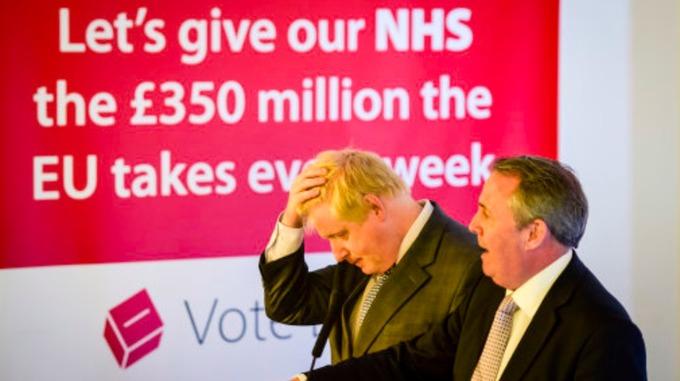
When the Leave campaign in the UK Referendum created a blatant lie - ‘give our NHS the £350 million the EU takes every week’ - it struck a chord with many voters. Only after their victory was it stripped from their website and grudgingly acknowledged as a “mistake.” Not a “lie” a “mistake.”
Politicians don’t “lie” any more they “mis-speak.” And isn’t it interesting that an MP isn’t allowed to say that another politician’s lying in Parliament - even when they are? If they say it, they’re dismissed from the chamber?
But Donald J. Trump is in a different class altogether. And why this should concern us and, regardless of its consequences, we should stand up against this appalling charlatan, is the example he sets for the future generations. How do you say to young children “don’t lie” when they now can, and having more courage than we ever did, will reply: “why not? You lot do it all the time. Look at the US President”?
In a moment of arcane philosophical reflection the Managing Director of M&C Saatchi, Tom Firth, said this:
“This is post-truth politics, so you can literally say pretty much anything you want as long as it fits with what people think is true”…or, I’d add “what they want to hear”.
Another take on the US Election was this from Peter Thiele, co-founder of PayPal:
…“the media takes Trump's remarks literally, but not seriously. Trump supporters take them seriously, but not literally. "
Which is all very well and very smart but it worries me to death as do all the apologists and gurus who are currently analysing Trump’s campaign and pronouncing him a genius marketer.
Sorry. That just will not do.
His campaign was a cynical piece of showmanship full of lies, monster over-claims and bigotry. He’s an impressive TV performer. His Apprentice series in the USA on NBC got audiences of 30 million I heard.
Hang on. No. It was the highest rating TV show in the history of US TV reaching 100 million people and winning a Palme d’Or at Cannes.
No, it didn’t. But the lie once spoken captures the average attention.
There are very few people like my friend Leon Kreitzman who will always say “hang on let’s examine those numbers for a bit to see if they feel right.” So here’s today’s formula. Lie first and repent later. Exaggerate, embroider and hype. Oh for heaven’s sake I spent years in advertising so I know about that but it really will not do as a strategy that’s acceptable any more in an increasingly credulous world.
We’ve got to stop it.
“In his anger, shadiness and batty orange campness, Trump looks like America’s answer to Hugo Chavez.”
I hope he’s wrong given the current state of Venezuela.
What I want to think about is truthfulness.
When the Leave campaign in the UK Referendum created a blatant lie - ‘give our NHS the £350 million the EU takes every week’ - it struck a chord with many voters. Only after their victory was it stripped from their website and grudgingly acknowledged as a “mistake.” Not a “lie” a “mistake.”
Politicians don’t “lie” any more they “mis-speak.” And isn’t it interesting that an MP isn’t allowed to say that another politician’s lying in Parliament - even when they are? If they say it, they’re dismissed from the chamber?
But Donald J. Trump is in a different class altogether. And why this should concern us and, regardless of its consequences, we should stand up against this appalling charlatan, is the example he sets for the future generations. How do you say to young children “don’t lie” when they now can, and having more courage than we ever did, will reply: “why not? You lot do it all the time. Look at the US President”?
In a moment of arcane philosophical reflection the Managing Director of M&C Saatchi, Tom Firth, said this:
“This is post-truth politics, so you can literally say pretty much anything you want as long as it fits with what people think is true”…or, I’d add “what they want to hear”.
Another take on the US Election was this from Peter Thiele, co-founder of PayPal:
…“the media takes Trump's remarks literally, but not seriously. Trump supporters take them seriously, but not literally. "
Which is all very well and very smart but it worries me to death as do all the apologists and gurus who are currently analysing Trump’s campaign and pronouncing him a genius marketer.
Sorry. That just will not do.
His campaign was a cynical piece of showmanship full of lies, monster over-claims and bigotry. He’s an impressive TV performer. His Apprentice series in the USA on NBC got audiences of 30 million I heard.
Hang on. No. It was the highest rating TV show in the history of US TV reaching 100 million people and winning a Palme d’Or at Cannes.
No, it didn’t. But the lie once spoken captures the average attention.
There are very few people like my friend Leon Kreitzman who will always say “hang on let’s examine those numbers for a bit to see if they feel right.” So here’s today’s formula. Lie first and repent later. Exaggerate, embroider and hype. Oh for heaven’s sake I spent years in advertising so I know about that but it really will not do as a strategy that’s acceptable any more in an increasingly credulous world.
We’ve got to stop it.
Labels:
American Conservative,
Chavez,
lies,
lying,
mis-speak,
NHS,
PayPal,
Trump,
UK referendum,
US President,
Venezuela
Posted by
Richard Hall
at
08:47
Tuesday, 8 November 2016
WHAT'S IN A NAME?
I discovered that Donald Trump’s father had an extraordinary middle name - Frederick Christ Trump. It makes my own - Martin - seem rather drab in comparison although being in the company of Scorsese, Amis and Luther King is a consolation. I recall once running a seminar for some Unilever Management Trainees. When it ended their leader said: “Will Jesus say a few words of thanks to Richard”. And up stood this Colombian…perhaps Trump Senior wasn’t so abnormal.
When I was younger I had an irrational urge to own a dog and call it “bollocks” so I could go down the street calling its name as it playfully ran ahead of me. The acid question regarding names is this - would the You Tube video of a stout man trying desperately to get his dog under control in Richmond Park have gone viral if it hadn’t been called Fenton?
In marketing the experts were dismissive of two brands that emerged in the late 1980s. Werthers and Mueller, the first a caramel flavoured cream candy and the second a range of yoghurts. The general view was the Brits wouldn’t put up with German names … well ”Vorsprung durch Technik” to all those experts.
Similarly when Mars decided in a policy of global alignment (those words bring the Brexiteer out in marketing people) to rename Marathon Bars Snickers and Opal Fruits Starburst, Catastrophe was foretold - the marketing book of revelations was quoted
“and they gnawed their tongues for pain ….and repented not of their deeds.”
Actually Mars seemed a bit penitent themselves and the apologia they issued by way of a press statement must go in history as the definitive piece of corporate squeamishness:
“We know that changes of brand name do not happen on the whim of a brand manager, without reference to the people who really matter, in this case Opal Fruits’ consumers. Presented with the rationale for the name change and the reassurance that it is only the name that is changing, research shows (as one would expect) opinions ranging from the very positive to the very neutral.”
The “very neutral” is my favourite expression of all time.
But the best thing ever said about name changes was by Alexei Sayle in the 1980s
"You know what they're going to call the replacement for the Cortina? They're going to call it the bloody Sierra. Sierra don't mean nothing to a working man like me, does it? Not like Cortina..."
Alexei Sayle - strange name! Is Brains a great name for a beer or Helena Rubinstein a great name for perfume? We get used to names and even the oddest like Sweaty Betty become household names in time.
Labels:
bollocks,
Christ,
David Beckham,
Donald Trump,
Fenton,
Jesus,
marathon,
Opal fruits,
Scorsese,
Snickers,
Trump,
Unilever
Posted by
Richard Hall
at
11:26
Subscribe to:
Posts (Atom)