Showing posts with label pandemic. Show all posts

Monday, 8 August 2022

"CRISIS. WHAT CRISIS?"

This is what appeared on the front page of the Sun referring to the then Prime Minister, the laconic Jim Callaghan, during the so called Winter of Discontent in 1978.

Misery Monday: Then was the winter of our discontent | Shropshire Star

44 years later we’re back again to the “C” word. Friday’s Times headline was ”Britain slides into Crisis.” Note, not Crashes, not Plunges but Slides. There’s a  graceful inevitability to sliding but there’s only one direction to slide…down. And in the context of economic recession there’s a subtext…a slide isn’t sudden it’s a progressive state often caused by inattention. 

Growing inflation and recession have been inevitable for most of this year so there are no surprises here. It’s not just Britain that has its problems, Europe is struggling towards recession too with Italian debt the highest on record and France and Germany both struggling to cope. Most worrying of all is the Chinese economic slump and especially the issues with a mortgage-repayment- revolution. It smells a bit of 2008.

The Fire of the Dragon

Read Ian Williams – “The Fire of the Dragon” which is just out. A reviewer for the Daily Mail called it “a devastating exposé.” Chinese ambition for global domination mixed with internal discontent and an economy in trouble is a caustic cocktail.

So what can we do? Apart from being worried, frightened or just angry.

Boris Johnson 'does not have a nap' during the day, Downing Street says |  Politics News | Sky News

Our own slide into crisis is an acceleration owing to sleepy, eye-off-the-ball government plus the pandemic, Ukraine and Brexit. The global picture isn’t our concern  right now. That blaze down the road can be sorted out when the fire in our own home’s been extinguished.

I recently helped in a recruitment process of young, recently graduated Financial Analysts. The candidates were well qualified, gifted, high-achievers with positive attitudes to life. They were impressive. I was uplifted.

The biggest lessons they discussed were the resilience of human beings and the positive outcomes that crises like the pandemic, brought out in general and, specifically, in the ability of specialists to achieve in months what would normally have taken years. They didn’t talk much about government but instead about the inspirational impact people could have who had the will and capability to change things.

Kate Bingham - SV Health Investors

The heroes of the pandemic were  Kate Bingham who drove the vaccination programme and the team at Oxford who got so much of the Astra Zeneca programme to happen so quickly.

One of these clever young people I met said, crisis, more often than not, accelerated creative solutions and that, in general left to their own devices to work things out, people came up with good solutions or, at the very worst, muddled their way through.

These candidates’ faith in human ingenuity, reliance and energy has been missing in the media and in many people I speak to.  A more accurate Times headline would have better described the mood if it had read “Britain slides into depression.” But these clever, single golf handicap, accomplished musicians, county standard chess playing, A* gathering, 1st class degree (of course) young people were clear-sightedly confident “it” – this crisis- could be fixed. And fixed quickly.

Their refreshing view of life and their own obvious ability to juggle as well as excel cheered me and made me want to make sure we keep them rather than lose them in the brain drains that happened in previous economic difficulties.

The Soho House Privateclub is Opening in Brighton! - Brighton Journal

Later that day walking along Brighton Seafront I saw what just 20 years ago had been scruffy, grotty quality stalls and caffs but was now transformed to a smart – could have been the South of France – resort of the middle class. This uplifted me further. So again:

Crisis? What crisis?


Monday, 23 May 2022

APOCALYPSE SOON!

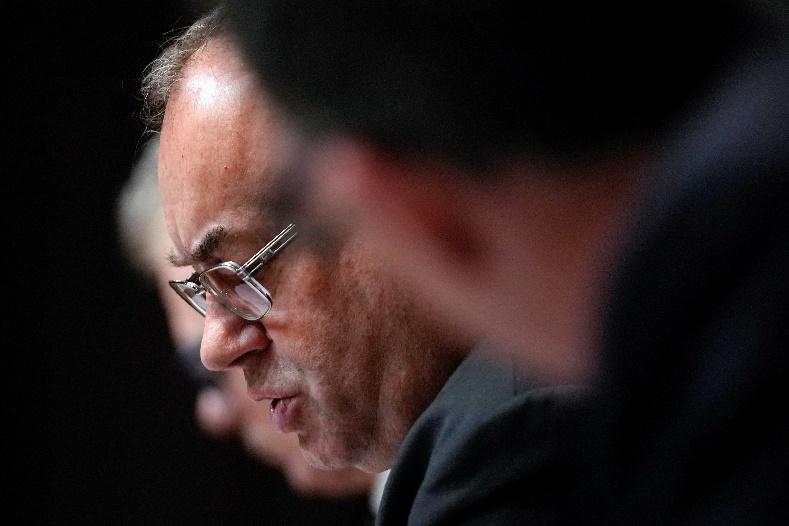
The governor of the Bank of England, Andrew Bailey, speaking to the House Treasury Committee said: “I’m afraid the one I’m going to sound, I guess, rather apocalyptic about, is food.”

Morning Bid: Apocalypse now? | Reuters

I was apoplectic when I read this. Governors of the Bank of England have in the past been more circumspect. The word “Apocalypse” describes the “complete final destruction of the world as described in the Bible Book of Revelation.” And we’re not there Andrew, not even close.

We seem to have lost the art of balanced argument and nuance.

Try this for Prime Ministerial understatement - Harold MacMillan in 1958 following the resignation of his Chancellor of the Exchequer and several others in the Treasury team just before his leaving on a Commonwealth tour, said“I thought the best thing to do was to settle up these little local difficulties, and then turn to the wider vision of the Commonwealth.” 

First of 27 new trains starts running on Gatwick Express route - BBC News

Last week we decided to abandon “apocalyptic Covid caution”.

So we went to London, visited Home House drank a refreshing few glasses of vino verde, strolled up Marylebone High Street bought some books in the delicious Daunt’s and ambled home on a busy train; then celebrating the Brighton Festival we made visits to the theatre and two amazing concerts in swift succession plus supper at Bills. There was barely a mask in sight anywhere; people hugging each other; smiles, laughter and sunshine.

No pandemic? Well actually there have been 239 cases in the past week in Brighton and Hove and in total a cumulative 96,000 (out of a population of 280,000). We are well on the way to achieving, if not herd immunity, pandemic saturation. But now 2 ½ years into this virus we know more but still not enough. The WHO data suggests that all European countries and the USA performed similarly in terms of “excess mortality” (that’s how this abnormality is measured. It’s the number of deaths – from all causes – that occur during a crisis that’s beyond what would be expected in typical times.) 

Director James Sunshine on His Pandemic Movie 'Safer at Home' – The  Hollywood Reporter

Some of the precautions taken like paranoid hand watching and surface disinfecting have been shown to be futile as preventative measures. Most importantly carrying on pretty much as normal like Sweden did seems to have been more effective than the more restrictive lockdowns in Germany. How did we do? The UK did averagely well or badly, depending how you look at it, although Scotland seems to have performed rather worse despite Nicola Sturgeon’s insistence on sustained tougher restrictions.

Taking a balanced view it seems fair to suggest that getting on with life, going to work, going to the theatre, cinema, restaurants and so on is the way forward. “Circumspect normality” we’ll call it.

A group of people in white clothing walking down a street

Description automatically generated with low confidence

So what about China and their “Zero Covid” strategy? The “big whites” (the Covid Inspectors dressed all in white with huge powers) have become very unpopular although infection rates have recently dropped. But so too is their economy. Bloomberg (gloomy Bloomberg) expect the Chinese economy to grow by only 2% this year compared to the USA at 2.8%. If so, this would be the first time China has lagged behind the US growth rate since 1976 and this despite a $5 trillion stimulus.

Possibly it’s a short-term correction but it’s also a lesson. Your economy will slow if you lock everything down.

How To Support Local British Farms This Easter And Be Sustainable

Back to the Governor: another lesson is our overdependence on food imports. We’ve failed to focus on and have faith in domestic food. In 2020, the UK imported over 46% of its food. That’s got to change to avoid future supply difficulties.

Spoiler alert: But no apocalypse


Monday, 26 July 2021

ANOTHER TOY STORY

Let me take you back in time. It’s 1979. The Walkman was the hot, new product. Apple launched their first personal computer: it was agreed it would never catch on. Radio-Control toys were all the rage and there was a large, ghastly rubberised spider which lurched towards you and could only be stopped by shooting it between the eyes which caused it to shriek, flash red eyes and retreat.

The name of this unfortunate toy was “Stop Boris!” (I’m afraid I was the author.)

In a week of Cummings and the more balanced and lethal critique from Sir Jeremy Farrar, Director of the Welcome Trust I wondered whether that “Stop-Boris” time was near. Yet in the polls last week the Tory lead over Labour has slightly increased since the 2019 election. Boris is an electoral magician, totally Marmite, loved and loathed but 10% points more lovers than loathers.

And yet. And yet.

As time passes a few realities are setting in. We can’t carry on believing this is a war that we can win. We can’t just send the virus packing. There are 24 letters in the Greek alphabet. We have a long way to go to omega before we run out of new mutants. Just suppose that this process of mutation carries on; just suppose that vaccines have to be developed and redeveloped; just suppose we are in this for say five more years or, worse, forever. Rhetoric won’t win and won’t help. Nor do those words “freedom” or “back to normal” make any sense.

We need to manage our lives, assess and take risks not avoid them. We need to live with viruses and work around them. At the moment we seem to think vaccination is king yet Britain the king of the vaccinations is still top of the infection league. We are Covid Island.

So what we know is that we know nothing. The data is contradictory, the models are fragile, the government uneasily veers from hurrah to boo-hoo. The Test and Trace App creating a  ping-demic seems a sledge hammer solution. As one pinged myself I wondered who and where I was at risk (I’d become a hermit – I seldom leave home) but I gather Bluetooth can work through walls so was it someone next door?


 Time to relax. Time to realise we can cope with disease, but it takes time and practical precautions.

What seems clear is we can’t blunder on ignoring the consequences of any of our behaviours. Climate change. Trolling on social media. Computer hacking. New viruses. A lot of tricky issues. If this pandemic does nothing else it’s forcing us to rethink everything.

The Future Laboratory have produced a paper called “Inter Covid Road Map” which considers this. I love their expression about the need for “retailainment” – retail theatre - and the need for brands to focus on sustainability and provenance. Technological developments of online meetings will soon make Zoom look like video in a world of streaming. A new concept, “neighbourhood nomads”, namely becoming real experts in your own locale will emerge.


McKinsey reckon we saw 5 years of digital development in the first 8 months of the pandemic – much more to come. Country is more exciting than cities (not sure about that). We are entering a post-growth era. Chaos in our new norm.

Back to Boris. He loves chaos and is self-confessedly chaotic. But is he right for now and next? I wonder if we shouldn’t be thinking about a National Government. 2021 -24 feels too important and tricky for one party and one maverick to cope with. 


Monday, 5 July 2021

DEJA BLOODY VU - WHAT'S NEW?

“So this is Summer
And what have you done
Another year of Covid
And a new one just begun” …

My apologies to the late John Lennon and Yoko Ono for bowdlerising their Christmas song protesting against the Vietnam war; yet another story of governments getting it wrong and where heavy handed might was neither right nor successful.

This coronavirus is nothing like the horrors of carpet bombing and the lunacy of war. We just need to adapt and get used to a new infected world. This pandemic in various forms will be with us forever. Napalm is not the answer. We are prone to get ill occasionally from flu, colds and much more serious ailments like pneumonia, malaria and norovirus. The more we get out and about the better the immunity we’ll build.

Staying at home isn’t the best prescription. 

For a few more weeks we‘ll still have limited restrictions. Get out (masked), lunch (distanced), travel (only if necessary), shop (are you sure?). Anyway shopping now looks like an increasingly rather muted affair. No Debenhams, Top Shop, Miss Selfridge and so on.  A blighted high street. 

Another high street gap appears as Gap are going exclusively online, John Lewis and M&S are closing many high street outlets. Online is king for these big retailers. 

But, wait a minute; not just the big ones. The corner shop has suddenly been reborn as a series of local delivery operators are being created. These deliver in minutes. And they’re  full time legitimate employees (none of your Deliveroo gig economy). In Brighton ‘Beeliver’ has started – wine, cigarettes, last minute grocery necessities or supper party ingredients – all delivered within the hour.

 A brand called Dija (Dija Vu?) is being heavily backed by investors to be a ‘unicorn’ billion-pound brand. The Guardian, as so often and rather ironically a trailblazer in detecting capitalist trends, recently wrote an article describing this as “democratising the right to laziness.” But it might be better seen as “revolutionising convenience”.  Tesco Express and Sainsbury Local are likely to be the biggest losers. Too slow. Too inconvenient. These new, disruptive convenience-delivery operators also make working from home even easier.

This is yet another example of enterprise unleashed by disaster. Covid has as many winners as losers. And those losers are often architects of their own demise losing their way in terms of stock, style, pricing, customer service. Their failure has been accelerated not created by Covid. 

Despite the dreary weather during June the football has cheered some as has Wimbledon. Yet as we watch a half-full Wembley – it looked pretty packed to me – perhaps the spectators were just fatter – I wonder how this reconciles with government guidelines. I think government wonders too. Still, come what may, with gritted teeth and with fingers crossed the shackles are being removed in a fortnight and then we’ll mix, mingle and have fun again. The government seems finally to have realised lockdowns don’t work – look at Scotland.

Chances are some will party to stay up with the others but many will find their instincts are to stay at home and watch Netflix. Meanwhile BBC and ITV are looking like the Woolworths of broadcasting whilst the streaming services dazzle and shine.

One thing we’re learning is that if you aren’t good enough you are going to struggle to survive in this new cruel world.

Talking of ‘cruel worlds’, watch “Princess Weiyoung” on Netflix and you’ll agree Eastenders and the rest are lost causes. 

Chinese TV like Chinese food is delicious. As soon as you’ve finished watching one series you’ll want another.


Monday, 16 March 2020

STOP BEING SO DEPRESSED

There’s a sense of giving up amongst many I know and it won’t do.

The other morning our doorbell rang at 7.15. It was a neighbour holding half of my wing-mirror and saying apologetically “I’m afraid someone’s vandalised your car.”  I shrugged and said “oh well, high spirits and too much to drink I suppose” but as the day wore on the outraged reactions from people seeing what had happened interested me …”bastards! Utter bastards!” “What’s wrong with people?” “Such a lovely car – how could they?”


Whilst entering a critical phase of the pandemic, these people’s focus had temporarily shifted to decrying unsociable behaviour. Our values and how we behave matter more than trying to interpret the indecipherable.

Prudent buying, which in a just-in-time world is having constantly replenished minimal stocks, has changed to what the media call “panic buying” or providing enough to withstand a two week lockdown. Meanwhile at Kimberley Clark the brand manager of Andrex Toilet Tissue is daily going to church to kneel and say: “thank you God for making me a famous success story”.


There is, as ever, a backlash against whatever government does. Gordon Brown said, with that grave authority that defined his short premiership, “the government is behind the curve.”


Given this is where he himself was most of his political life I suppose he feels highly qualified to make this assertion.  Yet ghastly as things are we are much less affected than anywhere else in Europe and are behaving as though we’re worse off. I’m confused by that.


Start-Ups, Pivots and Pop-Ups has been shortlisted for an award at the “Business Books Award Event” but I’m not going.  I said to Helen Kogan, the  MD of our publisher: “People should be at home reading our book not carousing at a black tie event off Trafalgar Square.”

It’s foolish to predict and dangerous to be categoric. We are in unknown territory. Better perhaps to think small. Think neighbourhood. Think checking on older, single people. A month ago I was a catastrophist frustrated by the laissez-faire attitude to what I detected was a major global event, today I think we need to restore balance, cheer up and become communally minded, kinder human beings.

Many years of experience, which mean I’m categorised as “most at risk”, allow me to suggest stop regarding every piece of breaking news as another obituary. We are going to get through this and if we use this period of uncertainty to reflect, we can do so in good shape.

We could do worse than to think constructively about our lives, our priorities and the way we spend our money and time. Just about the only thing that frightens me is the thought that listening to the news might negate all those good intentions.


On Sunday I heard a doctor on Radio 4 say “you need your 5-a-day not just of vegetables but also of fun because laughter is a great medicine. People in good spirits recover faster”

Right on Doc.


Monday, 4 October 2010

BRINGING ATHLETIC VALUES TO WORK

For a long time now I have been a sceptic about the value of using sport as a guide to success in business. Talks on how javelin throwing can help you gain market share have always seemed to me to miss the mark.

But I’m changing my mind after last week.

I went to a conference called “Ahead of the Games” at the Royal College of Physicians in Regents Park to hear a cluster of past Olympic medal winners tell their stories.

And something happened to me; it wasn’t, you see, just what they said but what lay behind their talks and the uniformly clean, enthusiastic positivism of their delivery and attitude to life that suddenly got to me. I became not just a believer in the Olympics but in this simple professional approach to life. There were no spurious words about market forces or external factors. This was simply you against them.

Three things particularly stuck in my brain (although if you want my list of all 20 top tips just e-mail me at richard@hallogram.freeserve.co.uk )
  1. On marketing – here’s what I jotted down as they were talking “The Olympic buzz is a virus – think of how to create a marketing buzz in your business – create a build up: a sense that something’s going to happen; use real people to talk about it; make the event itself extraordinary; worry about how to exceed expectation and then how to leave a legacy of new talent.” Stop using military metaphors in marketing and start using medical ones. How to create a pandemic for your brand – that’s the marketing man’s real job….spreading the bug.
     
  2. On the big performance – be that the race or, say, a business presentation….one chance…one contest…one winner….or as someone said “it’s sometimes not so much winning a bronze as losing a gold”. They all talk about proper preparation, about smiling at the start and reflecting “I’ve done all I can”. If Olympic athletes were as prepared to busk as most business people seem to be we’d never win anything. Robustly thorough preparation is everything.
  3. On success – top athletes all surround themselves with good advisors on diet, on positive thinking, on aches and pains, on technique because the difference between success and failure is the small % point improvement such help can give. And all, literally all, talk about WE not I – “we met every week over four years”: “we talked about it”; “we discovered a better way”; “we ran…” Compared with the value of achieving success, good mentoring and coaching is really cheap. Not to be mentored is one sign of career damaging egotism.
This event taught me more about business than I’d expected as well as inspiring me hugely. The Olympics is coming. It’s going to be great. And if business in Britain is half as professional as the builders of the event itself and athletes competing in it then the next good times are just around the corner.