Monday, 29 September 2014

IT'S NEVER TOO LATE TO LEARN

I’ve just started reading “Smarter: The new science of building brain power” by Dan Hurley.


He’s an American journalist who writes for the New Yorker and various science journals. He writes beautifully and persuasively about how it seems possible to improve our fluid intelligence, our IQ, by a series of brain training exercises. The theory is the same as that of physical exercise making our bodies fitter. If bodies, why not minds?

It even applies to people whose theoretical brain power is on the ebb - the elderly.  But, more than 500 years ago one smart lady, Elizabeth 1, recognised the need to keep learning. She claimed to learn something new every single day. And she lived to 70 - a fine Elizabethan age.

Giving up on learning and assuming we know how to fit the facts to the script that we’ve already written for ourselves hit the headlines this week. Tesco, a victim of unreasonable expectations all round, seemed to have romanced its profits somewhat and a whistle blower showed them the yellow card. Extraordinary that mighty companies haven’t leant you can’t fib anymore.


On stage next, Ed Miliband. So you’re a show off - “look no safety net!”-  and you try to do your conference speech unscripted. But you screw up and forget to mention two crtical issues you meant to raise. OK stuff happens. But then you try to wriggle out of it in a furtive “the dog ate my homework” kind of way.


Had you said “Yeah. I made a mistake” I’d have felt better about you. Extraordinary that big public figures haven’t learned that they can’t take unnecessary risks and that they can’t fib anymore.

Whilst we maybe overstate the importance of presentation in our working lives, decent clear communication is the least we expect and inspiring oratory works miracles (whether read or half read.) What we don’t need are word perfect actors.

Age is the greatest teacher of all. Most mature people I know have more inquisitive minds than they did when younger even if the passion to get-it-done and go-for-it has waned somewhat. Ferocious characters like Portillo and Tebbit mellow and even a foul-mouthed trader called “the Animal” at Salomon Brothers in Michael Lewis’ exposé “Liar’s Poker” is a genial novelist now in Colorado.


Yet the concern some feel about the upcoming generation’s ability to think nimbly and cleverly and have a NASA scientist competence with technological complexity is misplaced. Never confuse cleverness with understanding. By far the greatest asset in a world where marketing and people skills are still king, is empathy. We must be able to get what people really feel and think.

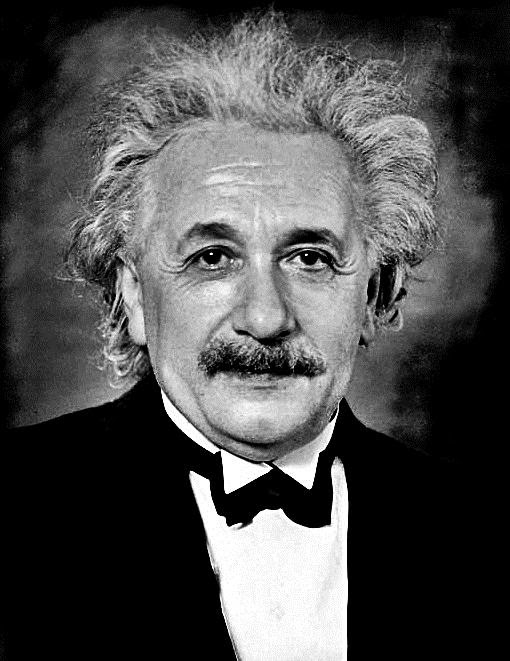
Finally Einstein’s version of insanity best describes the Tesco issue:-
“The definition of insanity is doing the same thing over and over again and expecting different results".

We must vary our behaviour in response to what’s going on around us, avoid silly risks and learn to tell the truth.

Amen

Monday, 22 September 2014

BAH HUMBUG!

I have been increasingly aware of how querulous the general mood seems to be at present. What thrilled me about the Scottish Referendum was the lack of apathy, look at that extraordinary turnout, and whilst the level of debate was certainly passionate people were at least arguing cogently about something that really mattered. What I hated was the sub-racist pro-Englishness that accompanied the victory for “no”. It smacked of football thuggery. “….’ere we go, ‘ere we go, ‘ere we go…..”


People just seem not overly fond of people. We are retreating into grumpy tribes. We don’t like the Scots, we don’t like the government, we don’t like our jobs - there’s just a lot of “don’t like” flying around - especially in the Tory party. What is wrong with them? They seem to dislike each other even more than they dislike Labour. They are unhappy and they want to hurt someone, anyone…”ere we go”.


The idea should be to get the best out the assets we have. So we want to create the most productive alliance with all of our allies, harnessing the genius in Scotland with our engineering brilliance all over the country, with our creative fecundity in the arts and media, with our financial firepower in the City of London and if we can mobilise that with the best of the EU instead of balefully lamenting their foreignness then collectively we might get somewhere and create a world to be proud of.


Hey, how rose tinted are my spectacles?

The querulous thread came up in a conversation last week about increasing the number of women in key roles. Not because that would be fairer (although it would) but because it would strengthen us, because it would activate talent we are currently wasting. Why are we spending so much time living in the past rather than recognising that the new generations (what we call generations Y and Z) are different. They’re bemused by the xenophobia, selfishness and misogyny that exist and they won’t accept them.

Someone said “we used to rule the world - so what the hell went wrong?” So did Venice, Persia, Greece, Rome and Egypt in their time. Domination is a male concept. What we want to do surely is not rule but help create. Our influence for good is still enormous and if instead of getting cross, territorial and  thinking of life as a zero-sum-game we formed teams and groups to solve problems and uncover opportunities then we might be better off.

I was not always a fan of Bill Clinton but here’s what he said in a speech at Yale in 2010:

“A lot of these whacko things that are happening in … politics today are not really what they seem, they’re just people screaming — stop the world, I want to get off. The problem is you can’t stop it and you can’t get off. And since we’re all stuck, we better make it better together.”

Right on Bill. Right on.


Monday, 15 September 2014

NEW YOUNG SCOTLAND - WELCOME


I watched a referendum debate on TV the other night at which hordes of young Scottish students were in the audience. They were amazing- very bright, eager and full of passion. If this is Scotland, I thought, they’re going to have a ball whether Thursday’s decision is ‘yes’ or ‘no’. And the debate has gone beyond a simple ‘yes’ or ‘no’ already. It did that with Gordon Brown’s olive branch, not so much an olive branch as an olive forest. And the bruising nature of the debate from the ‘No Campaign’ has meant one thing.

Union as we know it is over.


There’s been an overall miscalculation by everyone and oddly I think this includes the SNP. They were, I was told a few months ago by a pundit, making the most of an average hand that had been dealt to them. But the campaign, populist, mostly positive on their part and above all young now feels more like a revolution than a referendum.

I wonder if Alex Salmond realises what kind of toothpaste he’s squeezed out of the referendum tube. Times writer, Robert Crampton, who’s been touring Scotland on a temperature-taking tour, may be right in predicting a successful “yes” vote. But what he rather sadly concludes is that this is a great, happy and upbeat nation we’ll miss. One he thinks that deserves to have a go by itself. But the general sense is that Alex will have served his time whatever happens. Old politics - simply not fit enough.


A friend of mine said right at the start of the campaign that he'd been down to England on holiday and felt what a miserable bunch we all were.  This holiday had converted him from staunch “no” to wavering “maybe”. Another friend defined the issue as a “governance” one. Westminster cannot rule anywhere anymore - too remote culturally. The mayor has taken over London and Westminster is sitting in a stagnant, historic pool. If Scotland goes, just watch the action from Cornwall and Wales.

(Something odd’s just happened. I’m a dreadful typist and I just made an error - Westminster as “Westmonster”. History will judge this époque as the one when centuries of history may be seen to have reached their sell-by date. ‘Westmonster’ is in its death throes.)


Undertakers are gathering like Nigel Farage and George Galloway (in that Scottish Referendum debate looking grumpy, wearing a trilby - why? What’s George got to do with anything?). Both are yesterday’s minor men.

Back to Scotland ….. whatever happens on Thursday this is the place to be right now … like Berlin after the wall came down. It’s got energy, verve and ambition. I’d guess it might even manage to hang on to its young talent - previously it squandered its entrepreneurial youth. It’s got momentum and that rebel yell feeling that successful and innovative places seem to have.

I think the referendum is no longer relevant. A new, young nation has been launched.


Friday, 12 September 2014

WHAT WENT WRONG WHILST I WAS AWAY?


We’ve just spent a fortnight in Venice - again. That city’s life started with people fleeing attacks from Germanic and Hun hordes. These refugees from places like Treviso and Padua scrambled to relative safety (but with very wet feet) into the marshes in the Venetian lagoons.  No horses would come there to pursue them. They were wet but protected by swamps. Wet, on their own  and with only the future to think about.


They built upwards by learning to drive piles of wood down and creating platforms on top of them. A city grew from trial, error and persistence. Any management consultant would have told them they were completely crazy. “It won’t work, there’ll be floods, disasters, go to dry land”…and back to the Huns?
In 570 AD Venice didn’t exist yet just 600 years later it was the biggest and most powerful city in the world. Necessity drove imagination, energy and success.


Management consultants (them again) have propounded the effectiveness of creating crises to enliven and motivate management teams - a kind of “jump-start” theory.

Well, coming back from the balmy calm of the one-time Venetian master state I encountered the current Scottish referendum ‘crisis’ with a degree of amazement.
“I go away for a week or three and you wasted, simply wasted 20% lead points. You all need a damn good shaking.”

The realities, as most of us, the experts and most businesses know them, is that independence is not a good idea judged from an economic perspective. The head is shaking (‘No. It’s a very bad idea’) … but the heart is thumping away (‘Yes. Yes…. just imagine how wonderful freedom could be.’) It’s extraordinarily naïve of us to discover this late in the game that ‘YES’ is a more powerful, motivating and exciting word than ‘NO’.


So what’s happened in this fortnight of apparent madness? Quite simply rather than ravening hordes of spear-wielding barbarians it’s been the grey suited, male Westminster crowd of dull, old fashioned and self-interested, elite politicians who’ve driven away the more adventurously, positive yes-minded and discontented Scots rather like those Venetians years ago.

Maybe it’s too much Prosecco, maybe it’s too much holiday , maybe it’s the rebel inside me that’s got provoked but I’m beginning to see the “yes” votes point of view quite vividly. If you have to choose between Ed, Nick and Dave or mad Alex and if you’re into a bit of excitement, well, you know where to go.


Scotland, if you do take this brave (reckless even) step to be alone, you can survive, indeed you will thrive if you take the Venetian route of building new foundations and pretty well starting from scratch.  My guess is the chill of the ballot booth will calm the urge for risk and there’ll be a “no” vote but we shall see.
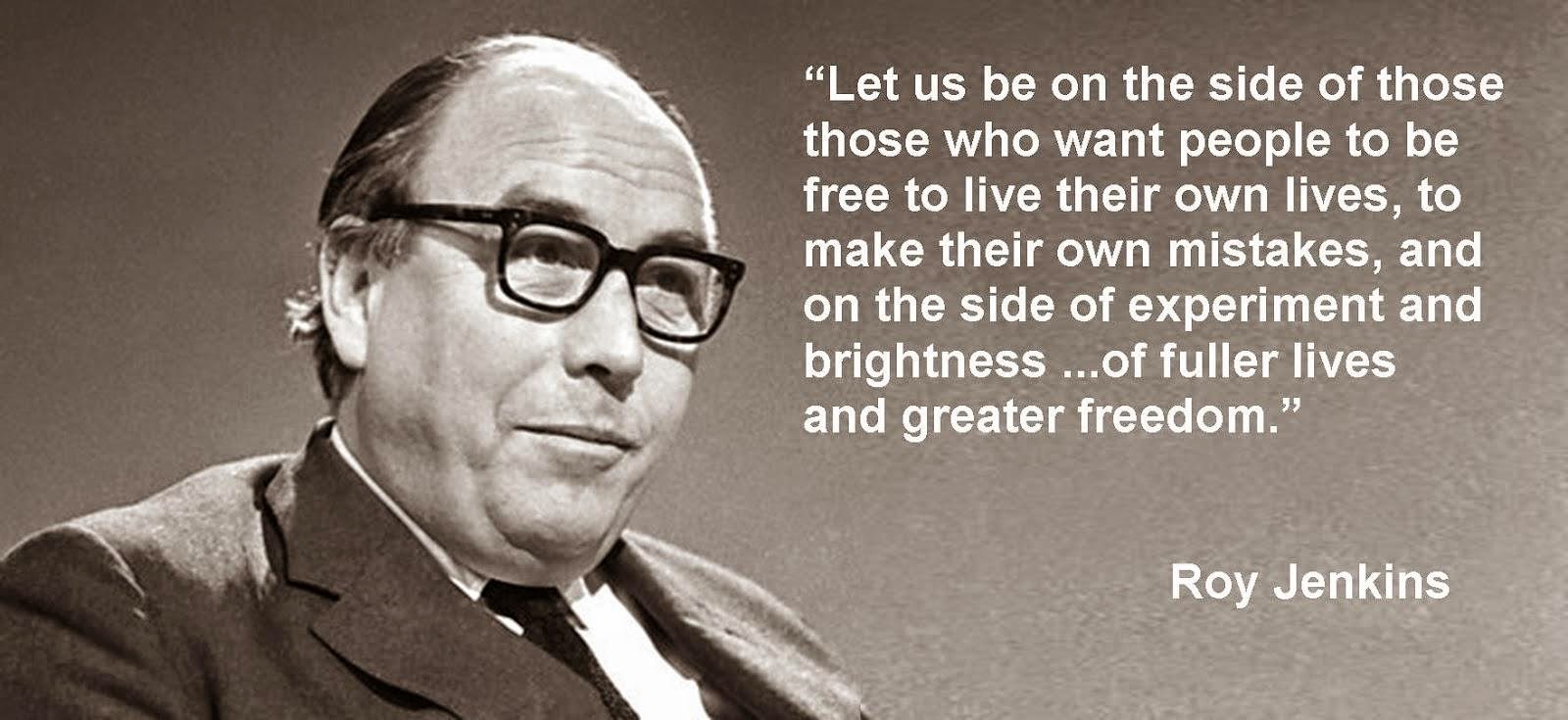
But I think Roy Jenkins got it right years ago in 1959. Try this:


Colourfulthinkers.com

Monday, 1 September 2014

HERE COMES THE SUN


That was a Beatles song but in 1859 it was Richard Carrington (English Astronomer) who was saying it. The so called Carrington Event was when he observed an amazing white light flare in the solar photosphere. This led to the biggest geomagnetic storm in history. It caused huge disruption to telegraph services.


If it were to happen today experts from NASA predict it could catapult us back to a pre-technology age. Fortunately there’s only a 12% chance of this happening in the next decade.

That’ll teach me to listen to Radio 4 at 4.30am before rushing to the airport as I did last Monday. And it’s real, it’s serious. It even happened - with a  solar storm - in 2006 which blew out the Quebec hydro-electric system for a few days.

So what’s our plan?


I ask not in horror but in fascination as I’m a huge believer in human resourcefulness. The sort of resourcefulness that had people like Sam Walton, William Kellogg and Henry Ford doing their inventive but practical work. You know, like creating mass markets.

Lord Rutherford deserves a mention too for his Nobel prize winning work into radioactivity. He it was who said “we have no money so we’ll have to think”.

I want to change that to “we have no technology so we’ll have to think”.

I say this with feeling having just acquired Sat Nav and discovered it’s the navigational equivalent of autocue. You do pretty well what it says. Your common sense gets switched off. (Incidentally that’s what newscaster Anna Ford did with autocue if news editors inserted ridiculous pieces which she then blithely read.)


Imagine no planes, trains, ATMs, banks or shops working, no phones, no TV or social media, no computers…no digital system at all. Imagine a total  infrastructure meltdown. Imagine the sudden irrelevance of Amazon and all those e-commerce operators.

If you never lived in a pre-digital age this would be like switching off the oxygen supply.
But I think before it all got sorted (which it would be after a few months of breakdown) that some great companies, brands and organisations would swing into action making things work and reinventing distribution systems.

Recently in Dorset we visited a pub in the early evening called the Wise Man in West Stafford. There’d been a widespread electrical failure in the area. Rather gloomily they said they couldn’t serve us because they couldn’t work their till. So we said no. We’ll give you money and you’ll find the change. Give us our pint. So they did. Meanwhile from all over the village people were gathering to meet and talk.


Pubs, churches, universities, schools would all become focal points. Localism would be redefined. As some bemusedly were shaking their smartphones and thinking OMG others would be wondering how to achieve lasting social, commercial and brand advantages.

So I thought the man from NASA opened to window on a new and exciting challenge.

Here comes the sun? Bring it on.

Monday, 25 August 2014

HALLO DORSET ARE YOU THERE?


OK, this joke about Dorset, where we’ve just spent the first chunk of a rather longer holiday than usual, a place which T- Mobile and broadband forgot, a place where it’s always “whatever-o clock”, slow, measured and clotted-creamy, has gone on long enough.


Dorset is a tiny county which it takes longer to reach by car than a return trip by Easy Jet to Venice. Above all Dorset belongs to the memory of Thomas Hardy. He’s the creator of names like Eustacia Vye, Damon Wildeve and Bathsheba Everdene. He’s the writer of novels in which the dreadful hand of fate constantly touches the shoulder of the unlucky or amoral - the nearest we have to a writer of Greek tragedy.
But there’s something else.

An award for exceptional marketing goes to Dorset.

We were entertaining our grandchildren (or vice versa). Over three days we did the following:
Visited the ruins of Corfe Castle (one of the few strongholds to withstand the parliamentary forces in the south of England in the mid-1600s) where we learned to use a sword - “aim for the nose” -  a halbert - “great for gouging at close quarters” and a bow and arrow - lethal wounds were delivered to head, groin, legs and upper body of the targeted strawmen.


And so on to Abbotsbury - an award winning sub-tropical garden - huge Monterey Cypresses, brilliant succulent plants ; the Swannery - 600 of the white feathered thugs whom the children all fed with grain and we learned about their habits (did you know that the wretches bask in the reputation of being “one-swan-guys” but they all pop off for constant “surreptitious affairs” at the “Bonking Swan” no doubt.)


And then their farm. There’s more money to be made now by tarmacking fields and having kids ride plastic tractors, have pony rides, watch lamb races, have close contact with exotic birds (in the cage with the budgerigars and parakeets) and operate radio controlled pirate boats on the lake - than there ever could be by growing stuff.

Finally the museum day - “oh no Grandpa not museums!” Dorchester is about the same size as Goldaming, Newport Pagnell or Kenilworth… so quite small. It has a Town Museum and five (yes -  five) others. A Teddy Bear Museum; a reproduction of the Terracotta Warriors, a Dinosaurs Museum (where else have you heard “kids - you can touch anything here”);


an abbreviated version of the British Museum Tutenkhamun Exhibition and the Mummies (the boys loved these dead bodies so much that they eyed me as if to say “not long now.”).  Where else could there be this much enterprise, enthusiasm to please and involve and overall sense of drama?  If everyone attacked their cultural opportunity as well as this then all would be well in the sector.

Dorset I’ve heard you loud and clear.


And one other thing. Dorchester has a Michelin star restaurant. Proof that there’s more to life than my smart phone.

Monday, 18 August 2014

I KNOW EXACTLY HOW YOU FEEL

The trouble is that just isn’t true. We talk increasingly about empathy but when it comes to understanding Isis or Al Qaeda we simply don’t have a clue.  Actually, we often don’t even understand how people near to us really feel. It’s ironic isn’t it that those of us who spent our lives in advertising were, much of the time, guessing about how our ads were going to work?

But soon all that’s going to change and marketing, as we knew it, is going to be pretty well redundant. As neuroscience becomes front page newspaper stuff and not arcane and academic we are going to be embarked on a journey that will let us unravel moods and feelings and our ability to detect, predict and manipulate them.

And I think this is really exciting because it takes the finger-in-the-air-ness out of not just marketing but behaviour in businesses and specifically things like negotiation. How much time is spent trying to outwit and double guess each other? Eliminate business poker and we can spend more time on innovation and pure problem solving.

I’m writing this on holiday in Dorset – grandsons outraged that I’m tapping away when there are trees to be climbed and monsters to be caught. Outside although it’s drizzling I feel that curious contentment about this green and pleasant land that is pure gut and not rational. Yesterday I had a pint of Palmer’s Best Bitter (the Bridport Brewer) slightly flat, slightly warm, mildly hoppy and bitter sweet. It tasted to me of village cricket and memories of steam trains. But my wife said it tasted to her of “disappointment” not that it was disappointing but that it reminded her of “something not quite fulfilling what she’d expected it to”. I reflected she was probably right; it was a sort of UKIP taste – slightly discontented and mildly aggrieved, happy to put up with chipped cups and white bread.


A taste can do that as can a smell. Summer holidays are evoked by the smell of sun on old stones and of a BBQ aroma.  Mansion polish: just one sniff of it and I think of Oxford.

We can only guess at people’s memories, at what is stored in the brain ready to go off at any time. Yet “mood-barometrics” – the study of how to measure mood – will take us a long way down the road of disentangling the mysteries of feelings and human instinct.

The smartest business people are recognising the need to engage and inspire the emotions. The art of storytelling, creating a compelling narrative,  is the stuff of the C suite. We are on the verge of an era where emotion plays a much bigger part in business than spreadsheets and facts.


Einstein once said: “Everything that can be counted does not necessarily count; everything that counts cannot necessarily be counted.”

But that was then. The world is changing and quite soon we’ll be able to count the things that really count.