Last week I was thinking about time and space. Today I just want to consider time and why it can make us so angry. Take Martha Kearney, a quite annoying Radio 4 Today presenter who has made me shout at the radio a few times – it’s her patronising good humour which is getting to me. But nothing like Thursday when an earlier than usual start to the day and Martha collided.
5.45. Not much birdsong yet. Just darkness, street lights and a sense of disorientation. I creep downstairs and go through a personal ritual of opening the house – curtains open , lights on, kettle boiling, radio tuned in. Martha Kearney. And she says “It’s 7 o’clock”. No it isn’t … my watch says 6am, the wall clock in the kitchen says 6am but Martha repeats the time “7 o’clock”.
And something quite odd happens. I am conditioned to believe the BBC. Martha patronising though she might be would not tangle with something as serious as the time. Brexit maybe but the time never. So I have 20 minutes, not a relaxed 80 minutes, to shower, shave, breakfast, dress, get the paper and so on. I hurl myself into the boiling shower cursing the malign spirit that has put all our clocks back. I slash the razor over my chin. I drink my coffee…too hot … and I hear the irritated self-justificatory voice of Martha Kearney who sounds really angry “It is ten past seven”. The time is the news. Has Kearney gone mad or am I living in a parallel universe that’s an hour earlier? I even wonder if I might have been consistently an hour late for meetings all week and everyone has been too kind to say anything. “Poor old Richard…late again…don’t upset him…bless him.”
As I hurriedly finish getting dressed a BBC male voice calmly says “it’s twenty past six. Martha Kearney has been speaking to us from Salzburg” – no “sorry” just calm. I feel relief and rage in equal measure. But I wonder if I’ll ever trust the BBC again. Part of my rage was caused by sleep shortage something affecting lots of people nowadays. This is often due to sleeping on a knackered mattress. Bed experts say you should change your mattress every 5 - 8 years.
I was talking to a friend recently who looked tired. She confessed to sleeping badly and needing to change the mattress but the kind she and her husband wanted was £12,000 which seemed a lot.
“Imagine sleeping really well” I said “Eight hours undisturbed a night – like Jeff Bezos does and look at what he’s achieved”. She had a dreamy look in her eyes by now. “Well would you pay around £3 a night to achieve that?” “Of course I would” she murmured. “Well wake up to the fact that’s what a £12,000 mattress costs each of you over 5 years”.
You know I should be back in advertising with an argument like that.
Showing posts with label time. Show all posts
Monday, 24 September 2018
Monday, 13 May 2013
THE MYSTERY OF WORK
Years ago I was walking through London and as I stared up at a skyscraper my companion asked “do you sometimes wonder what they all do in there all day?”
I ask the same question as I go through an airport early in the morning, removing my shoes and belt as I queue for security and seeing all these businesspeople rushing off to Euro-meetings.
Fast Company on Friday had a piece entitled “Why productive people have empty schedules” mostly dealing with Warren Buffett’s diary and his ability to keep it free and provide himself with time to think.
The article went on to explain that if we’re going to do the work that we want to do, we need to own our time because it’s limited:
- Time is highly limited: As humans, we're immature in our first decades, and declining in health in our last.
- Time is uniquely limited: You can't bank, transfer, or recover time, unlike money.
- Time is equitably limited: we can, on average, expect to live about 77 years. That expectation isn't equal with resources like money.
So if you are creative and that’s where your greatest earning capacity and, more importantly, where your greatest contribution lies, spend your time feeding that urge and honing that skill.
Most of us are trying to redefine what work is – I, for instance, haven’t worked as such for years. I spend my time doing stuff I enjoy. But what I do not especially enjoy are old fashioned skyscraper offices.
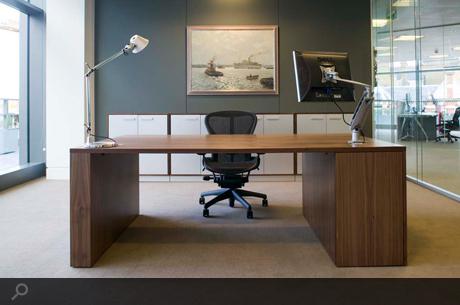
I’m puzzled by the need to have such offices with partner desks, carpets and filing cabinets. Places of Victorian labour. Yet when I speculate about creative spaces and working from home, my godchildren, nearly all of them major successes and working 60 hour weeks, look at me as though I’m mad. The truth is they seem to like being punished by the tyranny of work and having a grey office in which to lament the amount they have to do.
We are obsessed by work and by jobs. We seem to believe the Chinese or Indians or Americans or Germans work harder than us. They don’t. And the jobs most of them are doing are old fashioned.
We are spending too little time thinking about that and the fact that around 2/3 of today’s schoolchildren will end up doing jobs that haven’t been invented yet.
So just ask yourself the question “what do I really do all day?” and “why?”
Labels:
Euro,
eurobusiness,
Fast Company,
greatest earning capacity,
life expectancy,
London,
success,
time,
time is precious,
work
Posted by
Richard Hall
at
06:48
Monday, 21 March 2011
OH MY EARS AND WHISKERS, HOW LATE IT'S GETTING
The white rabbit in Alice in Wonderland, whose ears and whiskers these are, cuts a very modern figure, oppressed by the tyranny of time.
If you want to think your way though the problem time pressure creates, read Leon’ Kreitzman’s “The 24 Hour Society” or listen to what Lawrie Philpott thinks – his shortly to be published book “2,500 hours. All you’ve got!” is addressed at time-short CEOs.
Leon notes cavemen used to work 15 hours a week and whilst clock-time rules now - the first thought modern man and woman have on waking is “what time is it?”- more primitive societies lived by event time – like rice-cooking-time or pissing-time. They worked shorter hours in winter. Their lives were controlled by the frontier of night. Life was simpler.
Lawrie focuses on the need to spend time on the right stuff with the 2,500 hours at our disposal. Don’t work longer as you’ll burn out or, in your weariness, make things worse (“oh my ears and whiskers” – that white rabbit was a classic case of workaholic.) This hypothetical CEO’s aim is to make their time ensure that their workforce’s time is used best.
Both Leon and Lawrie (who are beginning to sound like a music hall act) recognise time is money and how the speed of change in a modern world has created time-inflation…in other words each second is worth less than it was.
Three brief observations:
1. What senior managers need are “Time Lords” – people who teach how to allocate time in their organisation. We have business plans. What we also need are “time-plans”.
2. Saving time saves money.
3. Whichever way we look at it, we know too little time is spent on thinking creatively about the future and about change….by anyone.
This is not just a narrative about “time-management”. It’s a story about a global world where the smartest are looking at ways to cut and reallocate time and simplify what we do.
All the research I’m doing shows time-stress is spoiling lives, performance and creativity.
It’s time to call in some Time Lords and start thinking afresh.
If you want to think your way though the problem time pressure creates, read Leon’ Kreitzman’s “The 24 Hour Society” or listen to what Lawrie Philpott thinks – his shortly to be published book “2,500 hours. All you’ve got!” is addressed at time-short CEOs.
Leon notes cavemen used to work 15 hours a week and whilst clock-time rules now - the first thought modern man and woman have on waking is “what time is it?”- more primitive societies lived by event time – like rice-cooking-time or pissing-time. They worked shorter hours in winter. Their lives were controlled by the frontier of night. Life was simpler.
Lawrie focuses on the need to spend time on the right stuff with the 2,500 hours at our disposal. Don’t work longer as you’ll burn out or, in your weariness, make things worse (“oh my ears and whiskers” – that white rabbit was a classic case of workaholic.) This hypothetical CEO’s aim is to make their time ensure that their workforce’s time is used best.
Both Leon and Lawrie (who are beginning to sound like a music hall act) recognise time is money and how the speed of change in a modern world has created time-inflation…in other words each second is worth less than it was.
Three brief observations:
1. What senior managers need are “Time Lords” – people who teach how to allocate time in their organisation. We have business plans. What we also need are “time-plans”.
2. Saving time saves money.
3. Whichever way we look at it, we know too little time is spent on thinking creatively about the future and about change….by anyone.
This is not just a narrative about “time-management”. It’s a story about a global world where the smartest are looking at ways to cut and reallocate time and simplify what we do.
All the research I’m doing shows time-stress is spoiling lives, performance and creativity.
It’s time to call in some Time Lords and start thinking afresh.
Labels:
Alice in Wonderland,
cavemen,
Leon Kreitzman,
save money,
time,
Time Lords,
tyranny
Posted by
Richard Hall
at
16:04
Subscribe to:
Posts (Atom)