Showing posts with label First World War. Show all posts

Monday, 6 January 2014

ONE 'EUREKA' AFTER ANOTHER

We seem to spend our lives alternately being nostalgic about our past or being in love with “life-transforming” inventions like Twitter which, if you were to pay attention to some people, makes the invention of Gutenberg in the 15th century of just marginal account.


I was reflecting on how retro so many things had become with the resurgence of artefacts and things from previous times which we now think are very contemporary. Things like:-
  • Bicycles, windmills, satchels, teashops, cup-cakes, baking,  porridge, cocktails, hard back books (making a big resurgence), knitting, community singing, cash, colourful ties (Tie Rack’s ties were not, by the way)
All of these are things that, in some way or other, slow things down rather than speed them up and have the smack of authenticity (and the porridge I’m talking about is the real Scott’s Old Fashioned Porage Oats not  Ready Brek.)


And I was pondering further on the story we keep on hearing about how 21st century technology is transforming our lives in quite unprecedented ways.  But our social media, video games devices, robots, iPods and new plastics (made from pig urine) don’t seem quite as life transforming perhaps as the inventive tsunami of the early 20th century which ran up to the outbreak of the First World War.

Here are just a few of those inventions during those thirteen years:-
  • Manned flight, Bakelite,  radio receivers, vacuum cleaners, air conditioners, crayons, cornflakes, windscreen wipers, colour photography, safety razors, cellophane, instant coffee, crossword puzzles, bras, zip fasteners, the isolation of Radium, the model T Ford and the theory of relativity.


We speak in awe of Dyson’s bladeless fans today but they don’t quite match the bra do they?  Indeed I think it might be fair to say that the work inventors did in the early 1900s helped define and change modern civilisation in a way that Xbox and Skype simply don’t come close to.

More importantly, perhaps, it wasn’t until I checked up on what had been actually going on in that period that I realised how extraordinarily fertile it had been.


And then on BBC Radio 4’s on Saturday I heard a further piece that was eye opening. At the beginning of the 20th century the global centre for piano production was in Camden Town where there were over 100 factories. (These disappeared after the First World War because most of the skilled piano craftsmen had been killed in France.)

And how did this inventiveness happen?

In part it was through the sheer exuberance of economic success in the USA, Germany, Russia and Britain and the increase in wealth.  In Europe real wages had risen by nearly 50% between 1870 and 1912. But there was something else. Just as a half century earlier had seen a vivid explosion in artistic achievement in all its forms so this narrow decade and a half saw something really special happening – an epidemic of commercial inventiveness.

But how many “eurekas” died in the mud of the battlefields?


Monday, 11 November 2013

IS YOUR GOOD MOOD SWITCH ON?

I’m an unashamed optimist. Not that being cheerful come what may always makes sense – the First World War was full of optimistic generals. But clicking on the “let’s go for it” switch – click - usually results in a better result than wrenching at the “aagghh! How typical, I feel awful - I expect today’ll be another shocker too” switch.
Is it too much to expect there’ll be more good nature than bad? Is it a surprise that crime, teenage pregnancy, house fires, drug abuse and alcohol consumption have all massively declined in this country over the past decade. Don’t believe me? Go check.
 
Is it a surprise that we have a bigger manufacturing industry than France, that we make more vehicles in the UK than we did in 1980 and 50% more than we did 4 years ago?

In a developed world increasingly dependent on service industries is Germany with its relatively old fashioned industries and high labour costs concerned about its lagging service sector – only 2/3 of its GDP compared to the UK’s 80%?


Are we all doomed in the UK?
If you listen to the hail-fellow-well-met Mr Farage you’d think so.


I saw a bit of Question Time on Thursday. He was on the panel. It was in Boston, the one town in the UK where immigration is a particularly tricky issue. Well in the part I saw our Nigel was murdered by a reasonable “immigration may be difficult but it’s an integration issue and as much our fault as theirs” audience. They were brilliant, open minded and kind.
But especially encouraging was Benjamin Zephaniah, the Birmingham born Rastafarian poet who is best known through his brilliant poem “Talking Turkeys” which starts, but you’ll remember it…


Be nice to yu turkeys dis christmas
Cos' turkeys just wanna hav fun
Turkeys are cool, turkeys are wicked
An every turkey has a Mum.


The panel was talking about the closure of the Portsmouth shipyards. Grave faces all round.  Farage “it’s a crying shame”. There was talk about our strategic vulnerability as an island and the prospective invasion of the Falklands. And Benjamin quietly said:- “I just wonder what would happen if peace broke out worldwide. I mean would we need these warships? Mind you I worry about all those jobs. Can’t we make nice cruise ships there instead?

Click. On goes that switch.

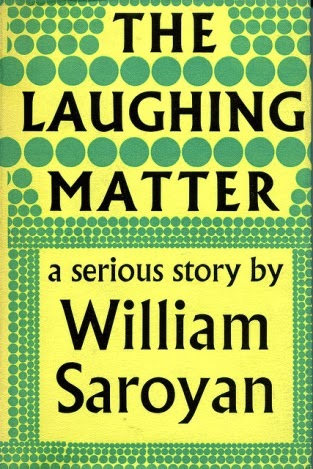
And finally a great quote from the American writer, William Saroyan:


Try to learn to breathe deeply, really to taste food when you eat, and when you sleep, really to sleep. Try as much as possible to be wholly alive with all your might, and when you laugh, laugh like hell. And when you get angry, get good and angry. Try to be alive. You will be dead soon enough.”

Click. Click. Click